900-Year-Old Sword Found off Israel’s Carmel Coast
While diving off the Carmel coast in Israel, recreational diver Shlomi Katzin discovered a sword lying on the sandy bottom of the Mediterranean Sea. Archaeologists who have examined the find say the weapon appears to be about 900 years old and likely dates to the time of the Third Crusade.
Details of the Find
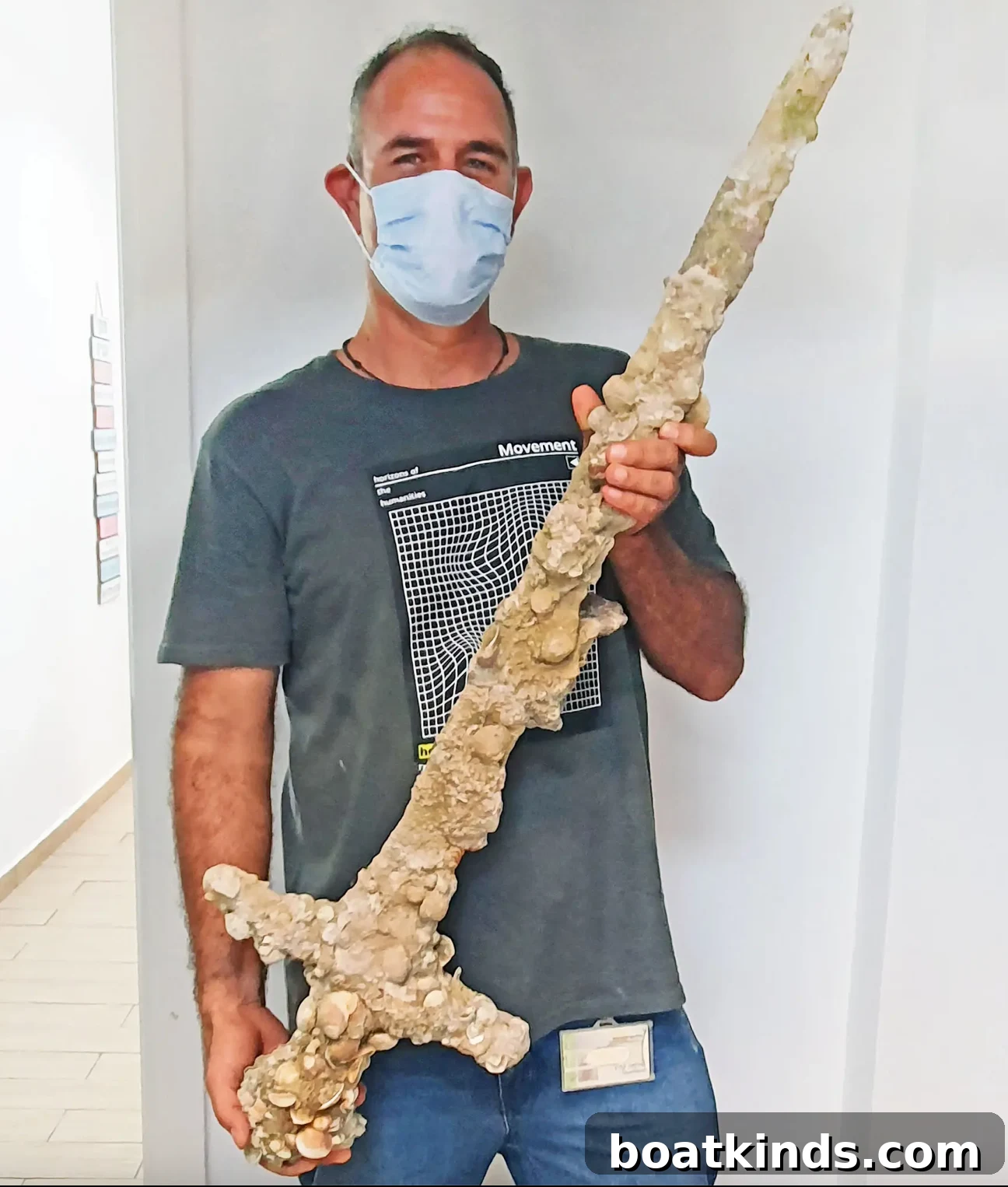
The sword measures roughly four feet in length and weighs about four pounds. Its surface is encrusted with shells and marine growth, evidence of long submersion. Specialists who inspected the artifact identified stylistic and construction features consistent with late 12th-century European swords, which aligns with the historical period of the Third Crusade.
Historical Context
The Third Crusade took place in the late 12th century and involved military campaigns in the eastern Mediterranean. Objects recovered from seabeds in this region can reflect the intense maritime movements of that era—military engagements, shipwrecks, and coastal skirmishes all contributed to the dispersal of arms and equipment into the sea. While the sword itself requires careful conservation and scientific study to confirm its precise date and provenance, experts consider it a likely relic of that turbulent period.
Legal and Conservation Steps
Under Israeli law, archaeological finds discovered within the country’s territory must be reported and are typically entrusted to the state. In keeping with this regulation, Mr. Katzin has handed the shell-encrusted sword over to the Israel Antiquities Authority for further analysis and preservation. The authority will undertake professional cleaning, stabilization, and study to determine the sword’s materials, construction techniques, and more exact age. Such work helps place the artifact within a broader historical and archaeological framework.
The Diver’s Perspective
Katzin declined requests for a full interview, saying he preferred attention to remain on the artifact rather than on himself. He did agree to a single photograph holding the sword, emphasizing that his priority was to ensure the find was handled properly and recorded by the appropriate experts. This response reflects a common approach among responsible divers who report historically significant discoveries to the relevant authorities.
Why the Find Matters
Discoveries like this sword are valuable for several reasons. They can offer direct physical evidence of historical events and interactions, illuminate weapon design and materials from the medieval period, and contribute to our understanding of maritime activity in the Mediterranean. When artifacts are recovered from underwater contexts, they also provide opportunities to study patterns of preservation and the effects of long-term immersion on different types of metal and organic components.
What Comes Next
The Israel Antiquities Authority will catalogue and conserve the sword, and specialists may perform non-destructive imaging, metallurgical analysis, and comparative studies with other medieval swords. Results from those examinations will help clarify whether the sword was used in combat, lost in a shipwreck, or otherwise deposited in the sea. Any official findings or publications by archaeologists will further illuminate the object’s place in regional history.
For now, the sword stands as a striking reminder of the region’s layered past—an everyday object from centuries ago that resurfaced unexpectedly and will now be studied and preserved for future generations.