
Four and a half years ago, after receiving an ALS diagnosis, Lance Garms reorganized how he approached each day.
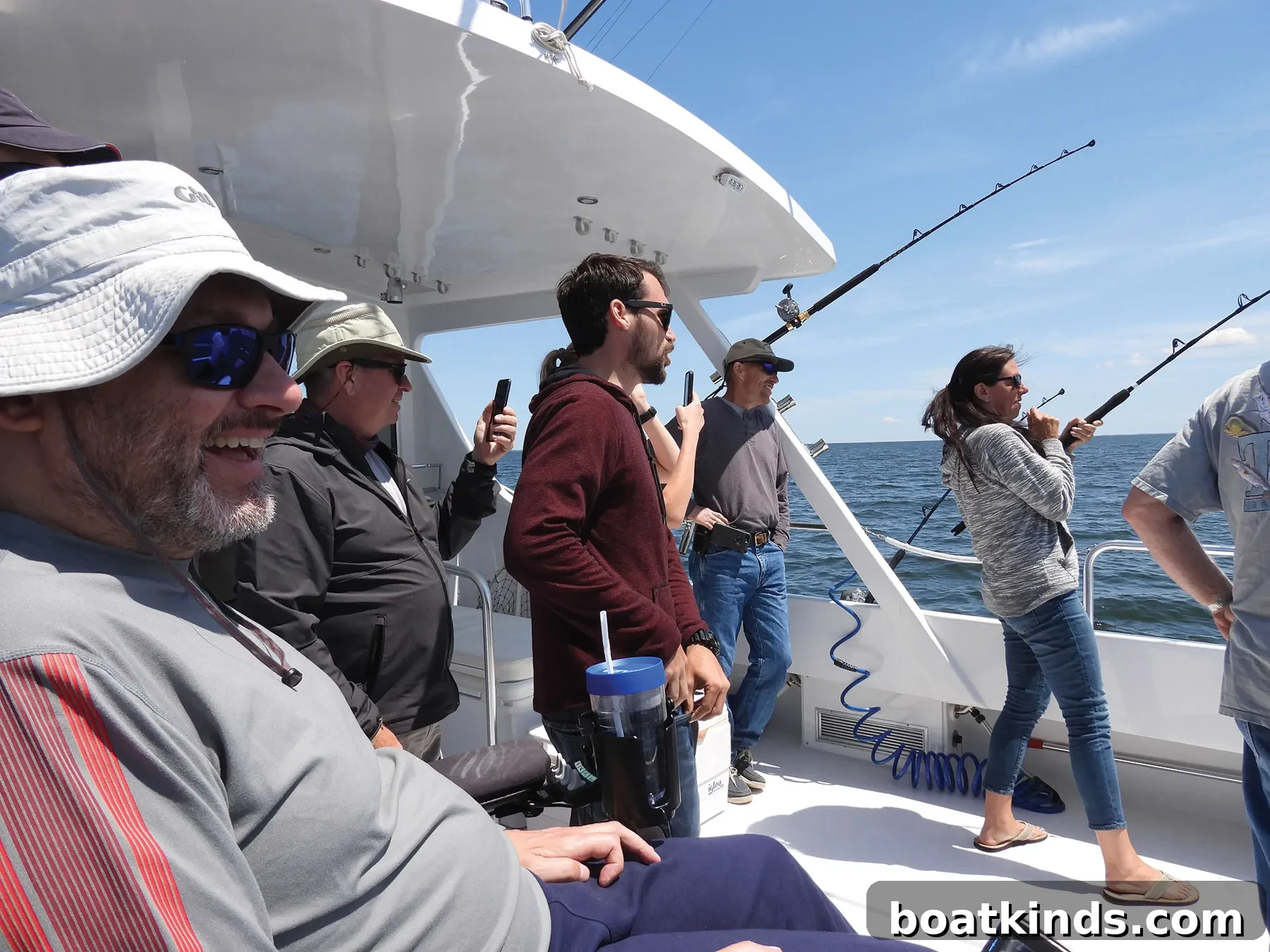
“I started a motto: Always say yes. Even if I’m tired, say yes,” Garms, 51, says as he gazes across the glinting expanse of the Potomac River on a clear spring day in the Chesapeake Bay. He sits in his wheelchair in the dance-floor-sized cockpit of the specialized 46-foot Chesapeake deadrise Redeemer, surrounded by lively friends and his two daughters, who rose before dawn and drove two hours south of Annapolis to meet the boat.
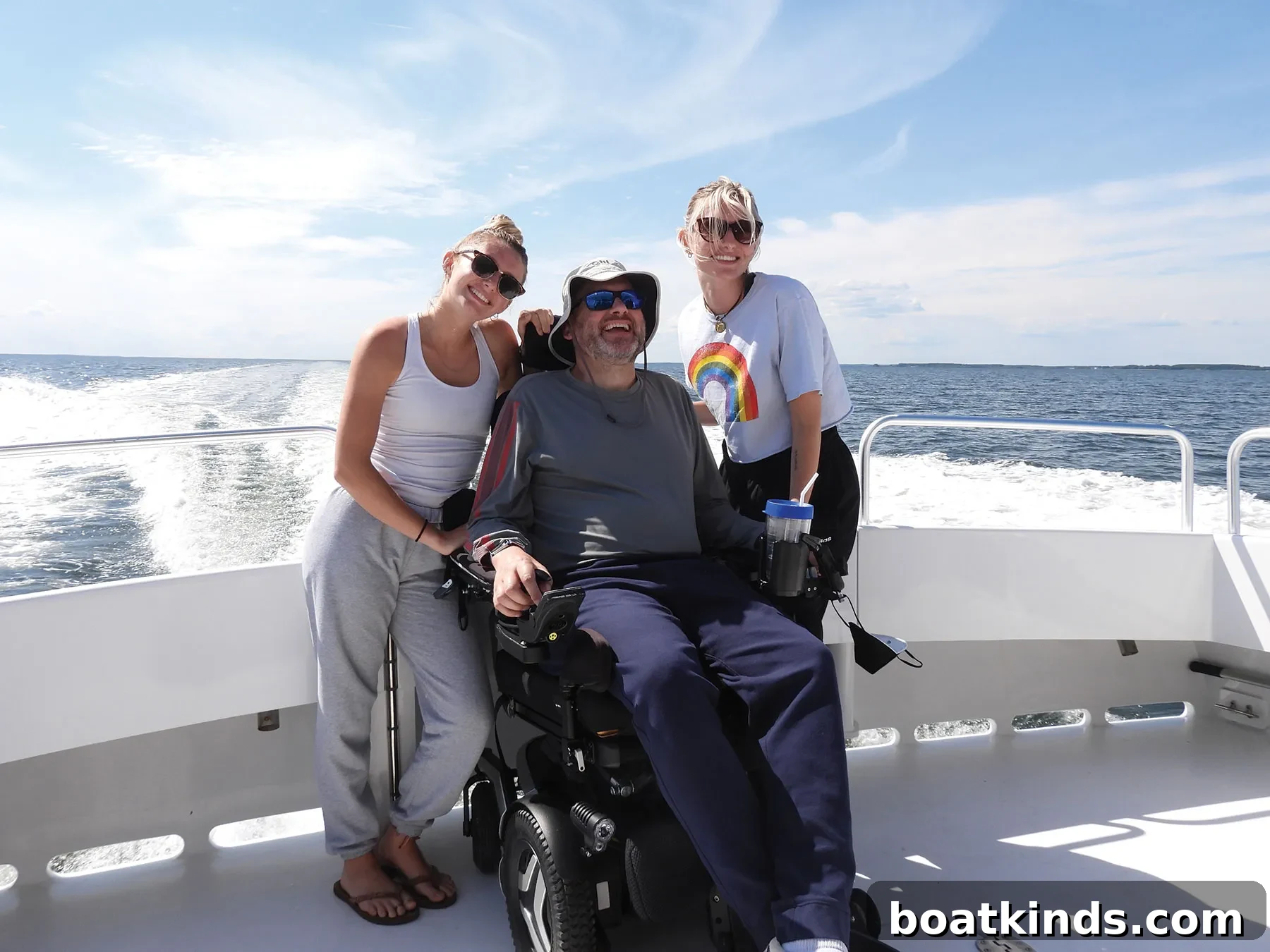
On the surface, the outing is a rockfishing trip—the practical purpose of the day and of the vessel. But the deeper aim is restorative: to soak in the Bay’s beauty, to restore a fragile spirit, and to let a day of “yes” offer comfort to a life living with loss. ALS, or Lou Gehrig’s disease, progressively damages nerve cells in the brain and spinal cord, taking away muscle control and, ultimately, the ability to swallow and breathe. There is no known cure.
“I wasn’t a huge fisherman,” Garms admits. “I planned to learn so I could go cruising.” He once sailed with his daughters, 17-year-old Julia and 20-year-old Sophia, on his Niagara 35 Wild Wings. Friends helped him board and move around in the boat’s tight spaces, and he cherished the water’s peace and the sense of independence sailing gave him. By the end of last summer, though, he decided to sell the boat as his needs changed.
As Redeemer moves in slow, easy circles on the Potomac with rods taut in their holders, Garms describes how planning trips—both large and small—has preserved his morale. When his friend Jenn Dadamo at the BoatUS Foundation sent a link about Redeemer, he immediately said, “We’re totally doing this.”
Several Chesapeake organizations provide on-the-water experiences for people and families affected by physical or mental challenges. Chesapeake Region Accessible Boating (CRAB) has offered sailing for people with disabilities from Sandy Point State Park for more than 30 years and is building an Adaptive Boating Center in Annapolis. Veterans Fishing Adventure, founded by U.S. Marine Corps veteran Ed Moore and his daughter, runs fishing outings for wheelchair-bound veterans from a 29-foot boat with a drop-down bow ramp.
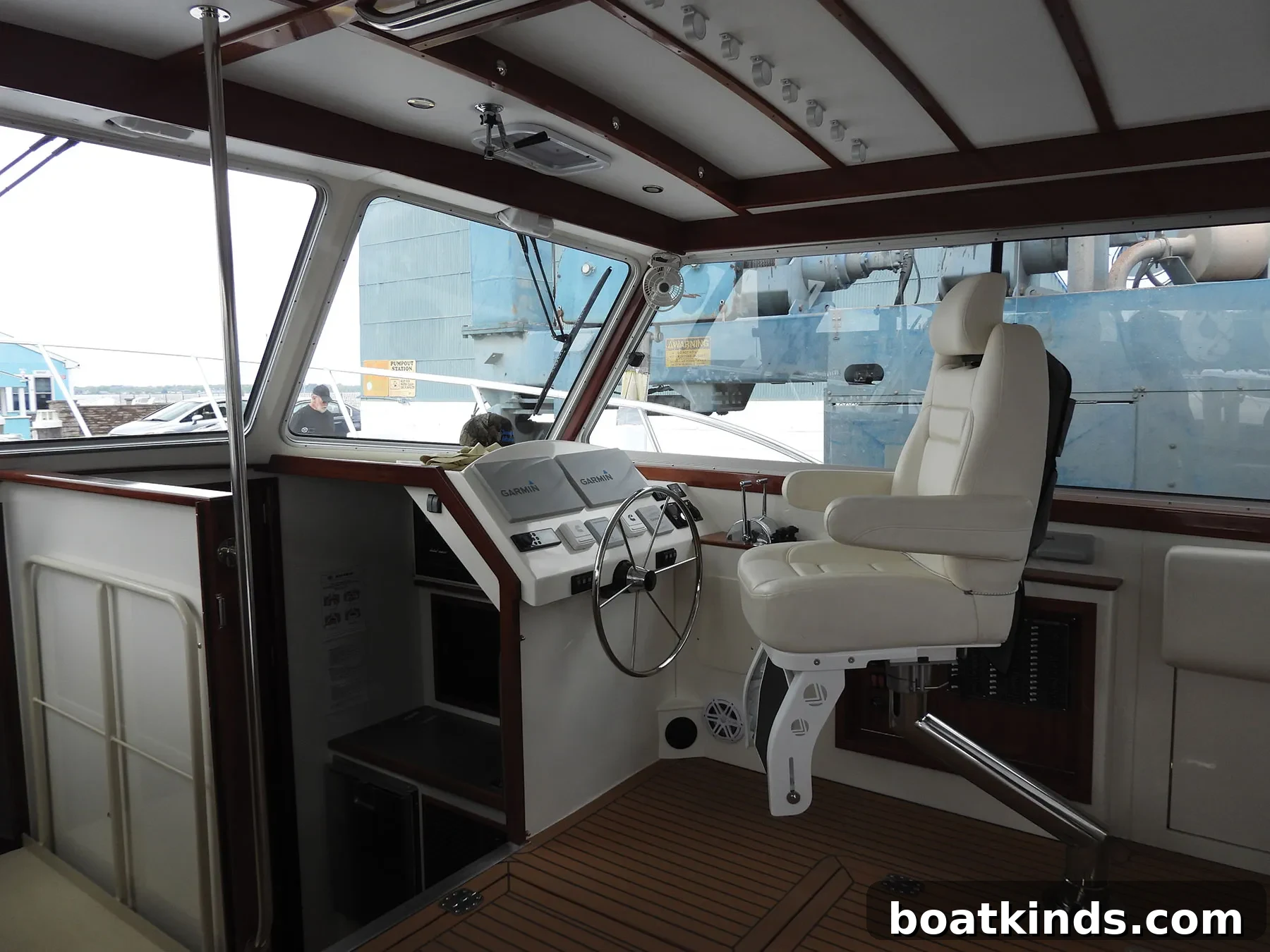
Redeemer, however, was conceived specifically to provide full independence for wheelchair users on a U.S. Coast Guard‑inspected small vessel. From the moment a guest rolls through the transom gate, the design allows access to every part of the boat without assistance, including the head, which occupies the forward cabin area typically used for a V-berth. That head is wide and open for wheelchair maneuvering and is reachable via an electric lift from the salon/pilothouse.
“From day one, it wasn’t build a boat and figure it out later,” says Jim Gosnell, a board member of the nonprofit Fish Redeemer, which supports the boat and operates from St. Jerome’s Creek in Ridge, Maryland. The property includes a wheelchair-accessible waterfront house for overnight guests and an adjacent accessible campground. “We wanted people with this need to get out on the water while maintaining their dignity. That required thoughtful design.”
Boatbuilder Martin Hardy of Composite Yacht in Trappe, Maryland, says safety and comfort were priorities: “A lot of people who haven’t been on a boat can be nervous. We wanted this boat to feel very safe.” An added connection drove the project: Hardy’s 19-year-old daughter, Ava, has cerebral palsy and uses a wheelchair, and his experience building adaptive solutions informed many design choices.
Hardy explains that attention to detail mattered. The salon doorway is 36 inches wide to reduce wear and allow easier passage. The head provides the five-foot turning radius that ADA guidelines recommend—no small feat in a vessel of this size. Coast Guard Chief Warrant Officer Carlos Sivilla, the lead marine inspector for the project, believes Redeemer may be the first USCG‑inspected small vessel certified to accommodate two power wheelchairs and a lift; comparable vessels with such features are typically much larger.
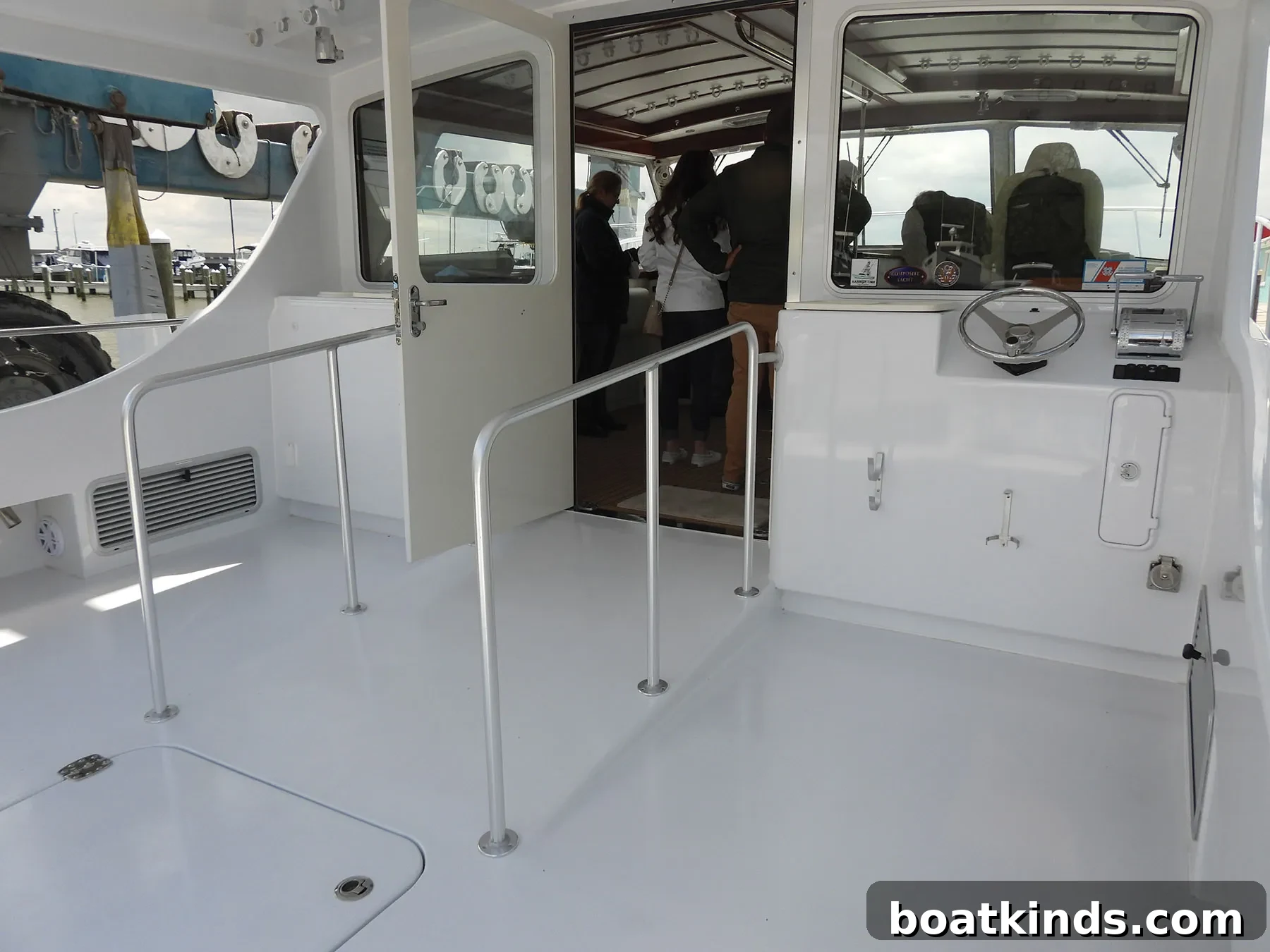
Initially the team considered modifying an existing Composite 46 hull, obtained from a Markley 46 mold, but determined it lacked the beam and cockpit freeboard needed for stability and wheelchair accessibility. They then designed a custom hull inspired by Bay-built boats but with more flare and tumblehome. Where a typical 46 carries about a 13-foot-9-inch beam, Redeemer maintains a 16-foot beam for most of its length, enhancing stability. Twin 500-hp Cummins diesels sit beneath the cabin sole to keep the cockpit and salon clear for maneuvering, and a Seakeeper gyroscopic stabilizer reduces rolling. The props are set in pockets, producing a 3.5-foot draft.
The Coast Guard required a raised pilothouse floor relative to the cockpit, and the team incorporated a ramp rather than a threshold to meet that requirement while preserving accessibility. Designing the electric lift proved complex. Inspectors would not allow the word “elevator” because of safety classifications, and very few manufacturers were willing to adapt their products to this size of boat. The team eventually partnered with Mac’s Lifts in California; the company completed a custom lift design that integrates seamlessly into the vessel.
Cardboard mockups guided the forward layout. The team rejected a small sleeping berth in favor of dedicating the entire forward cabin to the head, with a sink and vanity arranged so wheelchair users can fit under the counter—an arrangement that required reworking standard plumbing. Just aft of the head, on the same level and opposite the lift, sits the galley a few steps down from the pilothouse.
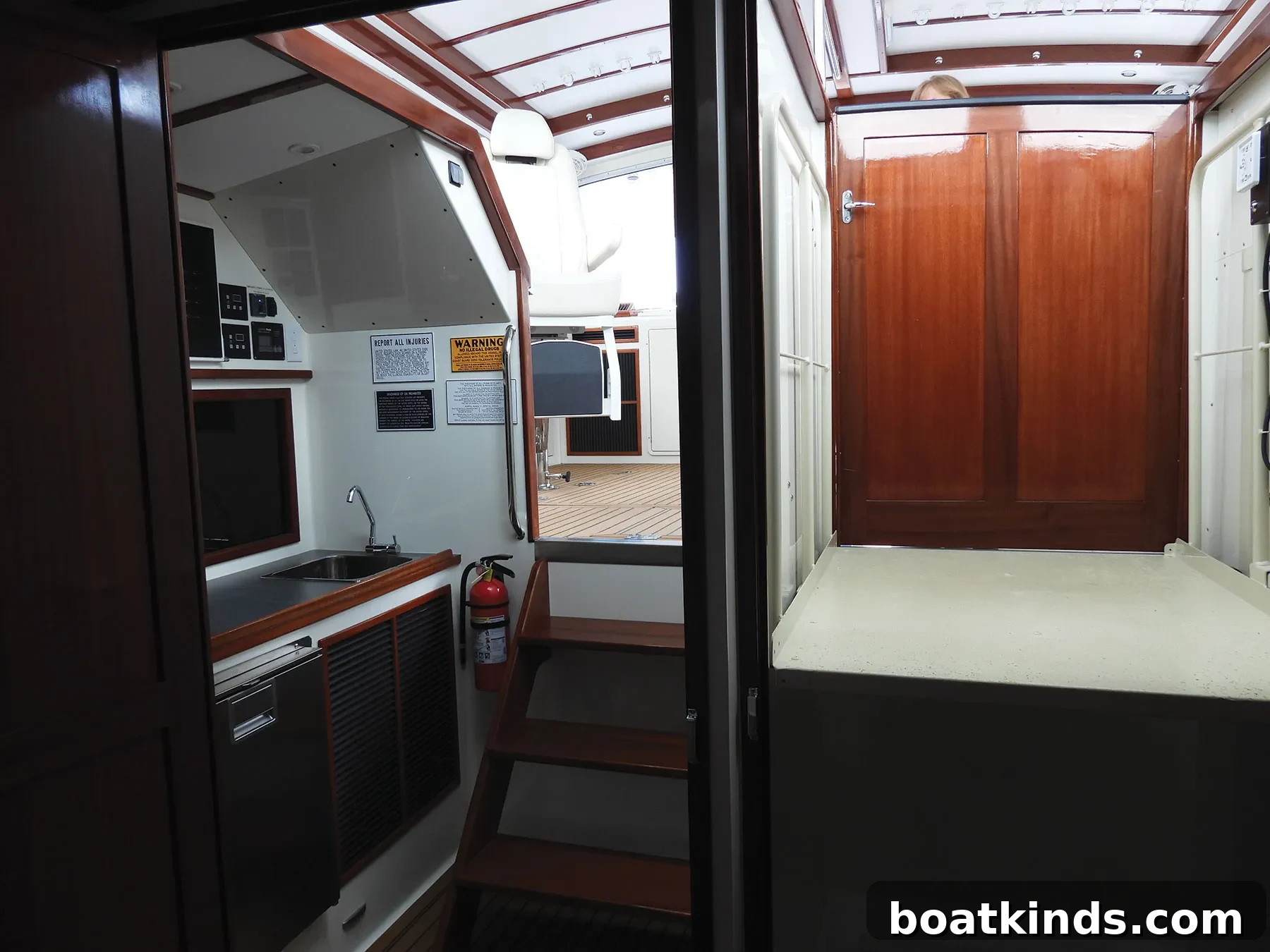
Other purpose-driven features include lower salon window sills for unobstructed views from a seated position, fold-up bench seats to maximize open space, a Coast Guard-mandated gin pole for rapid deployment into a life raft, and additional sound insulation to facilitate conversation underway.
“It’s about keeping people comfortable so they don’t need constant help,” Gosnell says. “It’s about the quiet of the water, fishing, and giving people a dose of freedom.”
Al Austin, a wounded Vietnam veteran who attended Redeemer’s christening and later went rock fishing aboard the boat, called the experience “awesome.” He said the vessel’s stability let him ride in a manual wheelchair without even locking the wheels. “It’s wide open. You can turn at any time. It’s incredible,” he said.
The boat’s name reflects its purpose and spirit. “It’s a faith-based boat,” Gosnell explains. “Many people feel redeemed—mentally or physically—when they spend time on the water. We’re offering happy days to folks who need them.”
As the afternoon progresses, with one keeper in the box and two released undersized fish, a reel starts to sing. Friends encourage Garms to the rail to feel the fight. Unable to hold the rod alone, he places his hands as Chris Hendershot guides them and another friend steadies the rod. Together they bring in a healthy rockfish. The moment—the laughter, the sun’s warmth, the steady breeze—underscores what Redeemer was built for: connection, dignity, and the simple joy of being on the water.
“This is so nice, and so necessary,” Garms reflects. He hopes Fish Redeemer’s example will inspire more groups and organizations to create similar opportunities. “Who can afford to convert or build a boat like this on their own? It’s beyond an individual’s capability. I’m really grateful they did this.”
This article was originally published in the August 2021 issue.