
Paul Larson and Larson Boat Works — From Handmade Skiff to Small-Boat Legacy
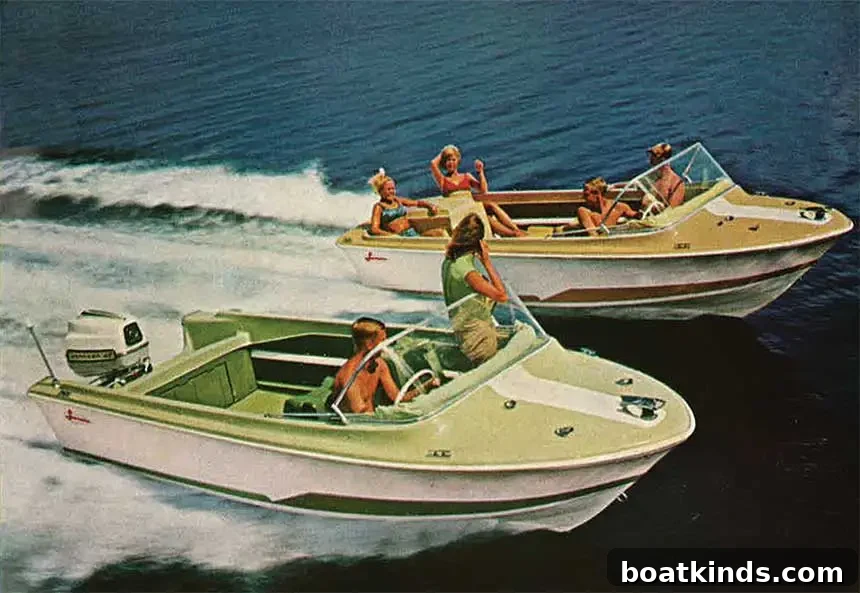
In 1895, an 11-year-old named Paul Larson wanted to hunt and fish in the waters around his parents’ farm near Little Falls, Minnesota. Lacking the money to buy a boat, he built one himself. That homemade craft was the beginning of a long career in boatbuilding that would evolve into Larson Boat Works, a company known for producing popular small runabouts and utility craft.
From a Trapper’s Earnings to a Boatbuilder
Larson’s interest in building boats grew as he reached his late teens. After a winter of trapping, he invested his earnings in woodworking equipment and began constructing boats along the banks of the Mississippi River at Little Falls. What started as a practical solution for local hunters and fishermen became a full-time craft: Larson built boats to meet the needs of his community and gradually gained recognition for his designs.
Wartime Work and the Move to Pleasure Craft
During World War I, Larson Boat Works produced boats for government use. In the years that followed, the company shifted focus toward pleasure craft, producing wooden runabouts and small recreational boats. By 1925 Larson was established in the pleasure-boat market, serving customers who wanted well-crafted small craft for leisure and sport.
Materials and Manufacturing: Wood, Aluminum, and Fiberglass
Throughout the 20th century, Larson Boat Works adapted as boatbuilding materials and methods changed. After World War II the company began working with aluminum, reflecting broader industry trends toward lighter, more durable metals. A fire in 1949 destroyed the original boatyard; in rebuilding, Larson experimented with fiberglass, another material that transformed recreational boatbuilding because of its durability and ease of shaping. The successful transition to fiberglass allowed the company to expand production and add a second facility.
Popular Models and Features
By the mid-1960s, Larson employed roughly 200 people and was producing a range of small craft. One notable example was the All American 166, a 16-foot runabout available in both outboard and inboard/outboard configurations. The inboard/outboard version was offered with a 120-hp MerCruiser gas engine and was advertised at a price of $3,275. Promotional materials emphasized comfort and performance, describing the hull as modified-V and promising a smooth ride through wakes and rough water. Standard amenities for that era included an 18-gallon fuel tank, convertible tops matched to the boat’s color, sunbather-style seating, and mechanical steering—features that appealed to families and recreational boaters seeking both style and practicality.
Retirement and Enduring Influence
Paul Larson retired and sold the business in 1976, but the company he founded left a lasting mark on Little Falls and on small-boat design. Larson’s creative approach produced a range of models—many with memorable names such as the Falls Flyer, Pumpkin Seed duck boat, Thunderhawk and Pla-Boy—that helped define midcentury small-craft aesthetics and utility. Because of the concentration of small boat manufacturing and Larson’s influence, Little Falls earned the nickname “The Small Boat Capital of the World.”
Larry’s story is a clear example of American ingenuity: a boy’s practical solution to a local need grew into a company that adapted through material changes, wartime demands, disaster and innovation. Larson Boat Works represents both a local manufacturing success story and a chapter in the broader history of recreational boating as it moved from handcrafted wooden skiffs to mass-produced fiberglass runabouts.
This article originally appeared in the May 2020 issue.