
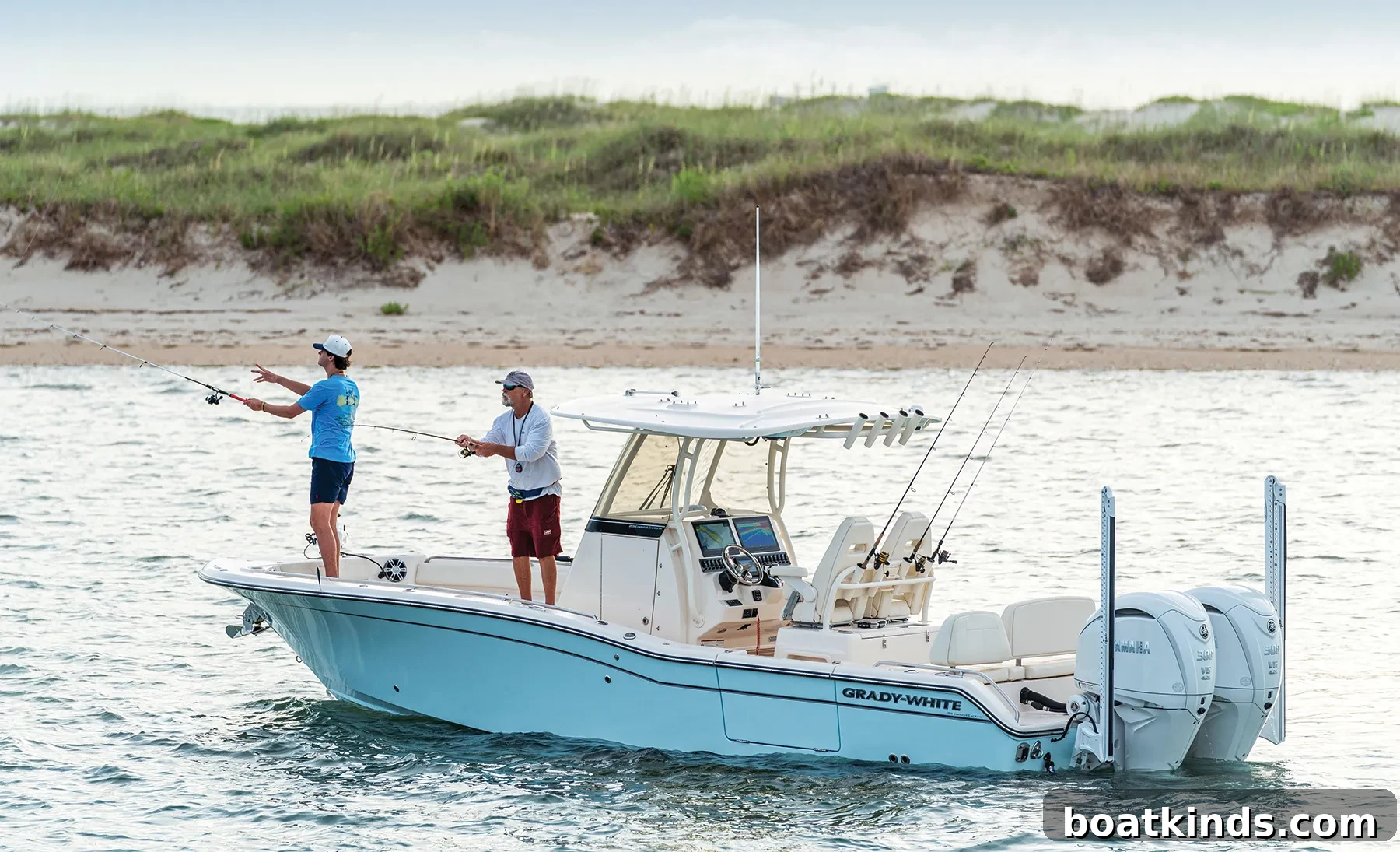
The call came around noon. “I’m at the marina,” my longtime fishing partner Adam said. “Stripers were blitzing out in Buzzards Bay this morning. I’m heading back out.”
I didn’t wait for an invitation. “I’ll meet you at your boat in half an hour,” I answered, grabbed three light-tackle rods, and headed to the marina. After more than 25 years of fishing together, Adam and I can usually tell when a day on the water will be special. I expected action within minutes of leaving the dock, but our first hour produced nothing.
A light breeze ruffled the surface and the sky was overcast—ideal for shallow-water work. The wind would help us drift quietly toward any feeding fish, and the lack of bright sun reduced the chance of spooking them. “On any given cast,” Adam reminded me. That had become our simple mantra.
As slack tide approached we pulled anchor and waited for moving water to start the feed. An osprey circled overhead, scanning for prey but never committing to a dive. We traded talk about fishing—tactics, lures and places—and then drifted into conversation about our lives: kids, partners, jobs, and health. Sometimes one of us offered advice unasked; at other times we let the silence sit—comfortable and unforced.
Over the years those trips stopped being only about catching fish. They became a space to share concerns, test ideas, and listen. The boat often works better than a therapist’s office: there’s fresh air, a shared task, and the kind of gradual intimacy that comes from hours spent shoulder-to-shoulder doing something you both love.
Research backs up what I’ve felt for decades—friendships are essential to better mental and physical health. Still, many men find building deep friendships difficult. Geoffrey Greif, Ph.D., who has studied male friendships, advises finding shared interests, getting involved in activities, and learning how much to reveal early on. I’ve found that fishing and boating fit that guidance perfectly. These activities require teamwork and naturally create situations where conversation flows without feeling forced.
Men’s friendships often grow out of “shoulder-to-shoulder” interaction, Dr. Greif notes, and fishing fits that pattern. You rarely have a meaningful talk while staring face-to-face at a control panel or while concentrating on a cast; the doing creates the space for honest exchange. Many of my deepest conversations with Adam happened while we were both looking away—scanning water, casting lures, or tending the motor. The rhythm of the work lets people open up in a way that coffee or dinner sometimes does not.
Fishing skill helps, but it’s not the only ingredient for a great trip. I can usually find the fish even if the captain is inexperienced; what makes a day memorable is the right balance of companionship. You don’t want a know-it-all, nor someone who ignores safety or environmental awareness. The ideal boatmate knows when to appreciate the scenery, when silence is appropriate, and when to engage in deeper conversation.
On almost every boat I board I ask questions—about fishing in the area, sure, but also about the person I’m with. If someone is uncomfortable discussing something, they’ll change the subject, and that’s fine. Men, more often than women, are taught to hide emotions and “handle things” alone. That stoicism can become isolating. Psychologists note men tend to struggle more than women after major life changes like divorce because they often have fewer confidants. Adam and I both faced difficult transitions around the same time, and having his 18-foot boat—our floating therapist couch, as we joked—made a difference. Aboard Scout we could be vulnerable without posturing.
During a recent NPR segment psychologists described how many men believe they must solve problems independently, viewing help-seeking as weakness. I was that younger man once. Age has taught me otherwise: admitting you’re not okay and telling a friend can be a form of strength.
Fishing has been a glue throughout my life. Beyond Adam, I have three childhood friends who also fish; our shared hobby has kept our connection intact for more than fifty years. One friend has said the angler he spends most time with talks about his terminal illness only while on his boat. That makes me wonder how many people would keep suffering in silence without the right setting to open up. As friends, we need to notice small clues of struggle and find an appropriate moment and place to ask, “Are you OK?” For me, that place is often on the water.
We eventually raised anchor and went back to looking for fish. In just five feet of water we realized stripers were milling below the surface. Adam shut the motor and we began casting. Our reels were spooled with 20-pound braided line—thin for its strength—so our lures flew farther. Adam threw a Sluggo and worked it on the surface with quick, intermittent jerks. A swirl followed, then a miss. He paused the retrieve and twitched the lure again.
Wham—one inhaled the bait. A geyser of water erupted and the bass, with no deep water to dive into, exploded away in a straight run. The drag screamed satisfyingly as the fish peeled line. My heart raced as the fish flashed near the boat and ran past the engine’s propeller, but after a tense fight Adam lifted a beautiful 38-inch striper aboard.
I took a photo of him and the fish, then watched him release it. I knew the image would bring back the memory of that moment, but even if some of the quiet conversations of the trip faded from memory, their value mattered just as much as the catch. On the water, with lines in the water and good company beside you, both the fish and the conversation can heal and bind us.
This article was originally published in the July 2023 issue.