
The Burning of the Steamship Caroline: A Night on the Niagara and Its Lasting Consequences
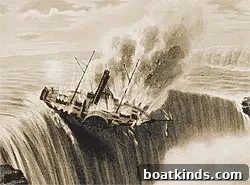
On a cold, moonlit night in late December 1837, the American side-wheel steamship Caroline was set ablaze and sent over Niagara Falls. The vessel, ablaze from stem to stern, became a dramatic symbol of a border conflict that had begun as a local rebellion and escalated into an international incident. The episode—known historically as the Caroline Affair—left a legacy that extended far beyond the wreckage in the river.
The roots of the incident lay in political unrest in Upper Canada (today’s Ontario). Earlier in 1837, William Lyon Mackenzie, a Canadian political reformer, led a group of insurgents who sought democratic change and opposed the British colonial government. After a series of setbacks, Mackenzie’s followers withdrew to the Niagara River and occupied Navy Island, a small island just above the falls. From that position they hoped to sustain their movement and to receive supplies from sympathizers across the river.
The Caroline was a privately owned, coal-fired steamship—the kind of vessel that epitomized contemporary river technology. With its engine power and cargo capacity, it was well suited to ferry supplies and personnel. Sympathizers on the American side used the Caroline to ship food, weapons and equipment to the rebels on Navy Island, making the steamboat an important logistical lifeline for the insurgency.
On the night of December 29, 1837, a group of government loyalists crossed from the Canadian shore, boarded the Caroline in the dark, seized control of the vessel, and towed it out into the current. They set the ship on fire and cast it loose into the swift waters of the Niagara. As the burning steamer was swept away, at least one American sympathizer was killed. News of the attack quickly crossed the border, inflaming public sentiment in the United States.
The United States government, under President Martin Van Buren, formally protested the attack. U.S. officials argued that the seizure and destruction of an American-flagged vessel—and the death of an American citizen—were unacceptable violations of sovereignty. Military forces were mobilized along the frontier to prevent further escalation as anti-British outrage spread through border communities.
Diplomatically, the Caroline Affair proved consequential. The incident prompted negotiations and legal discussions that reached beyond its immediate facts. In subsequent years, the controversy contributed to the framing of principles governing the use of force in international law—most notably the standard that any self-defense action must meet tests of necessity and proportionality, often referred to in discussions as the “Caroline test.” These ideas influenced later debates about cross-border reprisals and the limits of state action against perceived threats.
Ultimately, the tensions between Great Britain and the United States were resolved through diplomacy. The 1842 Webster-Ashburton Treaty addressed a range of boundary and security issues between the two countries, and it helped stabilize relations and peaceful cooperation along the Great Lakes and the northern frontier. While the Caroline itself was destroyed, the diplomatic settlement that followed reduced the risk of wider conflict and established precedents for shared management of border waters.
More than a dramatic maritime incident, the Caroline Affair stands as an example of how local unrest can have international consequences. A small steamship carrying supplies for a short-lived rebellion became the flashpoint for broader questions of sovereignty, the rules of engagement across borders, and the need for clear diplomatic arrangements. Its burning at Niagara is remembered both for the immediate human cost and for the legal and diplomatic aftershocks that helped shape U.S.-British relations in North America.
This account originally appeared in the February 2012 issue.