
What Owners Want: The Key Elements of an Ideal Trawler
Today’s trawler owners are more interested in cruising than in constant repair and restoration. When asked what matters most in an ideal trawler, the answers from a dozen owners were remarkably consistent: simplicity, accessibility for maintenance, comfort and seaworthiness.
“Easy does it” is a fitting motto for anyone shopping for a trawler. Ease of access to systems, straightforward maintenance and on-board comfort were mentioned as often as traditional measures of seaworthiness. When owners explained why they passed on certain boats, the most common objection was that those vessels required too much work to make them reliable and comfortable.

Many prospective buyers are couples approaching or in retirement who want to spend time cruising, not catching up on deferred maintenance. Sellers should take note: much of the market will avoid projects that demand extensive refitting. These buyers often value time as much as money and prefer boats that are ready to enjoy with minimal upfront effort.
While researching this piece I joined a Marine Trawler Owners Association gathering on the St. Johns River in Florida. Seven trawlers were tied up at the Outback Crabshack docks on Six Mile Creek, and the group’s relaxed dockside conversation underlined the same themes: owners appreciate vessels that are comfortable, easy to maintain and sensible to operate.
Not everyone at the gathering had a success story. One owner who preferred not to be quoted described buying a fixer-upper that ended up costing far more time and money than he expected. Roughly a third of the owners interviewed for this article said they had rejected boats because previous owners had neglected maintenance or made modifications that reduced the vessel’s value.
Milt Baker, who cruises part of the year aboard his Nordhavn 47, emphasized that many well-known trawler designs are well engineered when new, but age and later alterations increase the risk that systems have been compromised. “Additions and repairs are sometimes made without regard for how they affect the boat as a whole,” he said. “Buyer beware.”
Wives and partners play a strong role in modern trawler purchases, often insisting on livability and convenience. For many former sailors, joining the powerboat world represents a deliberate shift toward comfort. Owners commonly mention features like private, roomy heads and showers, comfortable saloons and layouts that allow relaxed living aboard—simple comforts that make cruising more enjoyable as people age.
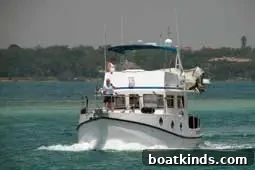
Comfort also extends to routine maintenance. Several owners said they wanted easy access to engines, filters and systems—because being comfortable while doing routine chores matters. Jeff Siegel, who cruises the East Coast with his wife and two large Labrador retrievers, noted that dog-friendly features are also important: walkaround decks, safe railings and interior stairs to the flybridge make life aboard easier for pets and owners alike.
Seaworthiness remains a consideration, though for many it is balanced against everyday comfort. A few owners in the group—such as Rudy Sechez and Joe Pica—placed more emphasis on hull design and initial stability, reflecting their preference for longer, more demanding passages. Sechez, who built a 34-foot wooden “troller,” stressed that structural design and appropriate scantlings must be determined during the design phase; altering a boat significantly after construction is often impractical and costly.
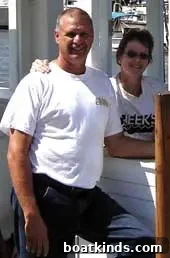
For offshore work and long-distance cruising, inherent hull motion and strength are critical. A comfortable motion can reduce or even eliminate the need for active stabilization systems, which are sometimes ineffective at anchor. Joe Pica praised the self-stabilizing qualities of his hard-chine Great Harbour N37, while Sechez highlighted the necessity of robust construction for boats intended for demanding offshore use.
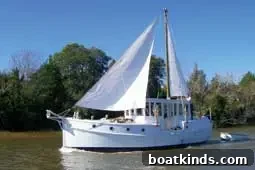
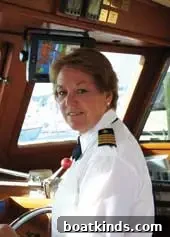
Other owners, like Bob and Helen Kovach, define seaworthiness pragmatically. Cruising full time along the East Coast aboard their 50-foot Marine Trader, they wanted a boat that could safely handle winds up to about 35 knots and seas in the 5-to-7-foot range. Their high bow, heavy displacement and Portuguese bridge delivered the confidence they sought. Helen, who holds a 100-ton master’s license, serves as captain while her husband manages engineering duties, illustrating how couples often divide responsibilities on board.
Most trawlers operate close to shore and are popular on inland waterways like the Intracoastal Waterway. During winter migrations to places such as George Town in the Bahamas, powerboats represent a minority of vessels at anchor, showing that trawlers tend to favor protected cruising grounds. Owners who do venture farther afield—such as Baker, Pica and Sechez—still prioritize comfort but place greater emphasis on offshore capability and reliable systems.
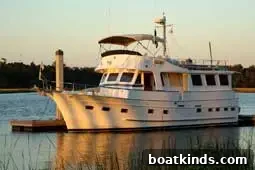
In short, today’s trawler owners are looking for boats that are ready to cruise: designs that combine comfortable living spaces, easy maintenance and sensible seaworthiness. Whether the plan is coastal exploration or extended offshore passages, buyers increasingly favor vessels that minimize the work required to keep them safe and enjoyable.
Peter Swanson is the former communications director for Great Harbour trawlers. He has participated in legs of the Nordhavn Around the World voyage and the Nordhavn Atlantic Rally. Having logged roughly 20,000 nautical miles under power, his own boat is a Morgan Out Island 41 ketch.
This article originally appeared in the May 2011 issue.