
Boat Electrical Maintenance: A Practical Checklist for Safe, Reliable Power
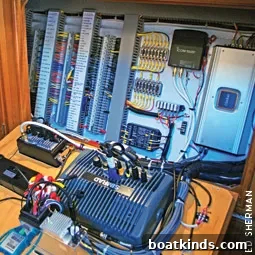
Maintaining your boat’s electrical system is essential for safety, reliability and preventing costly failures. Regular inspections and a small kit of spare parts and tools will keep you afloat and reduce the risk of fires, corrosion and loss of critical systems. The following checklist summarizes practical steps and best practices for battery care, wiring, grounding and routine testing, compiled from experienced marine technicians and industry authorities.
Essential spare parts and tools
Always carry a basic assortment of spare parts and hand tools to handle common electrical issues while underway:
- Spare wire and electrical connectors sized to existing circuits.
- Replacement fuses and bulbs, plus engine fuel filters and engine belts.
- Distilled water for serviceable batteries and appropriate corrosion inhibitor.
- Electrical tools: crimpers, wire cutter/stripper and a quality digital voltmeter.
Battery care and connections
Battery connections and maintenance are central to a dependable marine electrical system. Follow these guidelines:
- Keep battery terminals tight, clean and free of corrosion. Seal connections against moisture using a recommended corrosion inhibitor rather than lubricants.
- Avoid wing nuts on battery terminals—vibration can loosen them. Use nylock hex nuts or properly secured fasteners.
- Check water levels in serviceable batteries and top with distilled water as required.
- Inspect cables for damage or swollen insulation, which indicates moisture intrusion and degraded protection.
- If batteries are used in parallel, match age, case size and amp-hour or CCA ratings to prevent imbalance and premature failure. Replace both batteries if one is significantly worn.
- Use tinned buss bars and tinned terminals to improve corrosion resistance. Ensure ring terminal holes match the stud or screw diameter to maintain a solid connection.
Wiring, strain relief and component protection
Good wiring practices reduce the risk of shorts, chafing and electrical fires. Key points:
- Check wiring for wear, chafing and corrosion. Green or white residue on conductors is a sign of corrosion.
- Provide strain relief so connections are not stressed when wires are stepped on, pulled, or otherwise loaded.
- Never tap into other wires. Make new connections at positive terminal blocks, circuit breakers and the grounding bus to maintain circuit integrity.
- Use the component manufacturer’s recommended breaker or fuse size for protection.
- When installing new wiring, label or record locations and secure runs with zip ties for a neat, serviceable installation. In general, choose heavier-gauge wire where appropriate—the lower the AWG number, the better the current capacity.
Bonding, grounding and corrosion control
The bonding system is often overlooked but is vital to preventing galvanic and stray current corrosion of underwater metals. Inspect and maintain the bonding system as follows:
- Check for loose, corroded or high-resistance connections. Effective bonding requires low-resistance continuity throughout the system—ideally no more than 1 ohm between any two bonded parts.
- If your engine or cooling system uses sacrificial zinc anodes, replace zincs when they are 50 percent or more depleted to maintain protection.
Testing batteries and charging systems
Regular testing helps identify weak batteries and undersized charging components before they cause problems:
- Use a digital voltmeter to perform a simple battery load test: with the voltmeter connected, turn on all DC loads and crank the engine (do not start). The battery voltage should not drop below 10.5 volts during cranking. A sustained drop below this indicates weak or undersized batteries.
- Owners without an onboard generator should manage electrical usage carefully to avoid discharging batteries excessively.
- If you’ve added high-draw equipment on boats roughly 30 feet and larger, consider upgrading to a higher-capacity alternator. Alternators operating continuously at full load run hotter and wear faster; sizing appropriately improves longevity.
- Avoid turning the battery switch off while the engine is running, particularly on boats with multiple batteries, as this can damage alternator diodes.
VHF, antenna and critical connections
Ensure communication and navigation systems remain reliable by checking these items:
- Inspect the VHF antenna and its mounting for cracks, chips or other damage, and verify the antenna connection is clean and corrosion-free.
- Check VHF radio and navigation light connections for corrosion and tightness—these are critical for safety and legal compliance.
Safe practices while working on electrical systems
Always turn off power before performing any electrical work and use recommended safety gear. Keep a compact set of spares and the right tools aboard, and document any wiring changes for future reference.
Sources and further reading
This guidance reflects input from marine electrical experts and technicians: Erik Klockars (Soundings technical adviser); Steve D’Antonio (technical editor of PassageMaker and marine consultant); Dave Laska (owner, L&L Electronics); and Ed Sherman (director of curriculum development and delivery for the American Boat & Yacht Council).
See related article :
– Bulletproofing your electrical system
This article originally appeared in the September 2011 issue.