
Custom vs. Semicustom Boats: Choosing the Right Path
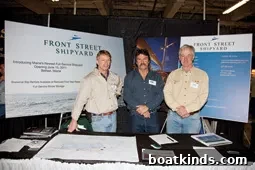
If you’re shopping for a new boat, production models cover a wide range of styles and budgets. But if you want a vessel tailored to your exact needs—and you have the time and budget—you can pursue either a semicustom or a fully custom build. The distinction can blur, but generally a semicustom boat uses an existing hull and deck with a bespoke interior, while a custom yacht is unique from keel to mast, according to JB Turner, co-owner and head of boatbuilding at Front Street Shipyard in Belfast, Maine (frontstreetshipyard.com).
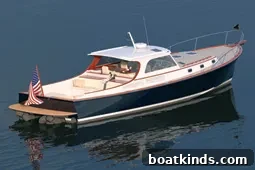
Clients usually arrive with a purpose in mind—ocean passages, family cruising, or a particular size and layout. Many have spent years looking at production boats at shows and conclude nothing fits. Some find a hull and deck they like and customize the interior; others begin from scratch: “We want a 60‑footer with three cabins, two heads and an aft cabin,” Turner says. From there the yard works with a designer to develop the hull lines and the overall specification.
These days most owners seek a designer first and then a builder. “It used to be 50 percent of owners asked us to help find a designer; now 90 percent come with a designer and say, ‘Let’s find a builder,’” Turner explains. Designers typically prepare a preliminary specification, then invite bids from several yards. Owners will narrow those bids to a few yards and visit them to assess workmanship, capacity, and how they’ll work together. Boatbuilding is as much about relationships as it is about engineering: owners meet mechanical and carpentry leads, riggers, and painters to judge compatibility.
From Design to Mockup
A key stage in custom projects is the full‑scale interior mockup. Turner calls this one of the most enjoyable parts of the process: owners can sit on settees, lie on bunks, and walk boarding arrangements to understand what the finished vessel will feel like. Plans and CAD renderings rarely convey spatial experience, and small changes at the mockup stage—moving bulkheads a foot or adjusting layout—may cost a few hundred dollars in the mockup but save hundreds of thousands if done before construction.
Turner warns owners about overcomplicating systems. High‑end, automated electrical systems sound enticing, but if an owner intends to operate the boat themselves, such complexity can create frustration. “Imagine standing there trying to figure out a push‑button electrical system you don’t fully understand,” he says. Often the conversation leads to simplifying systems to match the owner’s technical comfort.
Expectations, Decisions, and Contracts
A custom build is a collaborative effort that requires owners to make many decisions. “If you’re building custom, expect the builder to ask hundreds of questions,” Turner says. Owners who know what they want move faster and more economically; those who are indecisive increase build time and cost. Some clients provide a clear directive—“Build this, only make it bigger”—while others rely on the yard for solutions.
Designers who respond quickly and understand tradeoffs are valuable to yards. When owners make changes during the mockup, having designer and builder together lets them discuss structural or engineering ramifications on the spot—changes to davits, tankage, or deck loads can be addressed immediately.
Contracts have shifted toward fixed‑price models, making a clear, detailed specification essential. The process typically begins with a concise preliminary spec for bidding and evolves into a comprehensive, fixed‑price contract after the mockup and final drawings. For a large yacht, the final specification can grow to many pages with dozens of drawings.
Costs, Materials and Size
Most custom clients are experienced boaters—Turner estimates the average owner building custom has owned five to ten boats. Front Street generally focuses on yachts above 45 feet; most custom boats are 60 feet and up. A custom 60‑foot powerboat commonly falls in the $3–4 million range, though choices from propulsion to interior finish cause large swings in price. A sailboat and motorboat of the same length often align in cost because sailboats incur rigging and keel costs while motoryachts need larger engines.
Interior finish is a major differentiator: a $3 million 60‑footer can cost $5 million with a high‑end, flawless minimalist finish because every seam and surface must be perfect. The choice of hull material also affects cost and weight. Carbon fiber prepreg epoxy is the lightest and most costly; other options include vinylester‑infused E‑glass and traditional hand‑laid laminates. Tooling choices—carved molds versus hand‑built plugs—balance cost and lead time: carved molds speed production but require third‑party tooling work.
Typical build time for a 60‑foot custom boat is about 18 months, subject to backlog. Many owners appoint a project manager, captain, or surveyor to oversee progress and make on‑site decisions.
Semicustom Offers and Practical Tradeoffs
New England Boatworks (NEB) of Portsmouth, R.I., is an example of a yard that offers both high‑end custom work and semicustom models. NEB has built advanced racing and cruising yachts using exotic composites and aluminum, and it now offers a Doug Zurn–designed 50‑footer semicustom: buyers choose a hull and deck and customize systems and interiors. The advantage of a semicustom production run is lower cost and faster delivery once the first hull is developed—the tooling and files are already in place.
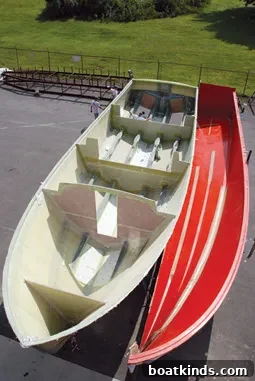
Tom Rich, NEB co‑owner, notes that propulsion choices and hotel systems drive both cost and weight. A high‑power propulsion package with waterjets can push top speeds dramatically and add hundreds of thousands in cost, while lighter hotel systems reduce generator and HVAC requirements. Semicustom builds—using hulls from established laminators or hand‑built molds—can save significant tooling costs and still deliver quality craftsmanship.
Modern composite techniques lean toward epoxy and infusion. Epoxy prepregs produce the lightest laminates but require controlled curing; infusion is increasingly common and allows strong, consistent laminates, though the process and core selection introduce tradeoffs in weight and finish. Because epoxy adhesion to gelcoat can be challenging, many high‑end boats are painted after demolding rather than relying on a gelcoat finish.
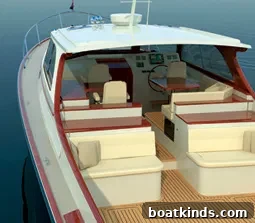
NEB and similar yards can also tailor acoustic and vibration control to meet owner expectations. Quiet operation, top‑tier fit and finish, and bespoke layouts—nanny staterooms, dinghy garages, or large fuel tanks—are all possible when working with an experienced custom builder. Choices in interior materials—from all‑teak raised paneling to lightweight Nomex panels veneered with wood—impact both aesthetics and weight.
There are many routes to a bespoke boat: pick a semicustom hull and finish it to your taste, or commission a one‑off that answers every operational and aesthetic priority. Both approaches demand vision, patience, decision‑making, and a realistic budget. As Johann Wolfgang von Goethe put it: “Whatever you can do, or dream you can do, begin it. Boldness has genius, power and magic in it. Begin it now.”
February 2013 issue