
The America’s Cup has long been a theatre for cutting-edge technology, strategic intrigue and oversized egos — a contest where enormous wealth and relentless ambition collide. Winning the Auld Mug requires not only skill on the water but the resources to assemble the best designers, sailors and engineers. Even losing can be ruinously expensive: Sir Thomas Lipton tried five times and fell short on each occasion. Larry Ellison, founder of Oracle and one of the world’s richest individuals, spent vast sums over multiple campaigns before finally claiming victory in 2010, ending a 15-year drought for the United States.
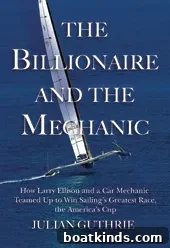
Ellison’s success underscores how billionaires can shape the Cup by funding elite teams and recruiting top talent. Yet sometimes victory hinges on unexpected partnerships. Julian Guthrie’s new book, The Billionaire and the Mechanic — published by Grove Press and due out at the end of June — traces one such unlikely alliance that began in 2000. At its center are two very different men: Larry Ellison and Norbert Bajurin, a radiator repair shop owner of Croatian descent who became commodore of San Francisco’s Golden Gate Yacht Club.
Bajurin inherited a yacht club struggling with debt and diminished clout, overshadowed by longer-established institutions like the St. Francis Yacht Club. Ellison, meanwhile, needed a club to represent his America’s Cup challenge. Their partnership was mutually advantageous: Ellison gained the sponsorship and control he required to run an aggressive Cup campaign, while Bajurin secured much-needed financial stability for his blue-collar club. Guthrie presents this convergence as a turning point that set the stage for American Cup campaigns to unfold on San Francisco Bay.
Guthrie blends personal history with documentary reporting. She delves into Bajurin’s family background and the formative influence of his father, capturing how a working-class upbringing shaped his determination. At the same time, she draws heavily on interviews with Ellison and members of his team to reconstruct the campaign’s drama. Guthrie recounts the difficulties she faced gaining access to Ellison — a notoriously private figure — and how persistence finally led to hours of candid conversation. Those interviews supply much of the book’s color, from the technical demands of modern yacht racing to the personalities who drive results.
Although much of the narrative concentrates on the high-stakes world of elite sailing, Guthrie frames the sport as a backdrop for a human story of ambition, loyalty and rivalry. Ellison’s obsession with winning — and the lavish resources he deployed to secure victory — is shown alongside Bajurin’s pragmatic efforts to rescue his club. The contrast between billionaire patron and working-class commodore gives the book broader appeal beyond die-hard sailing enthusiasts, making it a compelling read for anyone interested in leadership, competition and the dynamics of power.
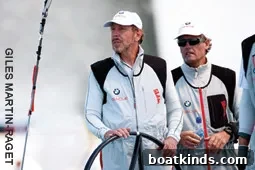
Guthrie also explores the inner workings of Ellison’s campaigns: the recruitment of top figures such as CEO Russell Coutts and helmsman Jimmy Spithill, the changes in leadership after early defeats, and the view that running a Cup campaign is akin to running a high-stakes business where only first place counts. She portrays Ellison as a relentless competitor who relishes the fight — a trait echoed by friends and fellow athletes who admire his refusal to accept anything but victory. Interwoven into the sporting narrative are personal vignettes, including Ellison’s friendship with Steve Jobs and how those conversations and walks informed his thinking outside of sailing.
The Billionaire and the Mechanic succeeds as both a detailed account of modern America’s Cup campaigns and a character-driven portrait of two men at opposite ends of the social spectrum joined by a common goal. Guthrie’s reporting brings to life on-board moments during races and the pressure-cooker environment that defines elite yacht racing. Yet the book never loses sight of the human stakes — the sacrifices, the rivalries and the fragile loyalties that lie beneath the spectacle.
One lingering question the book leaves open is when Ellison will decide to step away. He compares his Cup involvement to “a dog getting on a bus” — enjoying the ride but unsure when he will get off. That uncertainty captures the magnetic pull the America’s Cup exerts on its most devoted patrons and reminds readers that, for some competitors, the chase is as compelling as the prize.
July 2013 issue