
Upgrade Your Boat’s Freshwater System: Replace Polybutylene and Qest Fittings with PEX and SharkBite
Many older boats still rely on original freshwater plumbing made from polybutylene tubing and Qest-style fittings. These systems are notorious for developing cracks and leaks over time. Repairs are often temporary: fixing one coupling or a short length of polybutylene can simply move the leak to another spot. For long-term reliability, replacing as much of the old system as you can reach with modern PEX tubing and SharkBite push-to-connect fittings is the most effective solution.
PEX (cross-linked polyethylene) paired with SharkBite fittings offers a straightforward, durable option for onboard plumbing. PEX is flexible, resistant to corrosion, and available in color-coded tubing—red for hot water and blue for cold—making installation and maintenance easier. SharkBite push-to-connect fittings eliminate the need for soldering, crimping, or complicated unions; you simply cut the tubing square, deburr it, and push it into the fitting for a watertight seal.
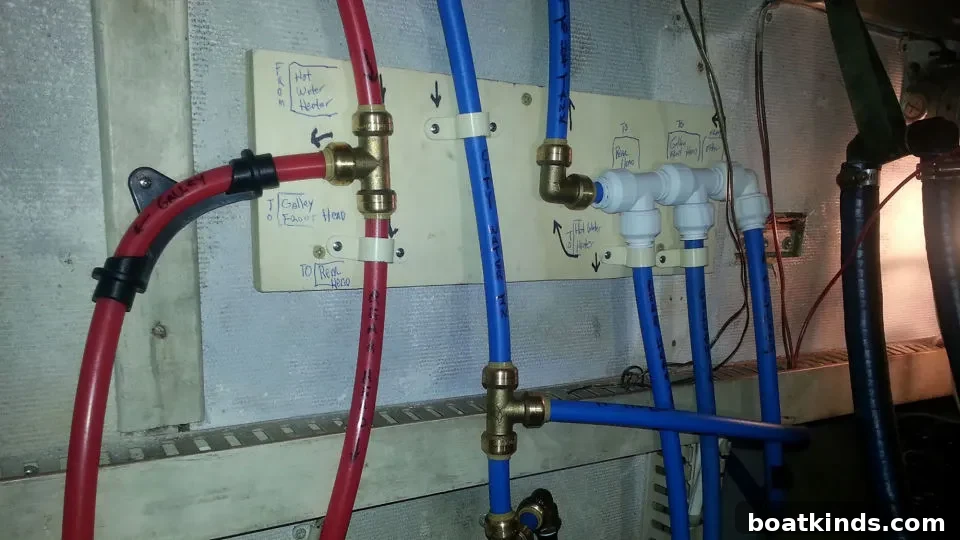
Before you begin a conversion, decide how much of the existing polybutylene system you can realistically remove. If replacing the entire circuit isn’t possible, terminate the old lines where they are accessible and transition to PEX using SharkBite fittings. SharkBite and similar push-fit connectors are compatible with polybutylene, and many hardware stores sell conversion fittings clearly labeled for poly-to-PEX connections. That lets you phase the work, reduce downtime, and focus on the most failure-prone sections first.
Tools are minimal but important. Invest in a proper PEX/tubing cutter—typically $10 to $15—which produces a clean, square cut. A square cut is essential for a secure SharkBite connection. You’ll also want a deburring tool and depth gauge, usually around $10, to remove rough edges and mark how far the tubing must be inserted into each fitting. Skipping these tools to save money is a false economy: irregular cuts or improperly seated tubing are common causes of future leaks.
Material costs vary, but PEX is inexpensive and SharkBite fittings are a bit pricier. Expect to pay roughly $10 for a 10-foot section of ½-inch PEX tubing and around $7 to $8 for a simple ½-inch SharkBite coupling. Given the time and frustration saved—and the reduced risk of recurring leaks—many owners find the investment well worth it.
During installation, follow a few practical tips to ensure a reliable outcome. Always measure and mark tubing with a depth gauge before inserting it into a fitting, and push until the stop is reached. Test the system under pressure after the upgrade and inspect every joint for signs of seepage. Protect PEX from chafe where it passes through bulkheads or near sharp edges, and secure runs with appropriate clamps or straps to prevent movement and reduce stress on fittings.
PEX has excellent thermal and chemical resistance for marine applications, but like any material, it benefits from careful routing and periodic inspection. Keep hot and cold lines properly identified to avoid cross-connection and ensure efficient hot-water delivery. If you’re unsure about routing in confined engine compartments or near heat sources, consult an experienced marine technician for guidance on insulation or heat shielding.
In short, converting older freshwater systems from polybutylene and Qest fittings to PEX with SharkBite connectors is a practical, modern upgrade. It reduces the likelihood of frustrating, recurring leaks and simplifies future repairs. Replace what you can, use the right tools, and take your time seating each connection properly. The result is a more dependable freshwater system and fewer sleepless nights worrying about leaks under the sole.
This advice previously ran in Power & Motoryacht magazine.