
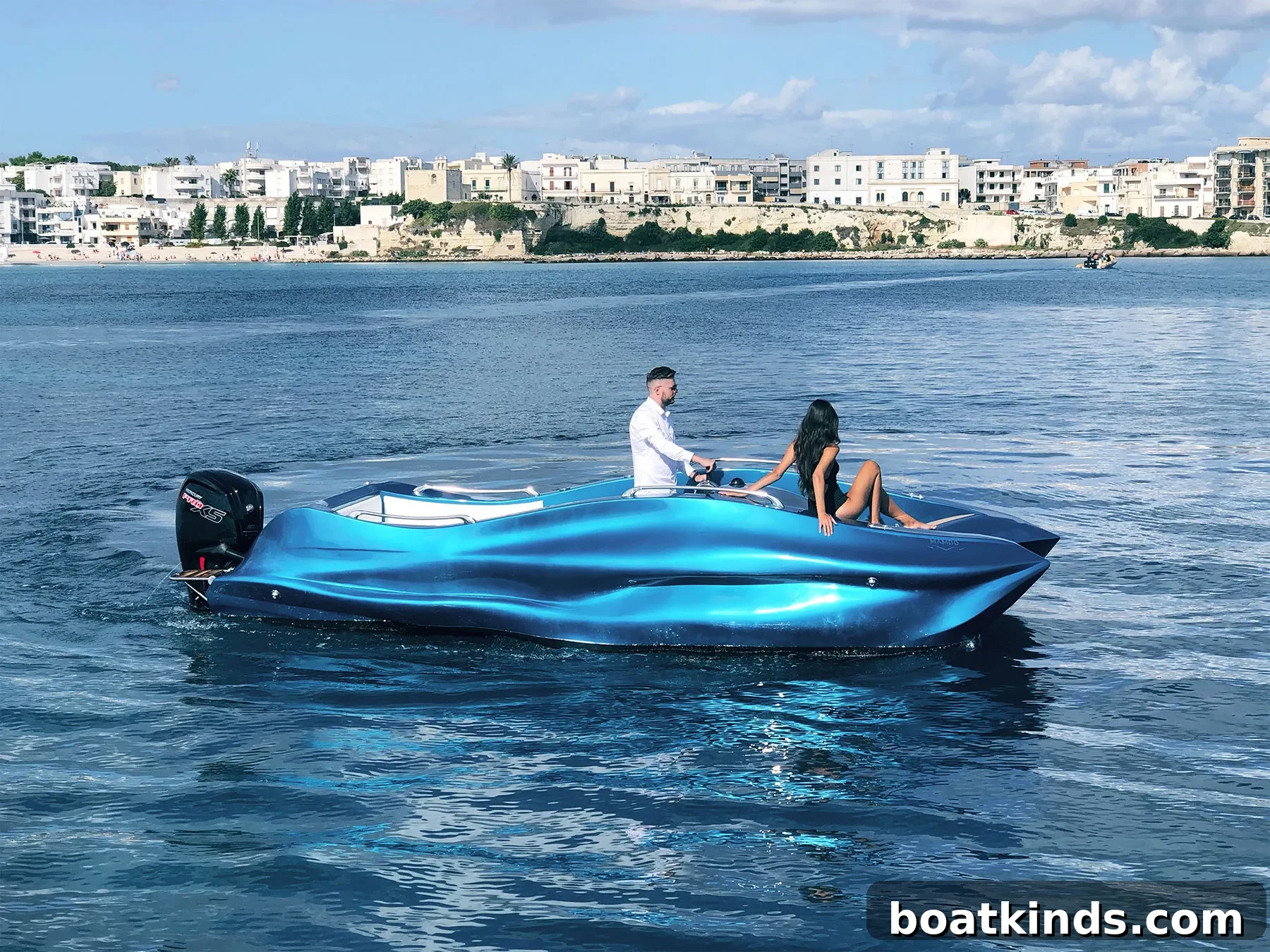
Mambo: Italy’s First 3D-Printed Fiberglass Boat and a New Direction for Additive Boatbuilding
About a year ago the marine world admired 3Dirigo, a 25-foot 3D-printed boat built by the University of Maine and produced in a single run on the largest prototype polymer 3D printer at the time. That project demonstrated the scale possible with additive manufacturing and used recyclable biofiber-reinforced material to produce a 5,000-pound hull in one piece.
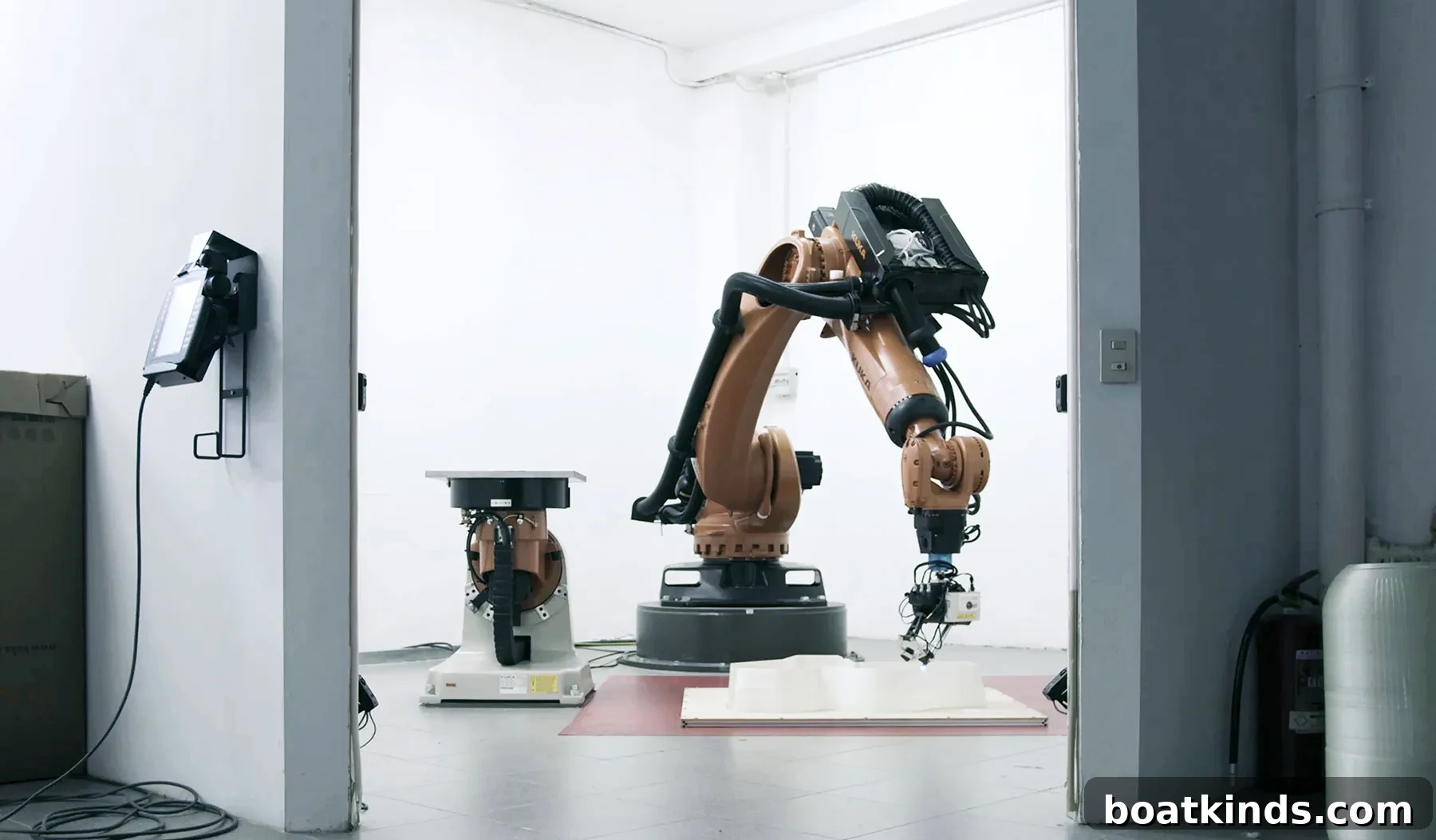
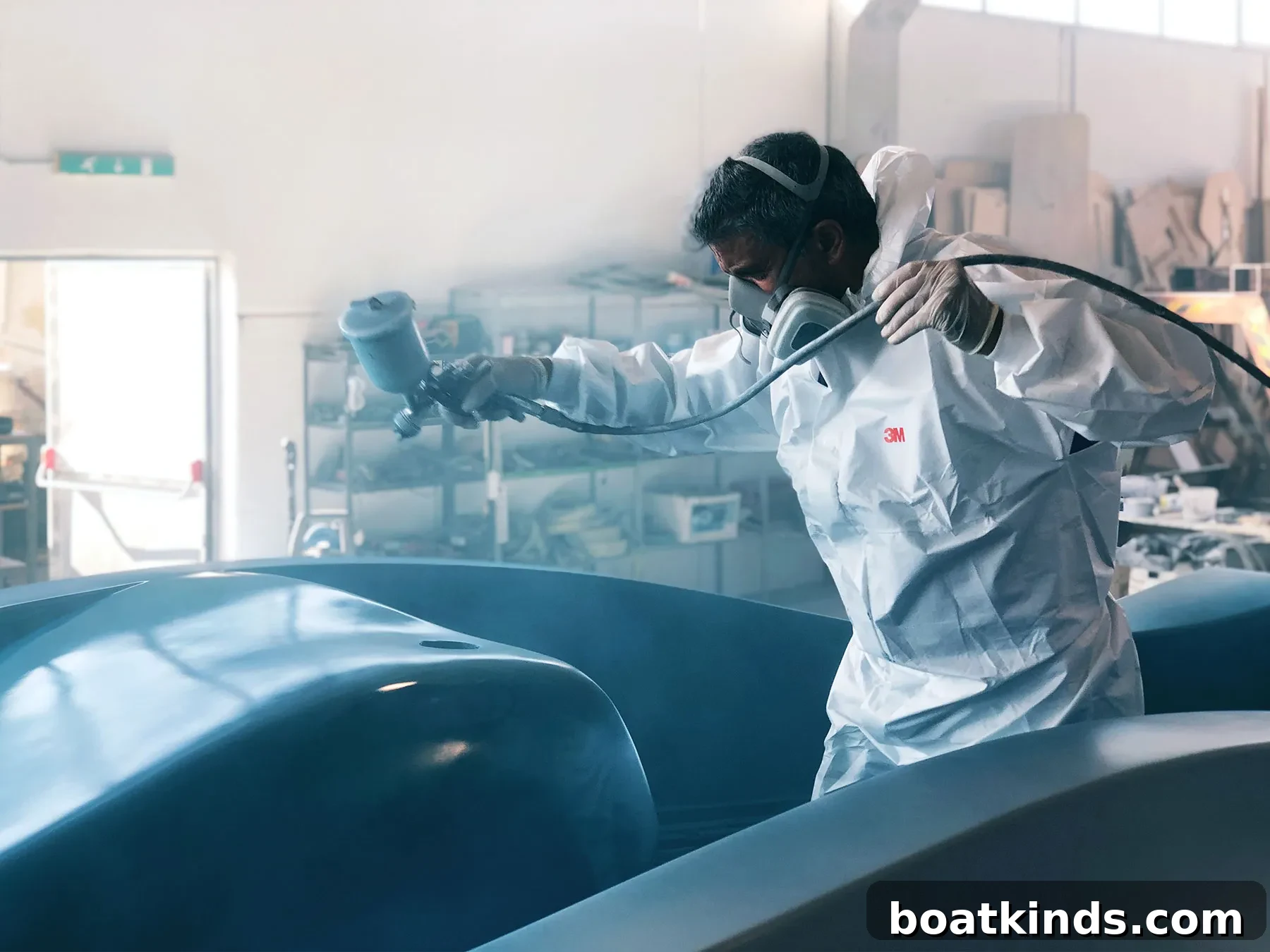
Now an Italian startup is presenting a different approach. At the Genoa International Boat Show in October, Moi Composites unveiled Mambo — Motor Additive Manufacturing Boat — which the company describes as the world’s first 3D-printed fiberglass boat. Rather than printing a complete hull in one continuous process, Moi Composites printed modular sections with robots, then joined and laminated those pieces before adding the decks, interior fittings, leather seats and final styling touches.
Mambo is shorter than 3Dirigo at 21 feet, 4 inches overall and considerably lighter—under 1,800 pounds—thanks in part to the way it was produced and finished. The modular approach also enabled more sculpted lines and a sleeker profile that attracted steady attention at the show. “We wanted to show that you can print any unique boat that you like,” says Gabriele Natale, president and CEO of Moi Composites. “The reaction was great. As an additive manufacturing technology, you need to demonstrate that the boat can navigate, and this is what we decided to do. The boat was floating, and you could navigate for real.”
The contrast between 3Dirigo and Mambo highlights two paths for marine 3D printing. The single-piece print demonstrates speed and scale—3Dirigo was completed in approximately 72 hours—while the sectioned robotic method that produced Mambo allows greater stylistic freedom and significant weight savings, albeit over a longer timeline. Mambo’s construction took several months, with work progressing in intervals as the company balanced other projects. Natale estimates that producing the largest section in future runs could take about two months under current conditions.
Moi Composites is developing and refining its Continuous Fiber Manufacturing (CFM) process. Today the company can print sections roughly 6½ feet by 5 feet by 5 feet. Natale says the process scales with larger robots and can be adapted to produce additional sections as needed for bigger vessels. Founded in Milan in 2018, the young company is already exploring applications for its technology beyond marine use, including aerospace, energy and biomedical projects.
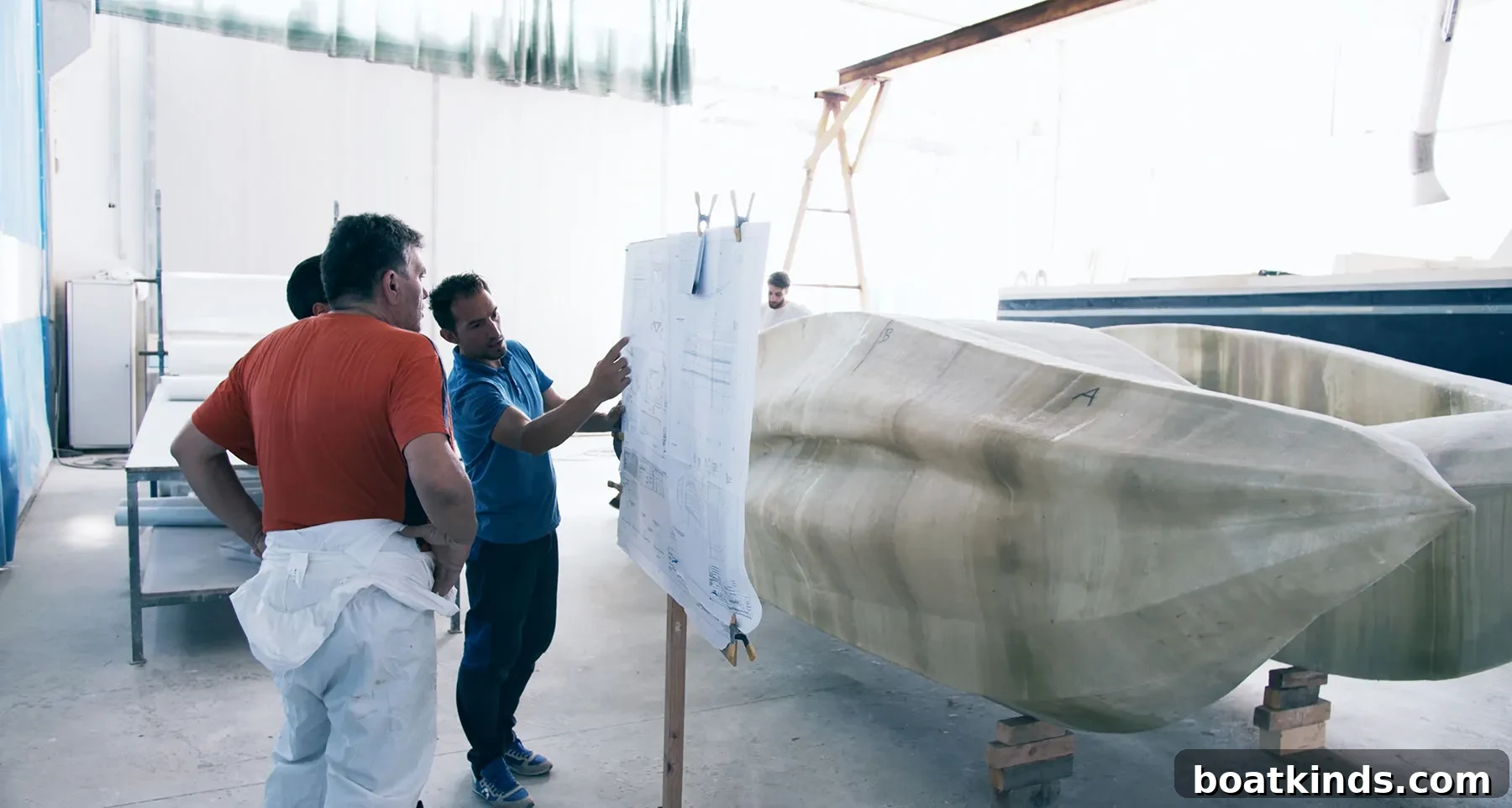
CFM opens design possibilities that are difficult or prohibitively expensive with traditional mold-based methods. Natale envisions a shift in boatbuilding labor: fewer routine shipyard tasks performed by humans and more creative roles for designers who can stretch the boundaries of hull forms and onboard layouts. “There are many designers with great ideas that remain only digital models because production limits stop them,” he explains. “This technology gives them a chance to produce those designs.”
Producing Mambo involved several industry partners. Autodesk provided software support, Italian shipyard Catmarine and design firm Micad contributed to the vessel’s design, Osculati supplied accessories, Mercury Marine provided the outboard engine, and Owens Corning brought expertise in fiberglass composites.
Mambo’s hull follows an “inverted tricycle” concept, drawing inspiration from the Arcidiavolo hulls designed by Renato “Sonny” Levi in the 1970s and later interpretations such as the Arcidiavolo GT. While Mambo is not a racing boat, its organic, flowing lines echo those racing inspirations. During the Genoa demonstration she reached 26 knots with a single 115-hp Mercury PRO XS outboard; Natale suggests modest adjustments could push that top speed toward 30 knots.
Looking ahead, Moi Composites is focused on certification and market testing. The next step before consumer sales is approval from RINA, the Italian classification and certification agency. Natale says mass production isn’t the immediate goal; instead, the technology is well suited to bespoke builds and limited runs. Custom day cruisers, fishing boats and unique tender designs for superyachts are natural fits for a process that can economically deliver one-off or small-series boats with custom styling.
At Genoa, yacht designers and industry professionals approached Moi Composites with collaboration ideas, signaling curiosity about what additive manufacturing could enable in boat design. Natale is listening closely to market feedback to understand how much demand there is for truly unique, printed boats. “Why print a standard boat when you can print anything you want?” he asks. For owners who want a tender that complements a bespoke yacht or buyers seeking a distinct small cruiser, 3D-printed fiberglass boats like Mambo offer an intriguing new option.
This article was originally published in the January 2021 issue.