
Federal Stimulus Brings Major Dredging Investment for Boaters and Waterways
The federal stimulus package included in the American Recovery and Reinvestment Act of 2009 is providing a valuable boost to recreational boaters and coastal communities by directing significant funds toward dredging and waterway repair. About $1.9 billion of the $787 billion stimulus package has been earmarked specifically for dredging projects, as part of a larger $4.6 billion allocation to the U.S. Army Corps of Engineers for the rehabilitation of the nation’s waterways, flood-control infrastructure, hydroelectric facilities and Corps-managed lakes and recreation areas.
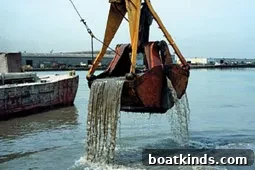
The infusion of funds is intended to address years of deferred maintenance and to create jobs quickly by accelerating projects that are already far enough along in planning to proceed without delay. According to program estimates, the selected projects include 892 operation-and-maintenance efforts and 178 construction projects. Those projects are expected to support approximately 57,400 jobs directly and another 64,000 jobs indirectly, helping to stimulate local economies while restoring navigable channels and public recreation areas.
Neglected maintenance has left many harbors, channels and shallow-draft waterways vulnerable to shoaling and sedimentation, forcing boaters to take longer routes or avoid certain areas entirely. Ryck Lydecker of BoatU.S., who serves as vice chairman of the Atlantic Intracoastal Waterway Association (AIWA)—a 200-member organization that advocates for the Atlantic Intracoastal Waterway (ICW)—says the backlog of deferred dredging has been a long-standing problem.
“Several hundred harbors are authorized for routine dredging,” Lydecker says. “But they have not been maintained. It has been hit-or-miss.” He and other advocates say that small-boat commercial traffic—fishing boats, towboats, water taxis—and recreational boaters all rely on timely maintenance dredging to keep waterways safe and accessible.
AIWA executive director Rosemary Lynch, who has led the organization for a decade, called the federal attention to dredging “a longtime dream come true.” Lynch expects most of the projects funded by the stimulus to be underway by September, noting that the selection criteria favored projects that could move forward quickly and put people to work right away. “Boaters will definitely see relief soon,” she said.
The Atlantic Intracoastal Waterway stands to benefit significantly from the allocation. Shoaling has been particularly severe in portions of North Carolina, South Carolina and Georgia, and AIWA chair David Roach emphasized that securing funds for Georgia projects is especially welcome. The immediate stimulus dollars are aimed at reopening and stabilizing critical stretches of the ICW and other navigation channels that have been impaired by sediment accumulation.
While the stimulus money is a large and necessary investment, advocates caution that it is not a substitute for reliable, ongoing funding. Roach and others stress the importance of restoring steady annual appropriations for routine maintenance dredging on the Atlantic ICW. They estimate that maintaining the full 1,300 miles of the ICW requires roughly $48 million to $50 million per year—far more than the ICW’s 2009 dredging budget of $10 million. The stimulus provides a much-needed, short-term influx of cash, but long-term planning and consistent funding will be required to keep these waterways navigable.
Restoring consistent maintenance funding would not only protect recreational access and commercial livelihoods but would also reduce the need for frequent emergency or large-scale dredging interventions. Regularly scheduled dredging keeps channels at authorized depths, supports safer navigation, preserves waterfront economies and reduces the long-term costs of more extensive repairs.
For local communities and mariners, the Corps’ plan to prioritize shovel-ready dredging work is expected to deliver tangible improvements in a relatively short period. Projects selected for stimulus support were chosen because they could be implemented quickly and generate immediate employment, with the added benefit of restoring vital navigation corridors for recreational and small-boat commercial use.
This renewed focus on waterway maintenance highlights both the economic and recreational value of properly managed coastal and inland navigation systems. The stimulus funding addresses urgent needs and provides momentum for advocates who continue to press for the sustained investment required to keep the nation’s waterways healthy and accessible year after year.
Related article titles:
- Riding the legislative tides
- Boater tax relief bill takes on water
- Shovel ready
This article originally appeared in the Florida and the South Home Waters section of the July 2009 issue.