
Rare Sighting: Pod of Four Orcas Spotted South of Nantucket
An aerial survey team working with the New England Aquarium observed a pod of four orcas approximately 40 miles south of Nantucket. Encounters with killer whales in North Atlantic waters are uncommon because the regional population is small, so this encounter was particularly meaningful for the researchers involved.
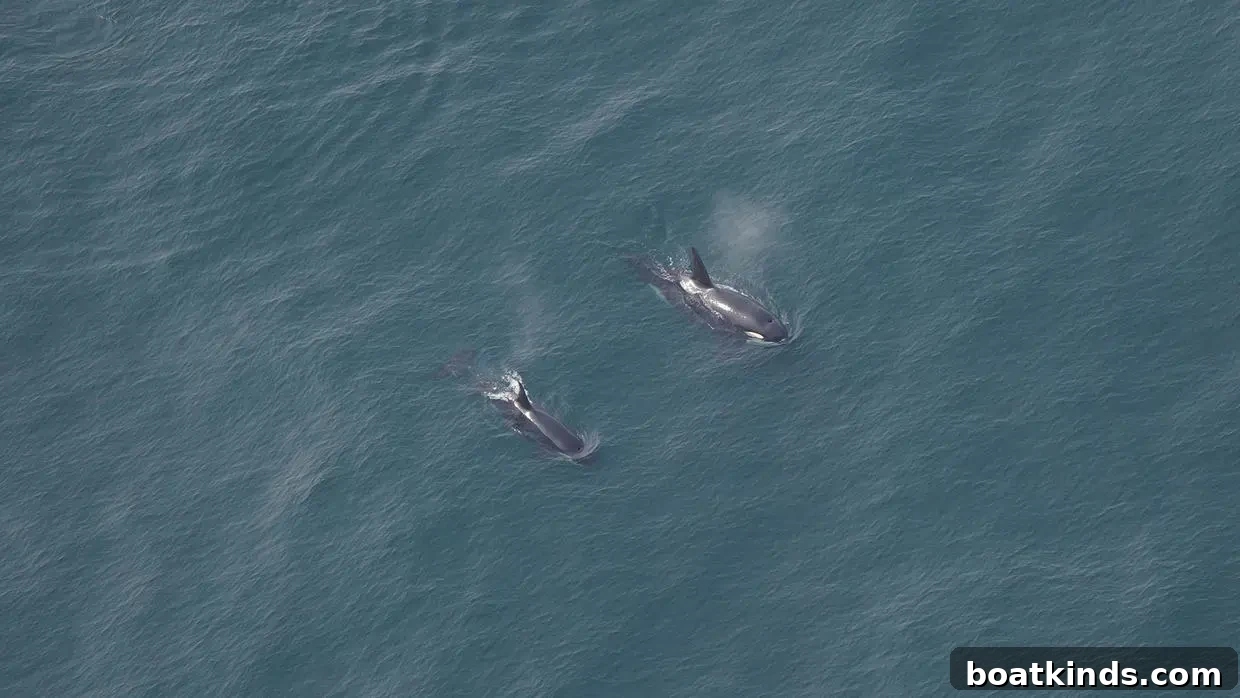
Orla O’Brien, an associate researcher leading the aerial team, said she believed the group consisted of two males and two females, though that assessment has not been formally confirmed. “Seeing them swim in formation was just unreal,” O’Brien said. The organized movement and coordinated swimming patterns stood out to the team, providing a clear window into social behavior during the sighting.
Why the Sighting Matters
In the North Atlantic, killer whales are not as frequently encountered as they are in some other ocean regions. Their lower numbers in these waters make each verified sighting an opportunity to gather important observational data. Aerial surveys allow researchers to document group size, composition, location, and behavior without disturbing the animals, and this pod of four offered a valuable snapshot of orca life in the region.
Seeing orcas travel together in a coordinated formation can reveal information about their social bonds, hunting strategies, and group dynamics. While the team’s immediate observations focused on confirming the number and likely sex composition of the whales, the footage and notes collected during the survey will support follow-up analysis by the New England Aquarium and collaborating scientists.
Local Context: Gulf of Maine and Bay of Fundy
The area south of Nantucket sits within a broader marine region that includes the Gulf of Maine and, farther north, the Bay of Fundy. These waters are known for their seasonal productivity and diverse marine life. Individual killer whales sometimes move through these areas, and their occurrences are of interest to researchers tracking movement patterns and habitat use. The New England Aquarium team routinely conducts aerial surveys to monitor marine megafauna and to understand how animals use the region.
Familiar Faces: “Old Thom” and Regional Sightings
One orca that has been observed regularly in these waters is known to researchers as “Old Thom.” Described as a large male killer whale, Old Thom is often found alone in the Gulf of Maine and Bay of Fundy. Sightings of solitary individuals like him are part of the broader picture researchers are building about orca presence and behavior in the North Atlantic.
Comparing encounters with lone individuals to group sightings—such as this pod of four—helps scientists better understand the variability in orca social structure and movement across seasons. Each observation contributes to a larger dataset that supports ongoing monitoring and conservation efforts.
Research and Conservation Implications
Documented encounters provide multiple benefits: they help researchers update occurrence records, inform potential protective measures, and raise public awareness about marine conservation. The New England Aquarium’s aerial team collects imagery and notes that can be reviewed in detail to confirm identifications and to study behavior. When sightings are rare, the added data value grows, helping to clarify how often and where orcas appear in the region.
While this sighting does not by itself change our understanding of the broader population, it underscores the importance of regular monitoring and the role of aerial surveys in filling observational gaps. Continued, careful observation supports science-based decisions about managing human activities and protecting important marine habitats.
Looking Ahead
The researchers on the flight emphasized that while this pod encounter was exciting, it represents one piece of a larger, ongoing effort to document and study marine mammals in the North Atlantic. Additional surveys and collaborative work will help validate initial observations, refine individual identifications, and contribute to long-term datasets.
For now, the images and observations from this flight stand as a memorable example of why field surveys matter: they capture rare moments in the lives of wide-ranging marine species and provide the raw information scientists need to better understand and protect them.