
A23a: The World’s Largest Iceberg Is Finally on the Move
A23a, the largest iceberg on record, has begun moving for the first time in more than thirty years. Covering roughly 1,500 square miles—slightly larger than the U.S. state of Rhode Island—the block of ice calved from the Filchner-Ronne Ice Shelf in West Antarctica in 1986. Since then it has rested on the floor of the Weddell Sea, but recent observations show the iceberg has regained enough buoyancy to lift off and be carried by ocean currents.
How an Iceberg Gets Stuck and What Changed
When large pieces of ice break away from an ice shelf—a process called calving—they can either drift freely or become grounded where the seafloor is shallower than their draft. A23a spent decades grounded in the Weddell Sea, effectively immobilized. Over time, slight melting, internal structural changes, or reduced sea-ice pressure can alter an iceberg’s buoyancy and stability. According to Oliver Marsh, a British glaciologist with the Antarctic Survey, A23a likely thinned just enough to lift clear of the seafloor and be set in motion by surrounding currents.
Where A23a Is Likely to Travel
Once freed, A23a is expected to enter the Antarctic Circumpolar Current, the dominant eastward-flowing current that encircles Antarctica. This current can carry large icebergs into a corridor often referred to as “iceberg alley,” which leads toward the open Southern Ocean. From there, the iceberg’s path will depend on prevailing winds, local currents, and any breakup that might occur as it moves into warmer or more turbulent waters.
Potential Destinations and Risks
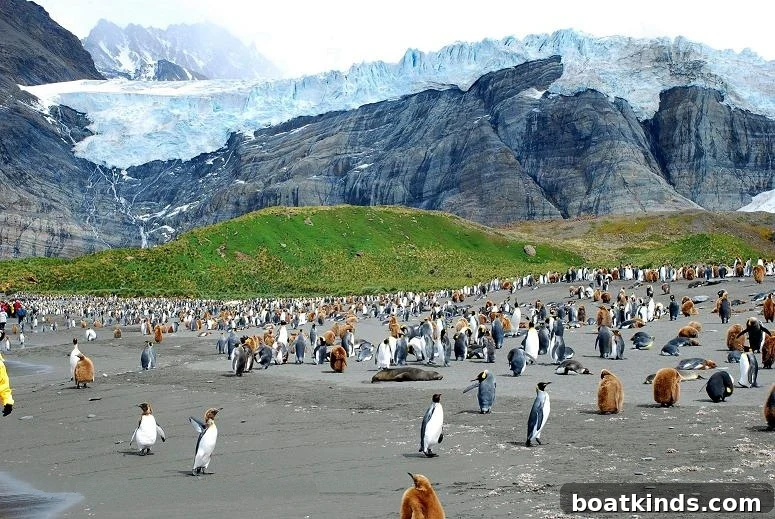
Scientists are monitoring whether A23a could make its way toward the sub-Antarctic islands. One particular concern is South Georgia Island. If the iceberg grounds near South Georgia, it could create significant ecological challenges: large grounded icebergs can block access to coastal feeding and breeding grounds used by seals, penguins, and seabirds, and can alter local ocean circulation and nutrient flows. Alternatively, A23a may fracture into smaller pieces as it drifts, which could reduce the risk of a single massive grounding but increase the number of moving hazards.
Why This Matters
Beyond immediate ecological impacts, a drifting iceberg of this size has implications for maritime safety and scientific monitoring. Large icebergs can pose navigational hazards for ships operating in the Southern Ocean and nearby shipping lanes. For researchers, the movement of A23a offers a rare opportunity to study long-lived tabular icebergs from their birth at an ice shelf through decades of drift, grounding, and eventual decay.
Monitoring and What Scientists Are Watching
Teams at institutions such as the Antarctic Survey are tracking A23a’s progress using satellite observations and oceanographic data. Monitoring focuses on the iceberg’s speed, direction, structural integrity, and interactions with sea ice and coastal features. Keeping close watch helps researchers anticipate ecological impacts, assess risks to shipping, and gather information that improves understanding of how large icebergs influence Southern Ocean processes.
What to Expect Next
At present, the future of A23a remains uncertain. It may survive long enough to travel into more temperate Southern Ocean waters, as some glaciologists suggest, or it may break into smaller pieces that disperse over a wider area. Scientists will continue to study its trajectory and behavior to better predict outcomes and advise maritime and conservation stakeholders accordingly.
As A23a begins this long journey, its movement is a reminder of the dynamic nature of polar environments and the complex links between ice, ocean currents, and ecosystems. Continued observation will reveal how a decades-long iceberg awakens and interacts with the changing Southern Ocean around it.