
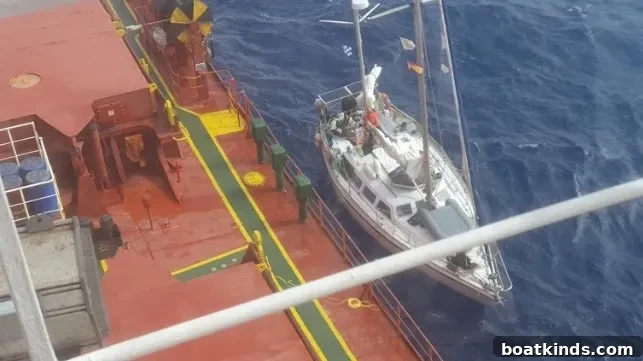
Bulk Carrier Sunda Rescues Four People and a Dog After Sailboat Engine Failure in the Atlantic
On January 10, the crew of the bulk carrier Sunda conducted a successful at-sea rescue of four people and their dog after the sailboat they were on suffered an engine failure in the middle of the Atlantic Ocean. The incident highlights the importance of effective communication, seamanship, and the long-standing maritime obligation to assist vessels in distress.
Initial Contact and Decision to Wait for Safer Conditions
Captain Ivan Versic of the Sunda first established contact with the disabled sailboat via VHF radio. After assessing the situation and consulting with his crew, he made the prudent decision to postpone an immediate boarding attempt until conditions improved. Poor weather and sea state can make transfers between a large merchant vessel and a small yacht extremely hazardous, so the captain opted to remain on scene and stand by overnight.
Nighttime Escort and Preparedness
After making visual contact with the sailboat on the same day, the crew of the Sunda kept the merchant vessel close through the night to provide assistance if the situation worsened. Remaining nearby allowed the bulk carrier to offer protection, stabilize the scene, and be ready to act quickly once conditions permitted a safe transfer. The decision to maintain proximity rather than attempt a risky transfer immediately reflects standard maritime safety practice.
Rescue Transfer Despite Challenging Weather
The following day, despite continued difficult conditions that made aligning the yacht and the ship problematic, the transfer was completed successfully. All four passengers and their dog boarded the Sunda without injury. Crews on merchant ships are often trained for emergency transfers and use careful seamanship and communication to manage the significant risks associated with bringing people aboard in open water and adverse weather.
Arrival in Brazil and Abandonment of the Yacht
The Sunda continued to Brazil and disembarked the rescued passengers at the port of Macapá, situated at the mouth of the Amazon River. According to reports, the sailors abandoned their sailing yacht in the ocean. The circumstances surrounding the abandonment—whether due to irreparable mechanical failure, structural damage, or safety considerations—were not detailed by the rescuers. Leaving a disabled vessel at sea is sometimes unavoidable when salvage is impractical or hazardous to attempt.
Maritime Duty to Assist and Practical Considerations
This event underscores a fundamental principle of maritime operations: vessels are expected to render assistance to people in distress at sea whenever it is safe to do so. International maritime conventions and long-established maritime tradition place a duty on seafarers and shipmasters to respond when lives are at risk. At the same time, masters must weigh the safety of their own ship and crew, which can necessitate delaying action until conditions are acceptable for a safe rescue.
Challenges of At-Sea Rescues
Rescues between ships and small boats present multiple challenges. Transferring people safely requires careful maneuvering to keep the two vessels aligned without causing collisions, plus the use of life-saving equipment, lines, or rescue crafts when available. Weather, sea state, and vessel size differences complicate every step. The successful outcome in this case—no injuries and everyone safely transferred—reflects effective decision-making by the master and crew of the Sunda and careful cooperation by those rescued.
Final Notes
While it is fortunate that all passengers and their dog were saved, the incident serves as a reminder for recreational mariners to maintain reliable propulsion and emergency communications, to file voyage plans when appropriate, and to carry the necessary safety gear. For commercial crews, routine drills, prompt coordination, and conservative judgments in adverse conditions are critical to saving lives without creating additional danger.