
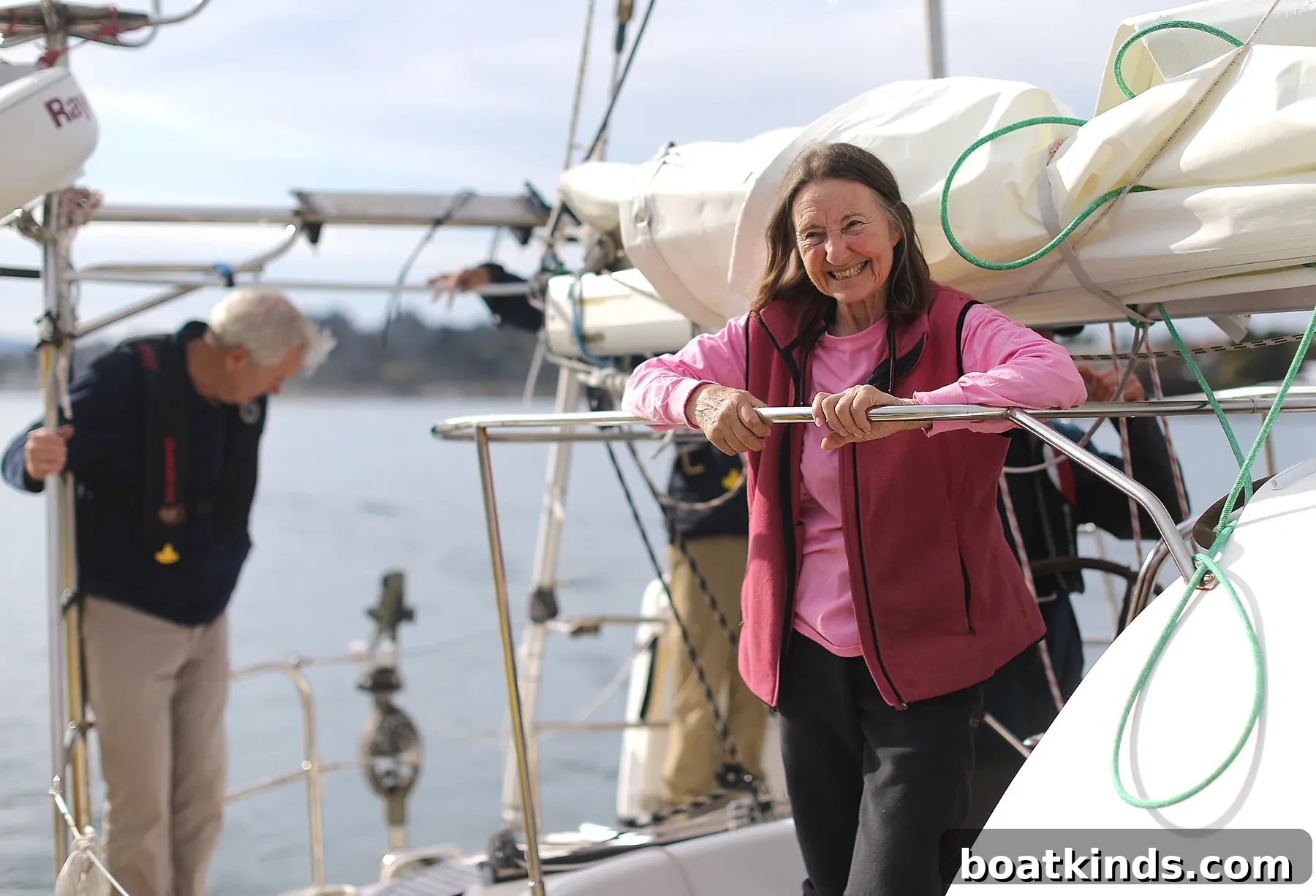
Jeanne Socrates has a focused to-do list. Her boat, Nereida, a 2009 Swedish-built Najad 380, is approaching the point where a significant refit is needed. Her latest ocean passage, from Mexico across the Pacific, left deck fittings and running rigging in need of attention. A full re-rig may be required, and the scope of the work is substantial.
“She’s seen a lot of action,” Socrates says. “She’s been around the world three and a half times, around Cape Horn three times. She’s done pretty well. I need to make sure everything is OK so I can keep cruising.”
Timing is critical. As of early March, Nereida was based on New Zealand’s North Island, waiting for a weather window to sail to Tonga. That window typically reopens in May after the cyclone season; sailing then would put Socrates in the islands about three months before her 82nd birthday in August. She expects to be in Fiji for her birthday, or possibly further on toward New Caledonia.
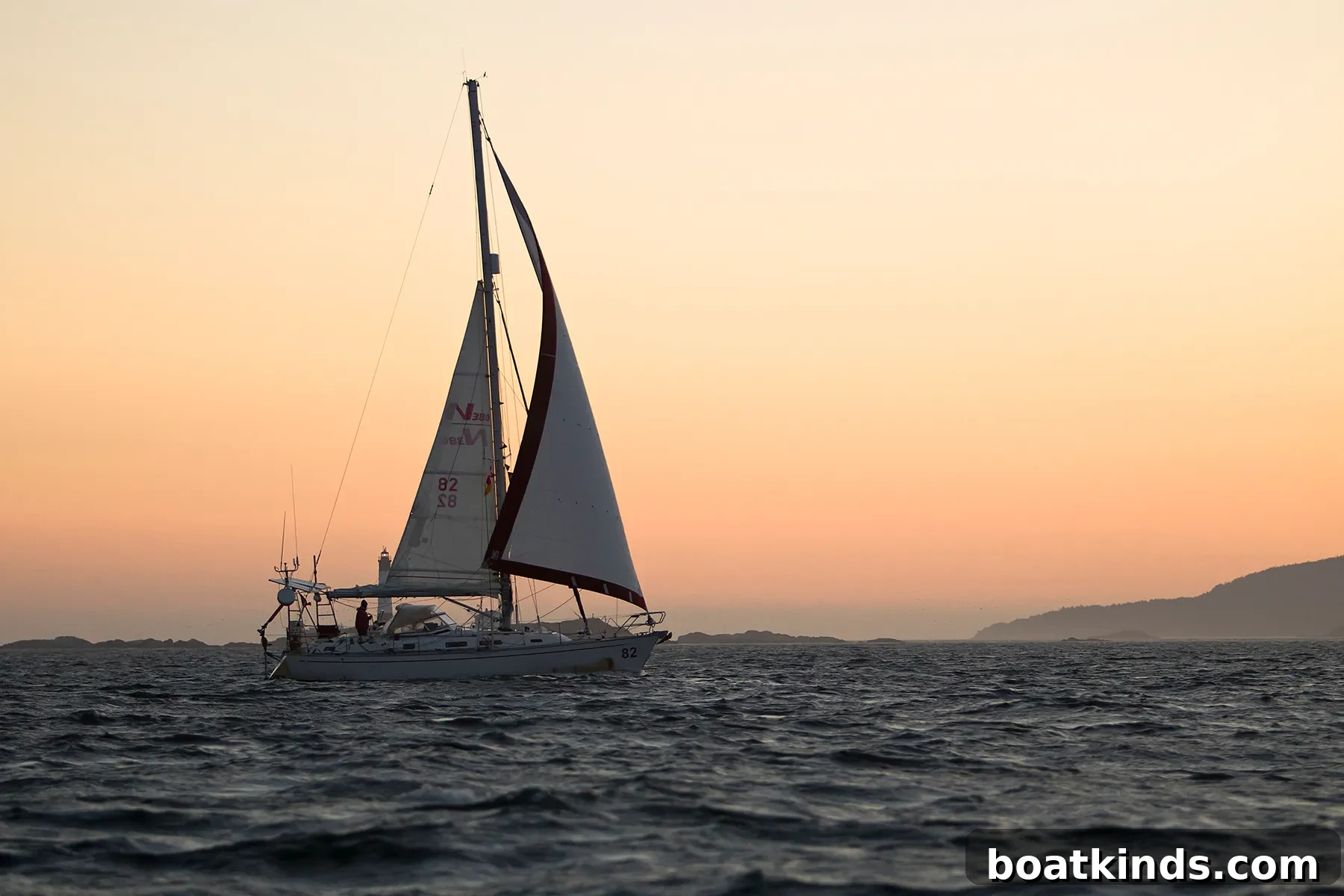
She intends to complete the repairs and island hop before the next cyclone season forces her to head down to Australia. Socrates remembers being stranded in Australia for 25 months during the pandemic, unable to reach Nereida because of travel restrictions. “It was excruciating, being trapped on an island nation without Nereida, and only occasionally being invited out to sail on other people’s rides,” she says. “It would be nice to get the boat there, to actually cruise my boat in Australia. I’m looking forward to going there with my own boat.”
More than a decade has passed since Socrates, at age 70, became the oldest woman to single-handedly sail unassisted nonstop around the world. She still holds that distinction, and she remains the first woman to complete a solo unassisted nonstop circumnavigation starting from North America. Her most recent nonstop circumnavigation concluded in 2019; she resumed single-handed voyaging in May 2023, departing Mexico and crossing the Pacific alone.
This latest voyage feels different to her. It resembles the relaxed cruising she shared with her late husband in the Caribbean before he died in 2003: moving from waypoint to waypoint more slowly, stopping longer to explore each place rather than racing past. “When you’re doing a nonstop, which my last two circumnavigations have been, you’re never setting foot on land anywhere. You don’t get to see anywhere,” she says. On prior nonstop trips, she did stop occasionally but only briefly, and never had the chance to visit New Zealand properly.
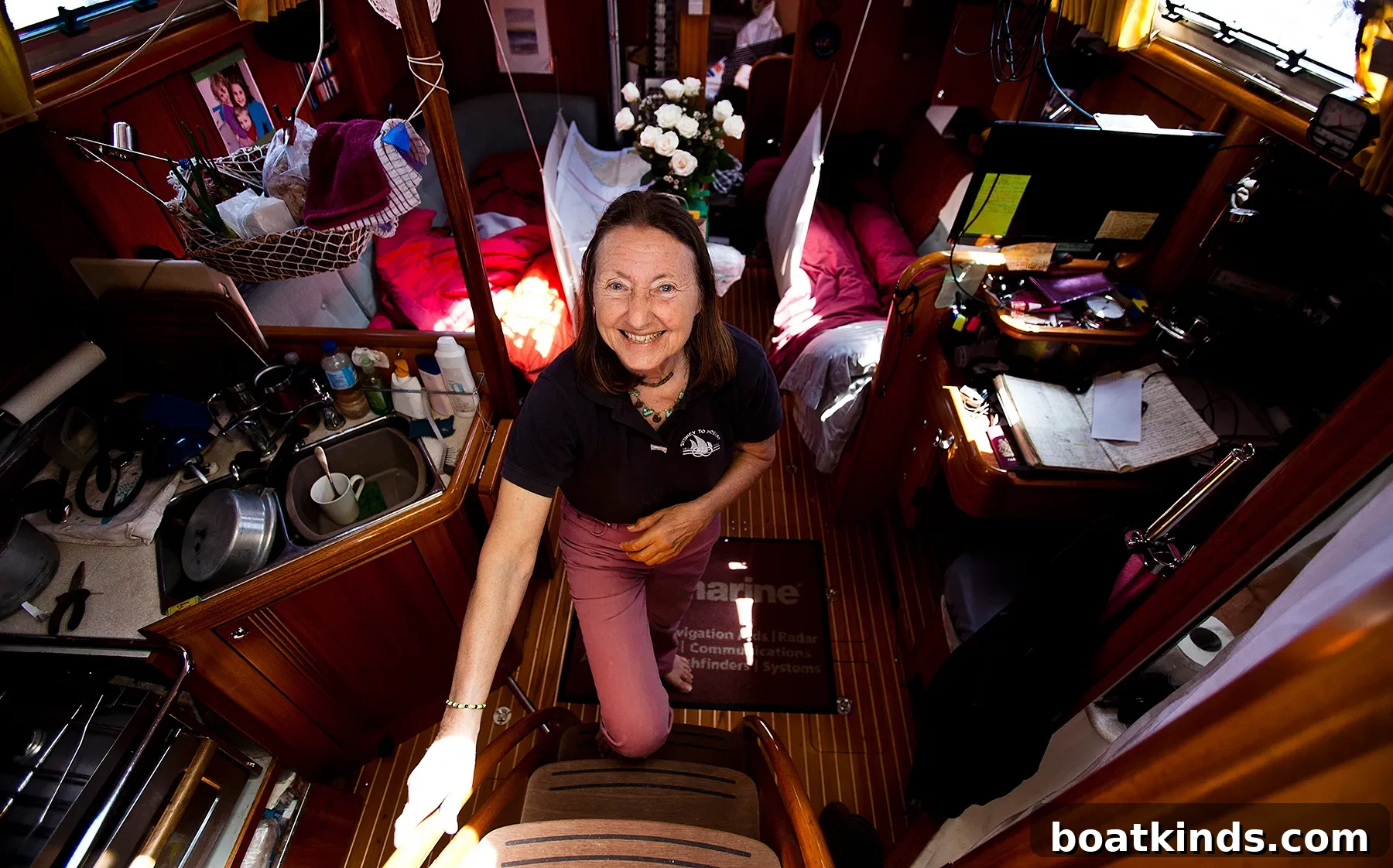
She’s made up for that on this trip, taking time to walk and explore New Zealand’s South Island while Nereida awaited repairs on the North Island. Though she’s rounded the southern waters three times before, this was the first real opportunity to spend an extended time ashore and really get to know the country. “It’s beautiful,” she says.
Sailing solo remains a passion. Aging has made some tasks harder—lifting heavy gear is tougher—but she still handles most sail operations by hand, winching sails manually when possible. She has adopted selective technology: she avoids electric winches, preferring the reliability of manual systems, but she does use an 18-volt cranker drill with rechargeable batteries when needed. “Most of the time I do the hand-winching,” she explains. “I may use my cranker every now and then. It really is lovely to get that last bit of the main up. The torque is such on the drill that you don’t risk damaging the mainsail.”
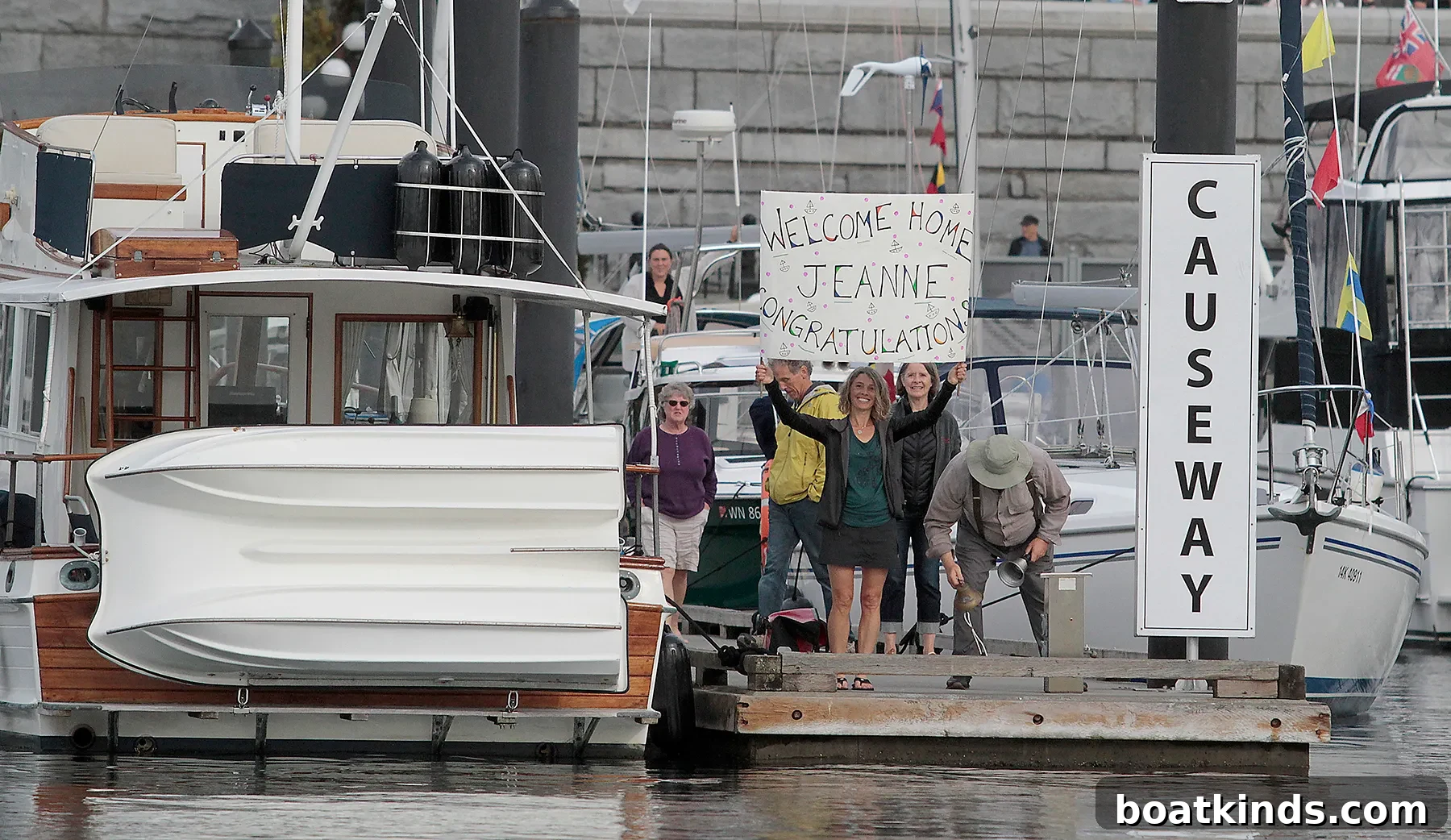
Socrates also contends with ageism at marinas, which she finds more pervasive now than the sexism she faced early in her sailing career. With younger sailors, she has found it effective to introduce herself by mentioning her solo circumnavigations; only then do many view her as an equal. “I was just talking to someone from the Philippines, and she wanted to put some kind of a prefix to my name. She said, ‘In the Philippines, we would add a prefix, something that meant older person as a sign of respect.’ They respect older people there. We don’t have that in the West. We used to, when we believed older people had acquired knowledge and wisdom, but now, the youngsters have no respect for that.”
She’s also noticed a shift in cruising culture. Modern cruisers, she says, are often less community-minded than those she met in earlier decades. She pins part of that change on constant connectivity—satellite services like Starlink let people stay online and stream entertainment constantly—and on GPS, which she believes has eroded some seamanship skills.
“I’m noticing a different breed of people coming into cruising,” she says. “Normally, you go around the anchorages, and it’s nice people and you chat and meet up. A lot of people aren’t in that mode now. The new cruising community, they’re just not into the social life, the getting together. They’ve got their Starlink, so they talk on that and they stream things.”
Socrates is concerned that heavy reliance on GPS and satellite communication can produce complacency. “They have GPS and Starlink, and they just go. They think that’s all there is to it. But they don’t always know the rules of the road, the Colregs. I’ve been quite shocked, really, at the attitudes of these so-called cruisers. They’re not the cruisers I used to know so many years ago, and they’re not as friendly. They need to become mariners and know what they’re doing.”
Despite these changes, Socrates still treasures the fundamental community that cruising can bring. Drop the anchor and the usual shore-based concerns—clothes, status, schedules—fade away. People gather on beaches and dinghies in T-shirts and flip-flops, swapping stories about common experiences, destinations, and boat repairs. “You’ve got common experiences to talk about. Maybe you’re going to the same place, or you’ve had the same problems on your boat. You’ve always got something to talk about,” she says. “If you give friendliness, you get back friendliness. It’s a basic thing that you learn quite quickly as a cruiser. You really have to give what you want to get in return.”
This article was originally published in the June 2024 issue.