
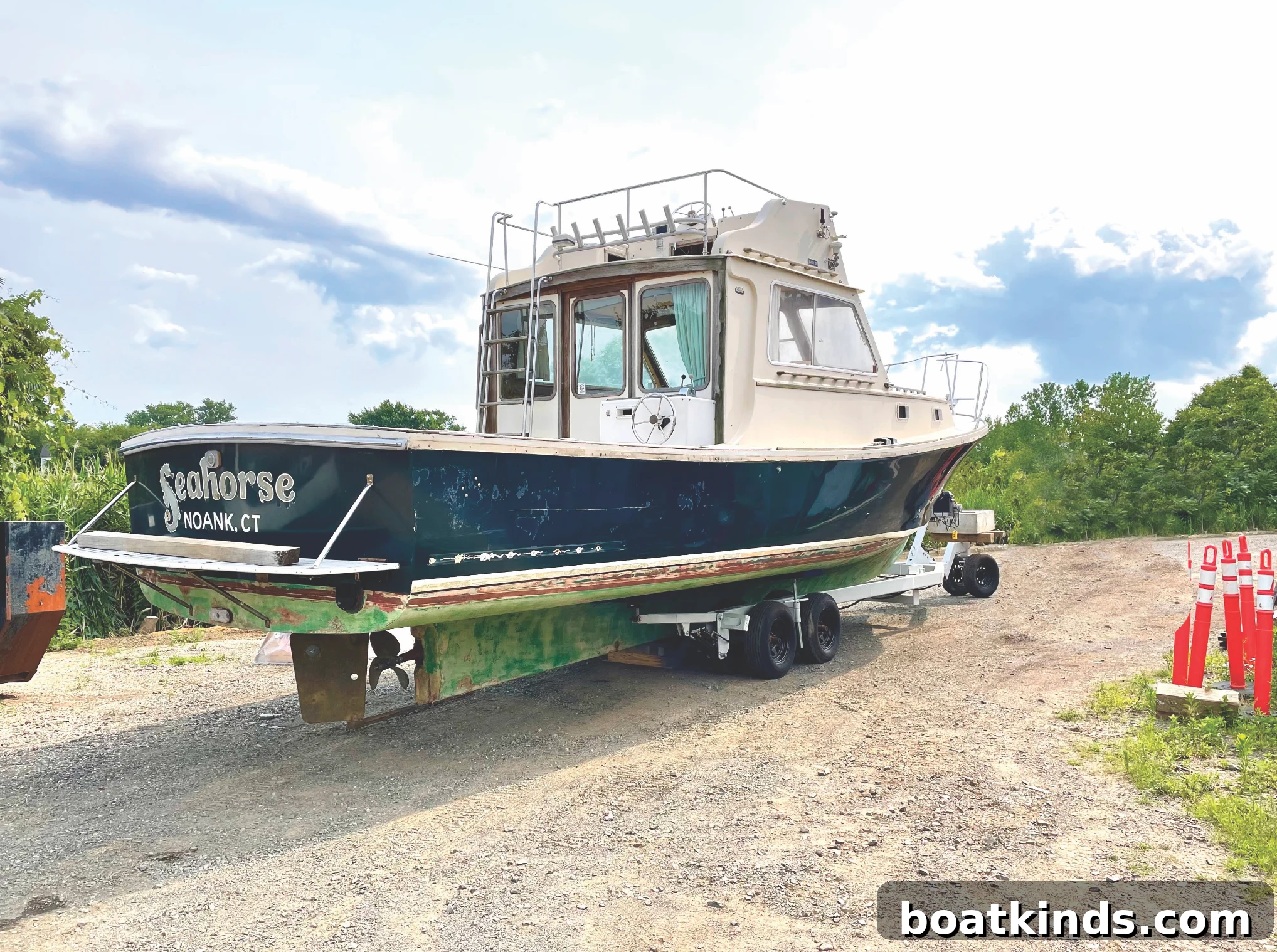
Lauren Tolla struggled to process what her senses were telling her — the sight, the smell, the feel. It was October 2021 when her husband, Tom, convinced her to go see a boat he’d found on Facebook Marketplace. They drove from their Guilford, Connecticut home up to New London, where rain from the previous day had left the vessel soaked and grimy. The 1984 Nauset 35 Downeast bore the name Seahorse, and it was obvious it had been ridden hard and stored wet.
“It was dripping,” Tom recalls. He was in his late 50s then. Lauren, in her early 60s, walked through the interior and turned to him, asking, “Do you think we can do this?”
Tom answered simply, “We can do this.” When the owner asked what they planned to do with the boat, Tom said, “We’re going to make this new again.” That promise launched a three-year rebuild that transformed the salvaged Nauset into a lovingly restored cruiser the couple renamed Resurgence. They relaunched her in July — just in time for their 30th wedding anniversary — and now look forward to family days on Long Island Sound with their four grown children and eight grandchildren.
Why They Could Succeed
The Tollas had three advantages: Tom is an experienced homebuilder and contractor with a fully equipped shop; Lauren is a practical nurse who isn’t afraid of hard work; and both share a deep love of boating. For 25 years they’d owned center-console Grady-White boats, but after selling their last Grady in 2019 the couple was suddenly boatless. Lauren says she was depressed — she loved being on the water. The classic lines of Downeast designs drew them to search for an affordable fixer-upper.
They found the Nauset for $25,000, sold its old engine and components for $10,000, and planned to invest the remaining $15,000 gradually. Once home, the boat barely fit through the overhead door of Tom’s shop — by about three inches — and when they began stripping it down they found far more damage than expected: mold, saturated coring and rotten wood throughout.
From Tarp to Transformation
Originally built in Orleans, Massachusetts, the Nauset featured a Bruno Stillman fiberglass hull and had been configured for fishing charters. The deeper they went, the more the Tollas realized they needed to remove all the compromised core and rebuild the structure. What started as a daunting cleanup turned into an engaging restoration once they began learning modern composites like Divinycell and Coosa and how to marry fiberglass, resin and core materials to create strong, lasting repairs.
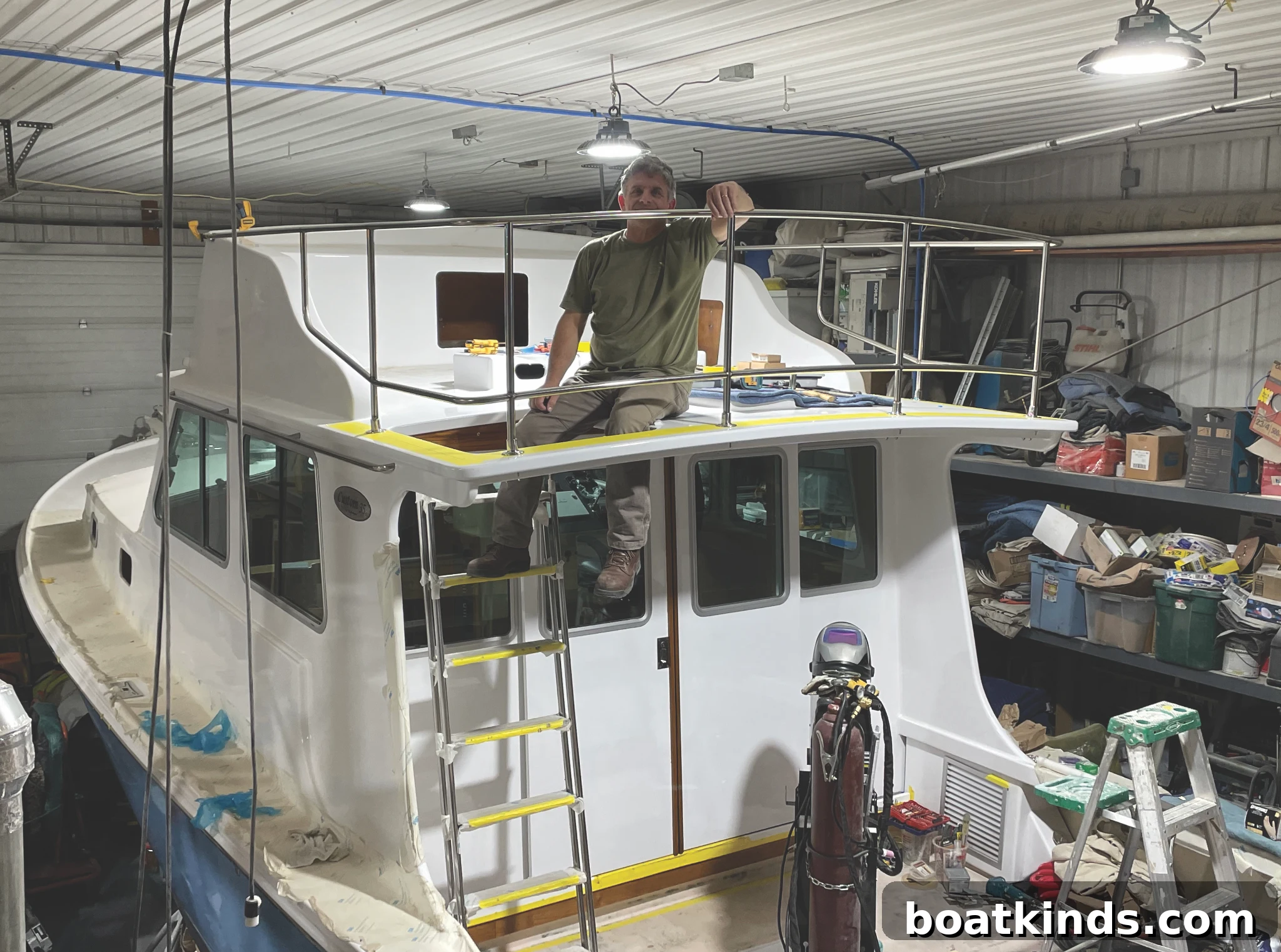
Tom compares the process to restoring a century-old house for a client: the challenge is rewarding when you learn new materials and techniques. They rebuilt the roof, extended the sides of the deckhouse and reconfigured the windows to give the boat updated styling and functionality. A supportive online Downeast Boat Forum became an invaluable resource; retired builders and experienced owners generously shared advice and step-by-step guidance, helping the couple solve problems and avoid costly mistakes.
Learning Fiberglass, Wiring and Engine Work
Neither Tom nor Lauren had prior fiberglass experience, but with mentorship and persistence they learned to lay up cloth and work with resin. “We bought 100 gallons of resin, and rolls of cloth,” Tom says. Nights in the shop sometimes stretched until midnight. Friends assumed they were crazy — and, at times, rebuilding tested their patience — but for most of the process they worked side by side. Lauren jokes she called herself “the boat bitch” near the end of the job, but she was also eager to learn and do whatever tasks were needed.
The most significant challenge was the repower: installing a new 480-hp Cummins QSB5.9 diesel, fitting new gear, aligning the propeller shaft and selecting the right propeller. Again, community contacts helped. A forum connection who was a mechanical engineer reviewed plans and answered questions, and a marine electrician found through another online community advised them on wiring and ABYC-compliant electrical design. The electrician provided written instructions and checked the installation in person, while YouTube and forum posts helped fill technical gaps like patching hull holes and finishing the interior.
Every Part, Every Detail
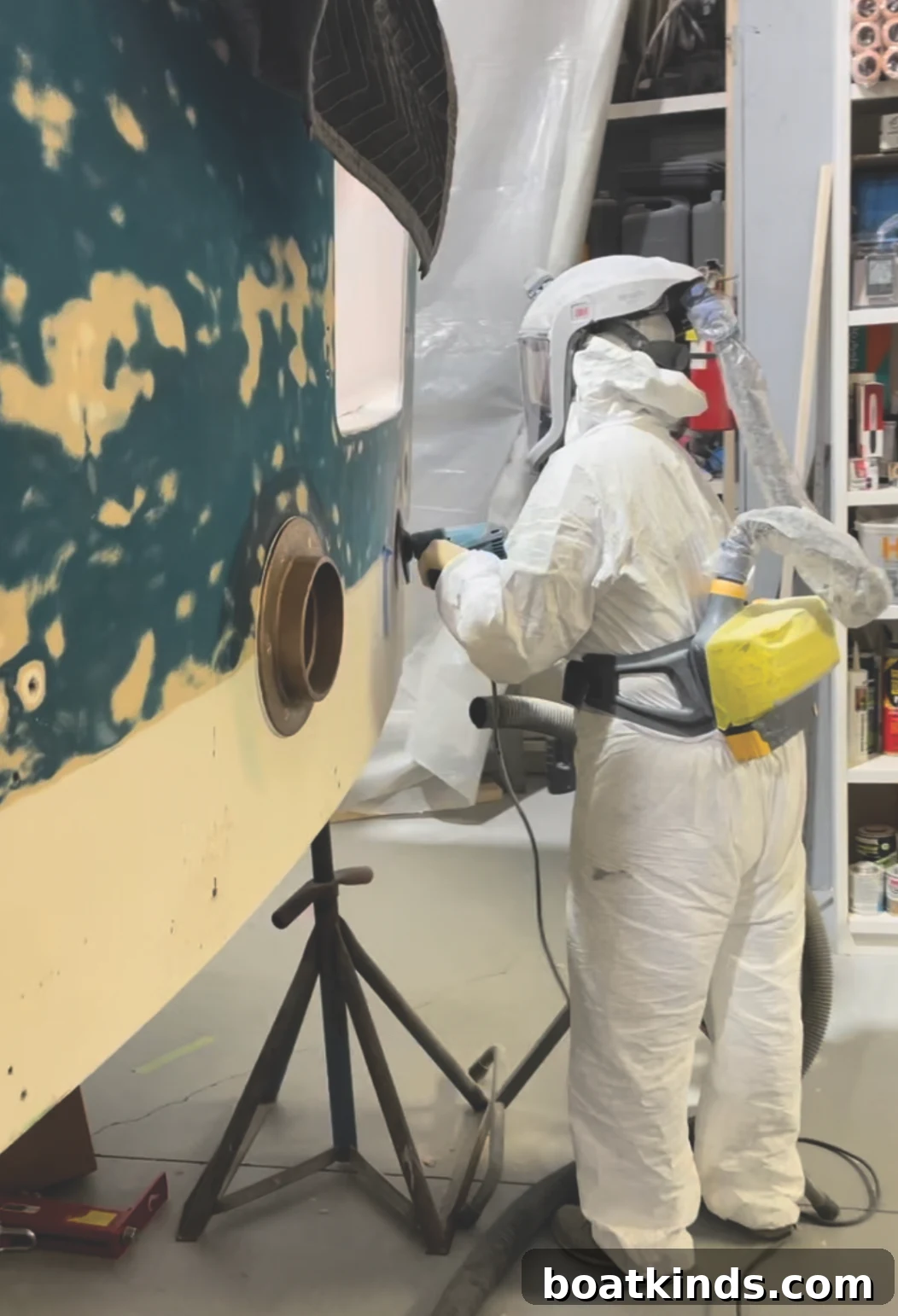
Over the course of the refit, Tom and Lauren handled nearly every part on the boat. They fabricated stainless-steel railings, fairing and painting, installed systems and fastened tens of thousands of components themselves. “Lauren and I have touched every single one of the tens of thousands of miscellaneous parts that are in this boat,” Tom says. Their hands-on approach allowed them to control costs, customize the layout and ensure quality workmanship.
They’ve retired the Nauset name and now call the rebuild a T&L Boatworks Custom 35. A photo in their shop shows Resurgence on the trailer they built the night before she left the shop, the empty interior behind her marking the end of an intense three-year chapter.
Driving away from the shop on launch day moved them both. “After the boat was finished, driving away from the shop gave me tears,” Lauren remembers. She turned to Tom and asked, “So, what are we going to do now?” He replied, “We’re going to use it.” Their goal is simple and clear: family time on Long Island Sound, teaching grandchildren to steer, watching birds and fish, and enjoying the fruits of a true DIY boat restoration.
This article was originally published in the November 2024 issue.