
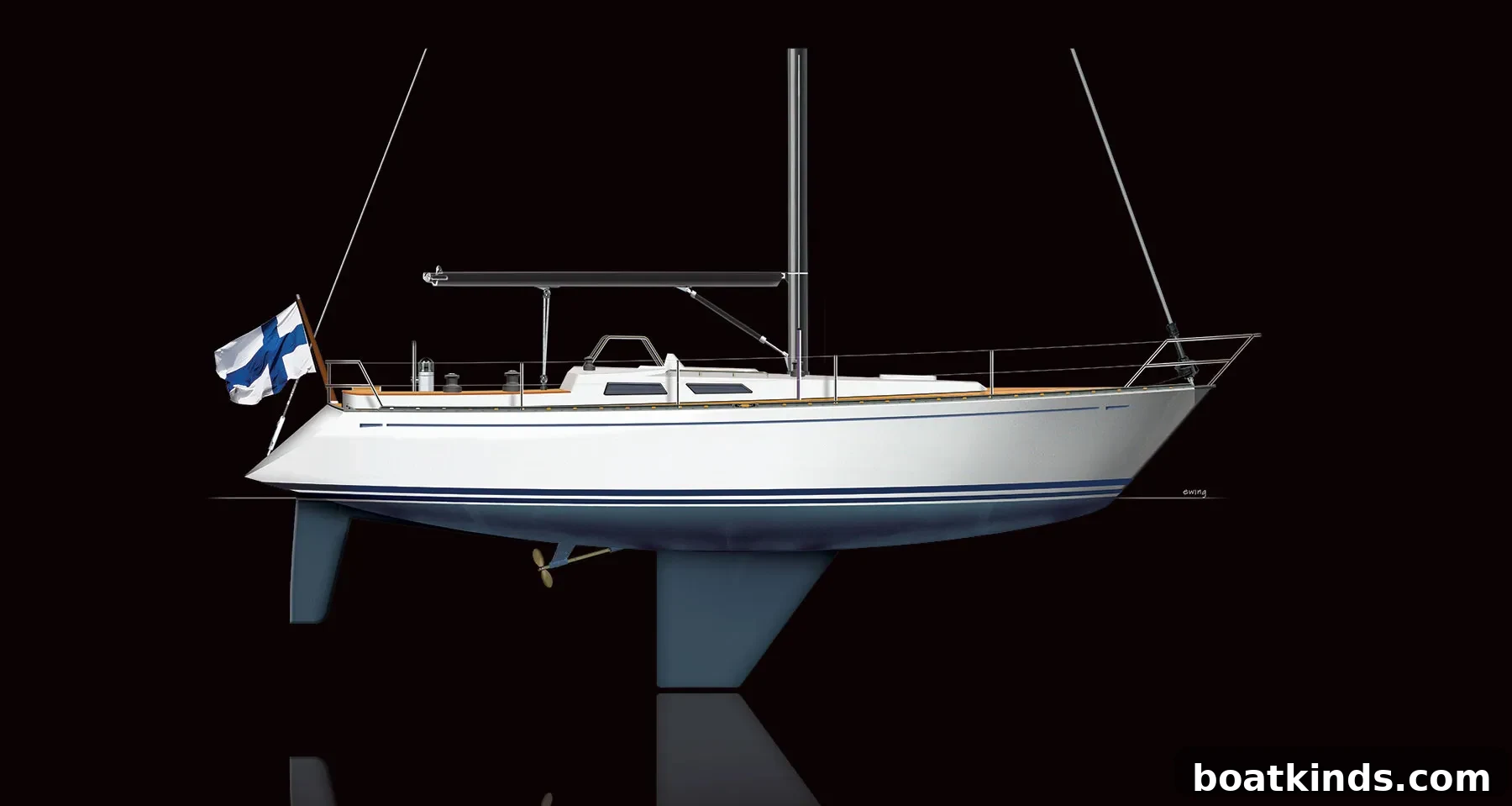
Baltic 38DP — A Rugged Offshore Cruiser-Racer from Baltic Yachts
The Baltic 38DP announces its purpose with a bold exterior: a boat built for demanding offshore conditions and fast, seaworthy passages. Baltic Yachts, founded in 1973 in Bosund, Finland, set out to produce yachts that combined strength, good manners and handsome lines, appealing to both serious racers and dedicated cruisers. The 38DP, introduced in 1982, quickly became one of the company’s most successful production models.
Designed by acclaimed American naval architect Doug Peterson, the Baltic 38DP is a classic example of a hybrid racer-cruiser. It measures 38 feet overall, with a 31-foot-6-inch waterline, a 7-foot-3-inch draft and a displacement of 14,300 pounds. Those proportions give the 38DP the kind of solidity and seaworthiness that experienced offshore sailors appreciate. It was conceived to satisfy the International Offshore Rule (IOR) parameters used in both Europe and the United States for rating and racing, while also offering comfortable accommodations for cruising.
Between 1982 and 1989, Baltic delivered 55 hulls of the 38DP. Many remain active in private ownership today and they are seldom offered for sale, a testament to both the boat’s durability and enduring appeal. The 38DP’s fiberglass construction, deep keel and conservative build choices make it an inviting platform for passagemaking and for sailors who value robustness over fleeting speed records.
On deck the boat carries a traditional masthead rig and a large genoa, delivering a lively sail-area-to-displacement ratio of 19.9. That balance gives the 38DP capable performance on both upwind and downwind points of sail. While not the outright fastest design of its era, the combination of a deep draft, efficient sail plan and seaworthy hull shape provides steady, predictable handling in a variety of sea states. A narrow cockpit is practical for offshore work—it drains quickly and helps maintain control and stability when conditions deteriorate.
Visually the 38DP displays racing intent: a raked stem paired with a transom angle that echoes the forefoot, plus a low trunk cabin with two sets of ports that suggest speed. But the interior reveals a comfortable, well-considered layout for cruising. A centerline companionway ladder leads down to a living sole located roughly six feet below deck level. The interior fitout is Scandinavian in spirit—teak joinery that feels both warm and robust, executed with clean attention to detail.
The practical interior arrangement places the galley to port, opposite an enclosed head and a dedicated chart table on the starboard side. Forward of the main salon is a comfortable dinette and seating area; a V-berth occupies the narrow forepeak. The primary cabin is located aft. Auxiliary power comes from a 30-horsepower Yanmar diesel, giving reliable propulsion for docking and motoring in calms. Decks on period examples were finished either in teak or molded fiberglass, depending on owner choice and original specification.
Baltic Yachts has continued to evolve since the company revealed its first model, a 46-footer shown at the 1974 Hamburg Boat Show. Over the decades Baltic has delivered more than 550 yachts, maintaining a reputation for high-quality construction and innovation. Recent flagship projects illustrate that spirit of innovation—one example is the 142-foot Canova, which employs a Dynamic Stability System: a large retractable foil that reduces heel and adds lift. Canova also integrates diesel-electric propulsion and hydro-generating systems to cut fossil fuel use, reflecting modern priorities in efficiency and sustainability.
The Baltic 38DP remains a desirable classic for sailors who want a capable offshore boat with a racing pedigree and a comfortable cruising interior. Its combination of sturdy construction, sensible accommodations and purposeful deck layout makes it a rewarding choice for those who relish long passages, salty conditions and a yacht that was designed to be sailed hard and lived aboard comfortably.
This article was originally published in the November 2021 issue.