
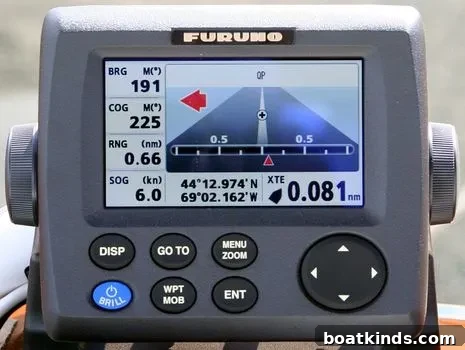
On April 6, 2019, many older GPS receivers faced a potential problem that could affect their ability to report accurate position and time. The issue is not a hardware failure so much as a limitation in the way early GPS firmware recorded dates. That limitation can lead to incorrect dates displayed by the unit, unexpected restarts, or other glitches that may temporarily interrupt location services.
The root cause is the GPS week number rollover. Early GPS specifications stored the week number in a 10-bit field, which can represent only 1,024 different values. Those 1,024 values correspond to 1,024 weeks—roughly 19 years and 36 weeks—after which the counter wraps back to zero. GPS time counting began at midnight on January 5, 1980, which produced the first rollover on August 21, 1999. The next rollover fell on April 6, 2019, and because GPS is now built into far more devices than it was in 1999, the potential impact is larger and affects a wider array of systems.
Government agencies and maritime authorities warned users in advance. The U.S. Department of Homeland Security and the U.S. Coast Guard issued advisories describing the rollover and its potential consequences. Those advisories also noted that a revised GPS message format exists to handle week number rollovers more safely, but not all devices implement the newer specification correctly. Consequently, some receivers could behave unpredictably on the rollover date or later.
Manufacturers issued statements about their products. Furuno reported that certain older models might exhibit rollover symptoms as early as March 17, 2019—almost three weeks before the commonly cited date—and published a list of affected units with instructions for a cold start procedure that can restore proper location reporting. In many reported cases the units retained the wrong date but recovered accurate position data after a restart or a cold start. The Furuno units cited were generally models introduced in the early 2000s that are no longer in active production.
Other manufacturers took a more reassuring tone. Raymarine posted that it was confident most of the company’s recent hardware would be unaffected. Garmin likewise published guidance indicating that devices running current, supported firmware were not expected to experience trouble. Still, these assurances applied mainly to updated or newer units; older, legacy devices without recent firmware updates remained at higher risk.
From reports and technical summaries, the most likely symptoms ranged from a simple incorrect system date to a device restart or, in some cases, a factory default. Permanent hardware damage appeared unlikely based on available information, but incorrect dates or a temporary loss of positioning could have operational consequences for navigation or time-sensitive systems.
Practical steps for owners and operators:
- Check your device documentation or manufacturer support notices to see whether your model is listed as affected.
- Install any available firmware updates well before the rollover date.
- If you operate older equipment, perform a controlled test around the rollover date to verify position and time reporting.
- Learn the cold start or reset procedure for your receiver so you can restore service quickly if needed.
- Consider keeping alternate navigation or timing sources available, particularly on vessels or in critical installations.
These actions are sensible precautionary measures and do not imply that most equipment will fail. Rather, they reduce the risk of being surprised by temporary problems and help ensure continued safe operation of navigation systems.
This article was originally written for Panbo: The Marine Electronics Hub and summarizes the technical background and manufacturer responses to the GPS week number rollover that affected older GPS units in 2019. If you use legacy GPS gear, check with your equipment manufacturer for the most current guidance and support steps appropriate to your model.