
It’s late February and the wind is howling. I’m at home, restless, pacing the rooms as I prepare for my night shift. With departure time approaching, I spread the chart across the dining room table and pin it flat with jigs and sinkers. I trace the wind and swell directions with my finger and mutter, “This isn’t going to be pretty.”
I run a pilot boat on Block Island Sound. Tonight we’re meeting an outbound ship from New Haven, Connecticut, and my responsibility is to transfer the pilot safely to the ship so he doesn’t end up on a long, unwanted voyage. We rendezvous between Block Island and Point Judith, Rhode Island, where the combination of wind, swell, and ship handling can make a pilot transfer demanding. The goal is to position the ship so it forms a lee for the pilot to climb down the ladder—simple in concept, but challenging in rough weather.
Before I leave the dock I always ask, “What’s the weather doing now?” On this particular evening the local observations are clear: a west wind at 38 knots and an eight-foot south swell every ten seconds. I consult the Block Island airport and Buzzards Bay Tower for wind reports and reference the sea buoy southeast of Block Island for wave readings. These instruments won’t show me the exact conditions I’ll face at the rendezvous, but they give a reliable ballpark. Plotting wind and swell on the chart helps me estimate the ship’s most likely course and boosts my confidence. When you’re operating a pilot boat in adverse conditions, foreknowledge is safety.
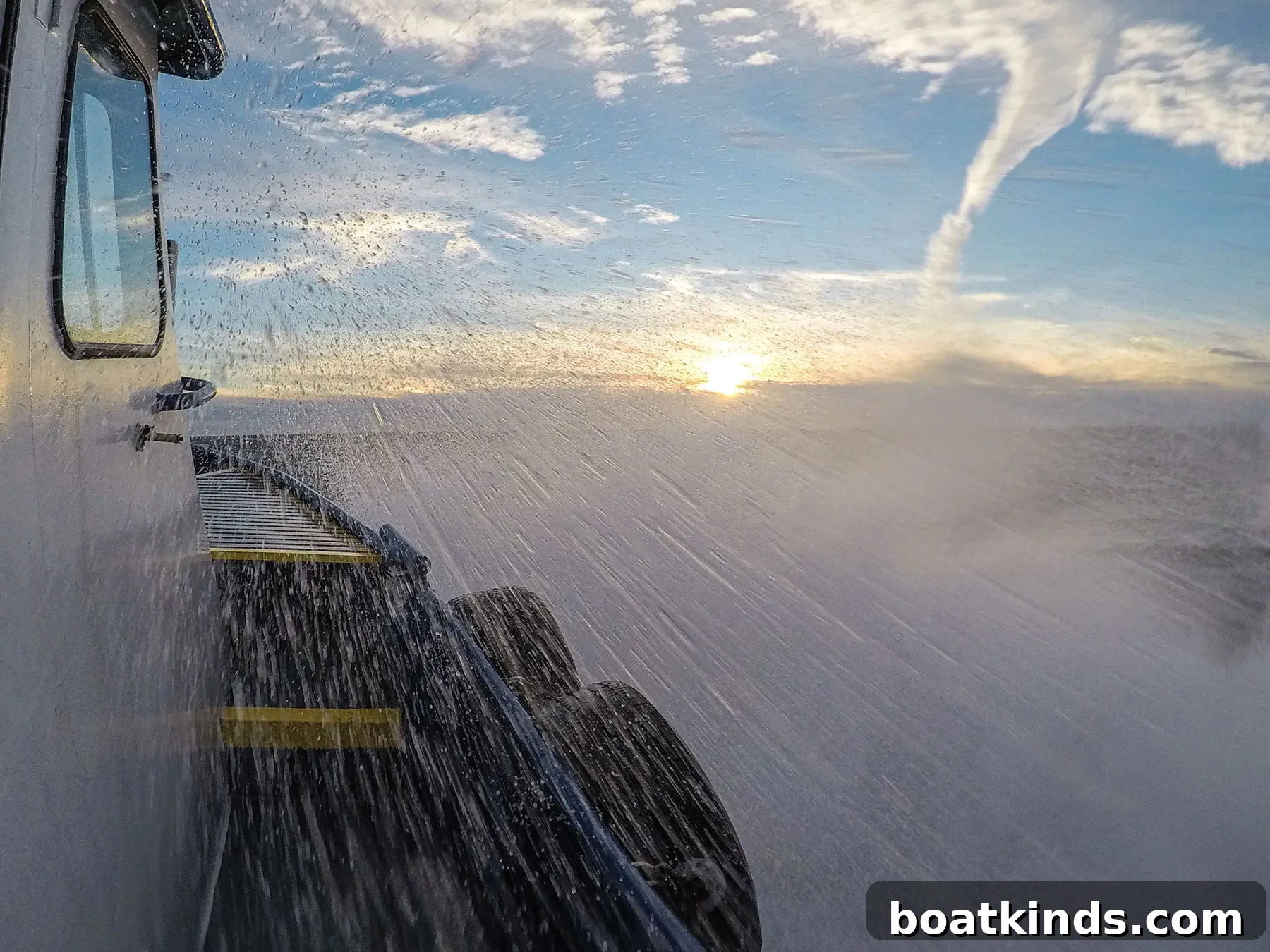
An hour later I’m at the dock in Snug Harbor. The wind screams across the marina and most of the fishing fleet has taken shelter. I slip the lines and pass Dog Beach; at night, every element feels larger—the wind becomes a tempest and the darkness amplifies the ocean’s temperament. We pass through the harbor entrance by George’s restaurant. That first push into open water is when the ocean’s mood becomes unmistakable. The mate and I exchange the same line of skepticism we always do when conditions are rough.
We encounter the surge immediately. The West Gap—the channel between Point Judith and Block Island Sound—gives us our first taste of sea state. “It’ll smooth out a mile out,” we say to one another, sometimes correctly. Outside the wheelhouse, the wind and sea take control. I settle in and trust the boat: its hull, my experience, and the crew. Confidence comes from repetition; running the pilot boat hundreds of times in varied weather has taught me how to read and respond to the sea.
That experience has changed the way I handle my own 21-foot Contender center console. The 64-foot pilot boat’s constant exposure to fog, wind, and night operations has given me the skills to run my smaller boat with greater assurance. There is no substitute for time on the water—practical handling and learning from mistakes are what build competence.
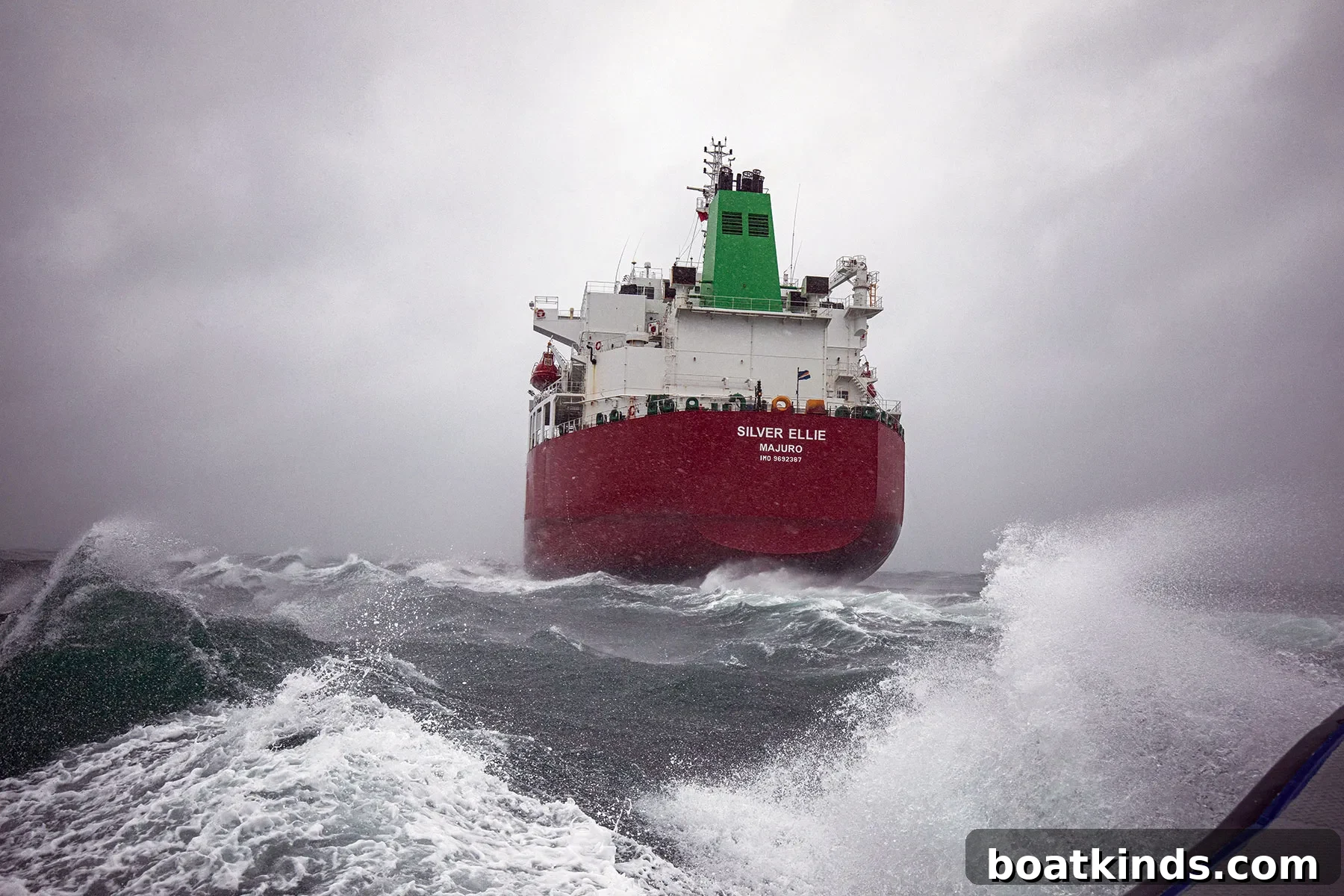
I once dreaded docking and night running; I was tentative and made errors that cost me confidence. But repetition helped. I learned by doing—by making mistakes, correcting them, and gaining muscle memory. Even now, I still misjudge approaches occasionally: coming in too fast or too slow, slamming alongside a tanker, or catching a following sea at the wrong angle. Those errors teach me to always factor weather into every plan, whether I’m taking a pilot to a freighter or crossing to Block Island in my own boat.
Once clear of the Gap, I set course and pick the ship up on radar. The conditions are too sloppy to sit, so I slow to about seven knots. The west seas hit like a stack of cement walls—short, sharp, and relentless—while the long south swell tries to lift our port side as the head seas continue their assault. This chaotic mix is Block Island Sound’s signature wash cycle. My only option is to brace and ride it out. I turn on the spotlight to better read the wave faces; wave direction and period are rarely uniform and require constant attention.
On the radio the pilot and I confirm the plan: the ladder will be on the ship’s port side and the agreed course is 110 degrees. I bring the pilot boat alongside and match the ship’s eight-knot speed. At night in this weather, the approach never looks graceful. Ships are enormous and the ocean is indifferent. Still, we complete the transfer and the pilot climbs aboard.
“Not nice out,” he says as he steps into the wheelhouse. We leave the lee of the ship and the sea throws a heavy roll at us—one of those rolls that makes every muscle brace like a drawn bowstring. I shout the instruction we repeat on board, “Hold on.” A fast-moving wave, seemingly separate from the surrounding sea, hits us. We rise and drop, then a west-running chop grabs our stern and spins us hard to starboard. In the chaos the pilot staggers and collides into the mate, who was wedged near the navigation table.
For a tense few minutes we check for serious injury. The mate feels pain in his leg but can move it; thankfully it’s not broken. The collision was a reminder that even with planning and experience, the sea can take unpredictable swings. We finish the transit with the mate at the helm, steering through the west wind on the port quarter and the south swell on the starboard beam—conditions we had anticipated and planned for.
In the end, everyone is okay and the job is done. Running a pilot boat in challenging weather tests seamanship, planning, and the ability to adapt quickly. It’s a harsh classroom, but the lessons are invaluable: respect the sea, know the weather, and learn from each crossing.
This article was originally published in the May 2021 issue.