
Every year a few of us push the season a little farther. November arrives quickly, and all the fishing we planned often hasn’t happened. So we hang on a bit longer, stay tied to the slip a little past our comfort zone, and try to catch a few more cod, chase bass and blues, or run the beaches while the northerly blows aren’t yet severe. We hope to intercept those late-season fish before the weather finally turns for the worse.
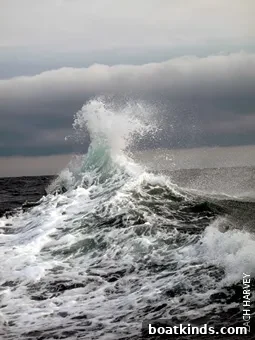
Fishing late in the year has distinct rewards—both mental and angling-related—but it also brings challenges. In colder years, pushing the season usually means fishing in near-solitude: tugs moving barges along inside lanes, a few draggers heading out to the canyons, and little recreational traffic. A calm, empty ocean can feel like a gift, but it can also be unforgiving when things go wrong. Cold, damp conditions add strain to electrical systems. Heavy seas can churn fuel and dislodge sludge in tanks, creating mechanical problems that are much harder to manage far from shore.
Weather is the great variable year-round, but it becomes more volatile as December turns into January. Fronts that are manageable in milder months can shift quickly and violently in winter. The one comfort is that winter still follows patterns. Large low-pressure systems—those multi-day easterly storms often lumped together as nor’easters—generally follow a familiar sequence of wind shifts: southeast to east to northeast. When remnants of tropical systems or strong easterly gales pull out to sea, winds typically veer to the west or northwest and intensify. A persistent, heavy south wind often presages stormy weather and precipitation. If you learn to read these patterns, you’ll make better calls about heading out.
Forecasts can be misleading, but even errors often follow predictable behavior. Take the classic myth of a northeast wind at 5 to 10 knots: mariners know that when a low-pressure system is building, easterly winds rarely remain light—expect 15–25 knots, gusting higher. As the season advances, some forecasts err more dramatically. A gray, easterly day is often a sign to stay ashore. To verify marine forecasts before you go, check live observations from NOAA buoys; comparing buoy data with forecast products helps you spot inconsistencies early.

Buoy reports are especially valuable because winter fronts can arrive early, late, or stall unexpectedly. If a forecast predicts light northwest winds through the afternoon but a nearby buoy already shows south winds at 15 knots and 3–5-foot seas, don’t take the forecast at face value—especially in December. Current measurements will often give you the earliest, most reliable picture of conditions.
Once you commit to a trip—say, 10 miles southwest of Martha’s Vineyard while working a cod school—watch the sky to the west. If the horizon looks strange or the wind picks up unexpectedly with a tide change, don’t hesitate: head straight for shelter. The most hazardous conditions may not be in open water but where currents meet seabed contours or constrictions, creating steep, towering seas. Areas such as The Race at the eastern end of Long Island Sound are notorious for sudden, dangerous water.
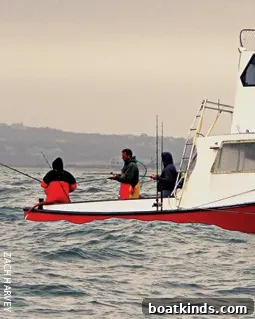
Dangerous seas are not only the product of dramatic storms; a changing tide that pits current against a strengthening wind can quickly close troughs and turn a manageable chop into chaotic, rolling waves. Swell from a distant storm can add another variable. Cold conditions also introduce the risk of ice: frost combined with spray can glaze exposed surfaces, adding weight above the waterline and reducing stability. Boats with tall towers or large superstructures are especially vulnerable, as ice accumulation makes them slower to right after a roll and less maneuverable.
Be realistic about your experience and equipment. Assess your boat-handling, mechanical, and navigation skills, your crew’s preparedness, and the seaworthiness of your vessel. If you haven’t logged enough time at the helm to understand how your boat behaves at different speeds and angles, don’t wander far from safe harbor. Take routine winter precautions you often overlook: remove unnecessary weight, secure loose gear, empty and winterize freshwater tanks and washdown hoses, and carry spare critical components such as an extra bilge pump. If you expect to fish into the cold months regularly, consider higher-level safety gear—a life raft, an EPIRB, and a ditch bag with a handheld VHF and personal locator beacons.
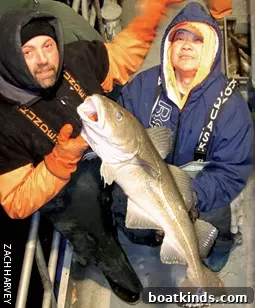
There’s also a practical reason not to chase winter weather: the fishing itself. Many bottom-dwelling species like cod and deep-water sea bass change feeding patterns during unsettled weather and often stop biting until conditions calm and the water clears. Your best chances usually come during calm windows or roughly 24 hours before a storm arrives. Heading out into a gale is not only risky but frequently unproductive.
In short, choose your days carefully, file a float plan, prepare the boat and crew, and then savor every therapeutic minute on the water. When conditions are right, late-season trips repay the effort—just don’t push your luck.
December 2012 issue