
Jacob Pike: Preserving a Maine Sardine Carrier and a Vanishing Commercial Fishery
If a single surviving vessel could stand as a symbol of Maine’s once-thriving commercial fishery, that honor would belong to the Jacob Pike. Built in 1949 at the Newbert and Wallace Shipyard in Thomaston, Maine, the 83-foot Jacob Pike was constructed of oak and hard pine—timber chosen by generations of shipwrights for its strength and longevity. Decades later, the boat’s heavy-built hull and solid joinery still speak to that craftsmanship.
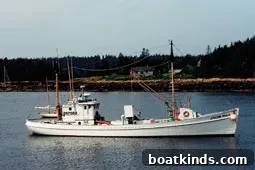
For more than half a century the Jacob Pike worked as a sardine carrier, hauling herring from inshore fishing fleets to canneries along the coasts of Maine, New Hampshire and the Maritime Provinces. With a reported capacity of 125,000 pounds of fish, she could make 12 knots even when fully loaded. Because the herring fishery operates close to shore, the Pike avoided the worst offshore conditions that shorten the lives of many wooden vessels, contributing to her unusually long service life.
By the late 2000s the Pike had changed hands. New owners acquired her from the last fishing captain in 2007, and after a couple of seasons in semi-retirement in Rockport, Maine, they donated the boat to the Penobscot Marine Museum. The museum saw in the Jacob Pike a rare example of a largely original wooden commercial vessel and hoped to make her a centerpiece of an interpretive program about Maine’s commercial fishing heritage.
Experts at the museum, including curator Ben Fuller and contributors from WoodenBoat magazine such as Maynard Bray, have noted that the Pike remains essentially as she was built. While her engine has been replaced at least once, and standard electronic and maintenance updates have been made, the boat retains original lines and structure. As with any vessel of her age there are patched planks, replaced fastenings and localized repairs; a strip of fiberglass now protects her waterline from ice, and there have been structural changes to the wheelhouse and repairs below the waterline. Compared with most other sardine carriers of her era—many of which have been scrapped or converted—the Jacob Pike is rare and museum-worthy.
Preserving an aging wooden commercial vessel, however, presents major challenges. Detailed assessments suggested that initial restoration costs could approach or exceed $1 million, and annual maintenance after restoration is likely to top $100,000. Because the full scope of work will only be clear once the boat is carefully dismantled and examined, the museum faces substantial financial uncertainty in any large-scale restoration.
Despite those obstacles, the museum has taken concrete steps to document and conserve the Jacob Pike. The Hinckley yard in Southwest Harbor donated a fall haulout and winter storage in 2009–2010 so the hull could be inspected. In late March the museum organized a high-precision photogrammetry project to capture the Pike’s hull lines and structural details in digital form. David and Katherine Cockey of Rochester, Michigan—retired General Motors engineers who specialize in photogrammetry—came to Maine to create a three-dimensional record of the vessel.
The Cockeys applied more than 100 targets—black dots, taped markers and special shapes—to the hull and photographed the boat from many angles and distances. While they prepared the targets, photographer Peter Mathews made large-format black-and-white images for archival record. Using PhotoModeler software, the Cockeys will convert those images into an accurate 3-D model of the Pike. That digital file can preserve the vessel’s geometry for future study or even help guide a faithful reconstruction.
David Cockey explained that assembling the model would take just a few days and that, with the museum’s agreement, he focused on documenting the port side under the assumption the hull remains symmetrical. He did take care to capture later additions such as the quarter-inch fiberglass at the waterline and a square of added planking near the stern so the model can account for overlay thicknesses and underlying surfaces.
Once complete, the model will join the Penobscot Marine Museum’s collection of vessel lines and plans, many of which represent boats central to Maine’s fishing industry. The digital record and initial conservation work are early steps in a longer effort to interpret and honor the region’s maritime heritage.
Museum staff continue to weigh options for the Pike’s future. One vision would rebuild and retrofit her as a floating classroom that could carry students and visitors while teaching about Maine’s commercial fishery. That approach would require a full rebuild and Coast Guard compliance to carry more than a handful of passengers. Ben Fuller has compared the idea to visible outreach vessels such as the workboat Sunbeam, which operates in the region—an attractive but costly public program that would demand substantial funding and ongoing support.
An alternative is to display the Jacob Pike on land, housed in a building on the museum’s Searsport campus—an approach Fuller likens to the display of the Norwegian exploration vessel Fram in Oslo. That option would preserve the boat and make her accessible to visitors but would also require new construction and additional expense.
Some conservation professionals, including WoodenBoat’s Maynard Bray, have warned that enclosing a wooden hull behind glass or indoors can present its own preservation challenges, including potential for slow deterioration if environmental conditions are not carefully managed. Even so, dry storage or an indoor exhibit is preferable to allowing the vessel to be broken up or left to rot.
Deciding the Jacob Pike’s long-term role, securing funding and implementing a conservation plan will take time. In the near term, Fuller has expressed his intention to relaunch the vessel for the coming season, even if she remains on a mooring. “She’s got to go in the water,” he has said, reflecting a desire to keep the Pike visible in Maine’s summer maritime landscape while supporters continue to develop a plan.



David D. Platt is the former editor of Working Waterfront, the monthly newspaper published by the Island Institute. This article originally appeared in the July 2010 issue.
See related article — The fading glory of working waterfronts