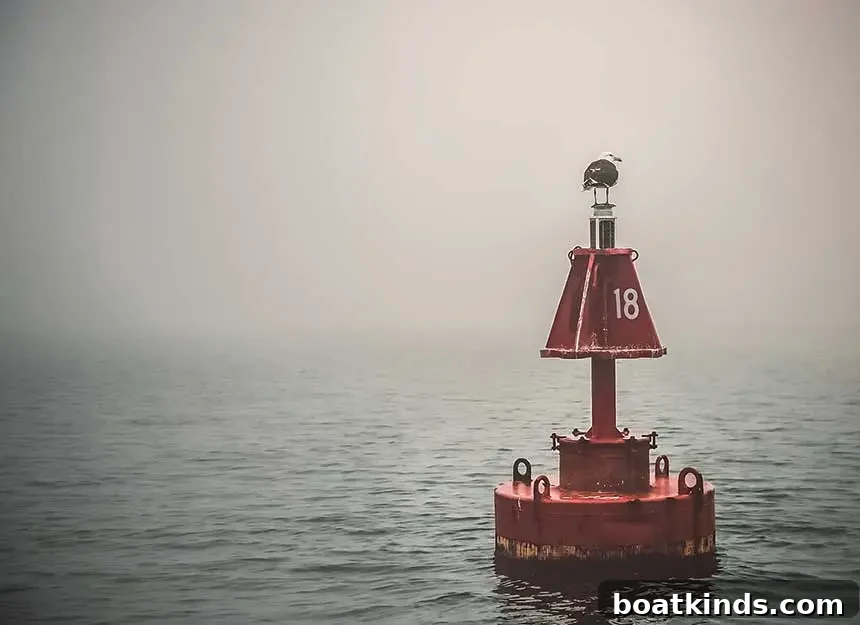
Did you know that dozens of navigation buoys shown on charts between Eastport, Maine, and Shrewsbury, New Jersey, simply aren’t where the charts say they should be — and in some cases they’re missing entirely? In the same region, about 100 buoys are present but displaced enough that relying on their charted positions could mislead you out of the safe channel. Further south, the situation can be even more serious: from Little River, South Carolina, down through the U.S. Virgin Islands, more than 500 U.S. Coast Guard aids to navigation are reported missing, off station, or destroyed.
If those figures are startling, it probably means you haven’t been keeping up with the weekly Local Notice to Mariners. Published by the U.S. Coast Guard, the Local Notice to Mariners (LNM) is the authoritative, regularly updated listing of discrepancies, outages, and temporary or permanent changes to aids to navigation and charted hazards. Skipping it increases the risk of running into an unexpected hazard or following a misleading aid into shallow water.
Navigation aids fail for many reasons: storms can destroy or displace buoys, vessels may strike them, lights burn out, and mechanical failures occur. When mariners notice a problem they report it to the Coast Guard, which then prioritizes repairs and updates. Despite that effort, conditions on the water change constantly, and the LNM documents those real-world changes faster than paper charts can be reprinted.
Each of the U.S. Coast Guard’s nine districts issues a weekly Local Notice to Mariners that covers everything within its area of responsibility. These notices are essential pre-departure reading. Download the notice for your district and review it carefully before you go out. The LNM lists special operations, temporary changes, chart corrections, and advanced notices of planned work or alterations to aids to navigation — information that may not yet be reflected on electronic or paper charts.
Most recreational and commercial boaters rely on electronic chart systems, and those systems are excellent when kept up to date. Regularly installing official weekly chart updates ensures your electronic charts reflect the latest surveyed depths, shoreline changes, and relocated navigation aids. Still, chart updates do not always include every temporary condition or administrative notice; that’s where the Local Notice to Mariners fills the gap. Even if your navigation software is current, cross-checking it with the LNM gives you the most complete and safest picture.
The LNM is organized into numbered sections that make it straightforward to find relevant information. Section I contains special notices: unusual hazards, temporary closures, military exercise areas, or other significant warnings — for example, hazards associated with volcanic lava deltas in Hawaii such as explosive collapses or toxic gas releases. Section II details reported and corrected discrepancies for aids to navigation within the district, noting chart numbers so you can mark or correct your charts. For example, mariners on the South Carolina coast should note on Chart 11532 that the Winyah Bay Range C Rear Light is reported as “struct dest” (structure destroyed).
Sections III and IV typically cover temporary changes and chart corrections. Section III announces temporary or intentional relocations or status changes for aids to navigation; Section IV lists the corresponding chart corrections and new positions for those temporary aids. Because every entry references the relevant chart number, you can quickly identify and correct the affected charts in your paper folio or mark the changes in your electronic charting system.
Section V provides advanced notices of approved projects or anticipated changes, such as upcoming dredging or planned relocations of aids. Sections VI, VII and VIII include proposed changes, general information, and further corrections. Thoroughly reviewing Sections I through IV before a trip will usually cover the most critical safety and navigation issues you are likely to encounter.
Reading and acting on the Local Notice to Mariners is a simple, practical habit that improves safety for everyone on the water. Before casting off, update your electronic charts and review the current weekly notice for hazards, temporary changes, and chart corrections in your area. Mark any discrepancies on your paper charts or update your electronic system so that what you see on the display matches the reality around you.
And about those missing buoys: the Coast Guard maintains and repairs navigation aids as part of its mission, so many of the problems listed in the LNM will eventually be corrected. The purpose of the notice is to alert mariners to conditions that could affect navigation so you can plan and steer safely.
This article originally appeared in the May 2020 issue.