
For more than 20 years I’d dreamed of landing a false albacore — a feisty, hard-running member of the tuna family. I scoured the internet and flipped through fishing magazines for a guide, and one name kept appearing: Capt. Sarah Gardner.
About two months later, my fishing partner and I pull into Harkers Island, North Carolina, a salty gateway to the Cape Lookout grounds. It’s early, roughly 45 minutes before sunrise, when we walk down the dock toward Gardner’s 23-foot Jones Brothers Marine Cape Fisherman, Fly Girl.
“How’s it going?” Gardner asks as we load our gear. “Fishing has been good. Let me check your flies and tackle to make sure you’re rigged properly.”
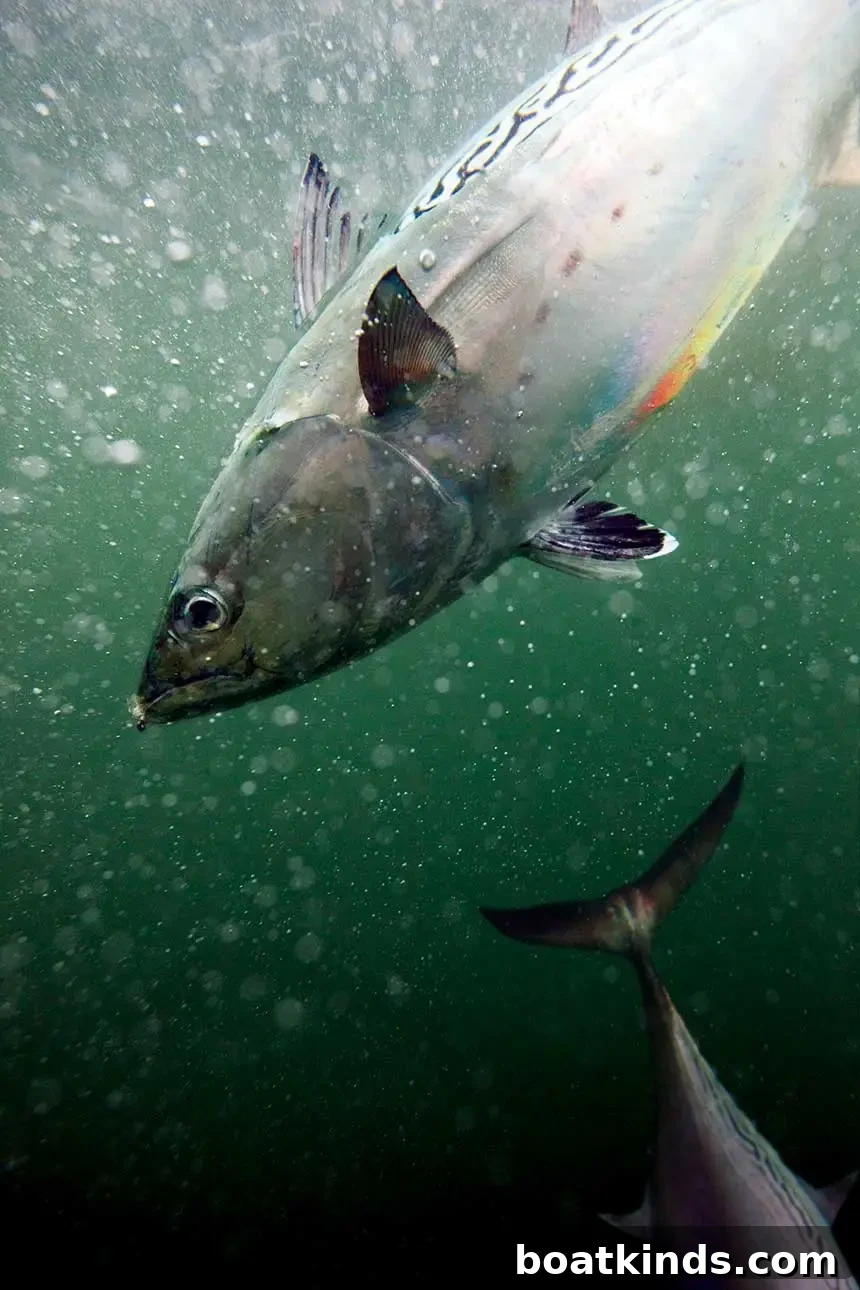
She inspects our gear, swaps a couple of flies for ones she’s tied, casts off the dock lines and sets a steady course for Barden Inlet.
As we run through the inlet, false albacore explode on a school of bay anchovies. “Get up there, Gary!” Gardner calls, maneuvering the boat into position. I point my fly rod at the commotion and then flop the cast.
“We need to work on your wind casting,” she says, joining me at the bow. She tells me to keep the fly line lower, under the wind, then stands beside me and guides my arms with her hands. Immediately my cast improves.
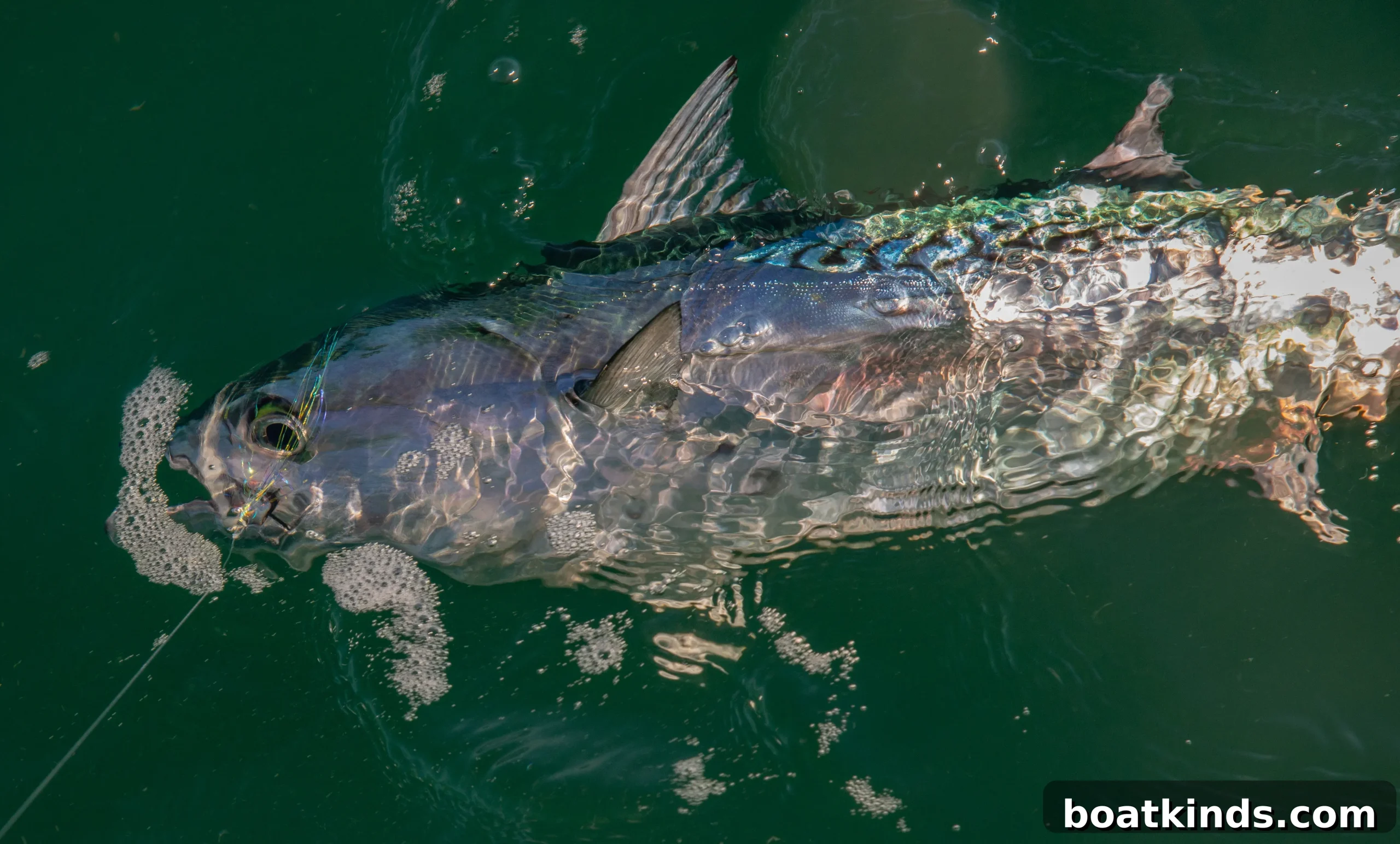
When another school breaks the surface, Gardner positions the boat and I manage to hold the fly line under the gusty wind. I land a Surf Candy fly into a boiling mix of bait and albacore. A powerful false albacore eats it, peels off line and runs deep into the backing.
“Yes!” Gardner exclaims. “That’s how it’s done!”
Minutes later she helps bring my first false albacore on the fly aboard, gives me a high five and snaps a photo. She’s as thrilled as I am.
We went on to catch as many as 30 more arm-straining fish apiece, making it one of the best days I’ve ever had on the water. Experiences like that helped make Gardner a sought-after guide during the fall Cape Lookout season — an albacore Jedi of sorts.
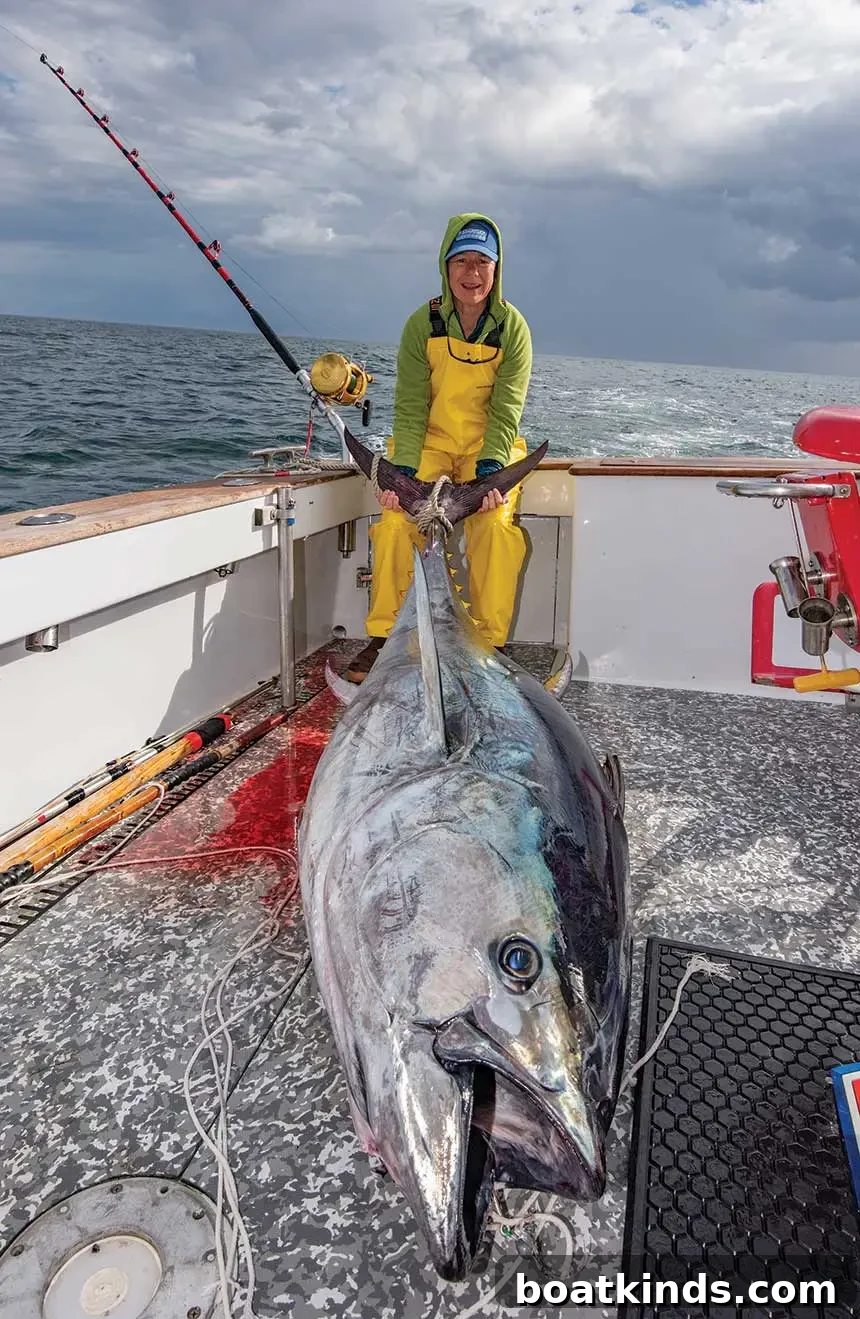
Gardner’s resume reads like an angler’s travelogue: sailfish off Guatemala, giant bluefin off North Carolina, striped bass in Chesapeake Bay, roosterfish in Mexico, and bonefish and permit in the Bahamas, among many other species. She’s also been a licensed falconer, a skilled bow hunter, a former International Game Fish Association record holder, and an Ironman triathlete. Beyond her achievements, she’s known for being empathetic, patient and a generous teacher.
“I saw something in Sarah when I first met her,” celebrated fly-fisherman Lefty Kreh said in 2017. “Sarah’s got natural patience and eagerness to share with people that plenty of guides simply don’t have. She’s an excellent teacher. Her instinct on the water is almost flawless, and she’s an excellent caster.”
Gary Bulla of Gary Bulla Baja Adventures echoes that praise: “Sarah’s one of the best anglers I know. She can cast with the best of them, has tremendous drive, and learns the ins and outs of specific fisheries very quickly. She mastered our roosterfish run and proved it with catches. Plus, she’s one of the nicest people you’ll ever meet.”
Gardner was born October 29, 1964, on the campus that is now Delaware State University in Dover. Her father taught history, her mother worked as a librarian and social worker, and she grew up with a younger sister. Their home sat on a creek that fed Silver Lake and the St. Jones River, which flow into Delaware Bay — the waters that sparked her love of fishing.
“I remember all my buddies fishing, so I was happy to go along,” she recalls. “My sister and I fished a lot together, but it was my grandfather and three uncles who really got me into it. I watched everything they did — I practically idolized them.”
Early on, the gear was basic — sticks, string and hooks — until her grandfather and parents helped supply tackle, sinkers and bobbers. “Maybe it’s my inner introvert,” she says, “but it was easier to grab worms and go fishing than to follow what other kids were doing. I’d water the backyard to find worms, raid the compost, and head out with friends who liked to fish.”
Nature was a steady influence. Gardner took part in the Youth Conservation Corps, became a junior naturalist with the Delaware Nature Education Society and grew into birding thanks to her father and encouraging science teachers. She credits her middle school science teacher, Mr. Long, for recognizing her curiosity about the natural world and pushing her to learn more about fish, birds and ecosystems.
She discovered fly-fishing around age 13 by tagging along with friends and watching a tiny fly below a clear bobber attract sunfish and bluegills. Though falconry dominated much of her late teens and early adulthood, she eventually received a casting lesson from a fly fisher connected to the falconry community and was hooked.
Gardner studied illustration and graphic design at Moore College of Art & Design in Philadelphia. After college she worked briefly at a design firm near Annapolis but left the office life behind when she decided it wasn’t for her.
Without a steady job in her early 20s, she approached Anglers Sport Center in Annapolis for work. The tackle shop gave her a chance, and she invested every spare dollar in gear while learning retail, fly-fishing, bowhunting and more. She began guiding fly trips and working on the Chesapeake and Eastern Shore.
At a fly-fishing show in College Park, Maryland, she met an editor from Fly Fishing in Saltwaters and soon after received a surprising phone call from Lefty Kreh. A visit to his house led to cast coaching and an invitation to write. Kreh became a long-term mentor who helped Gardner find her voice in the fly-fishing world and open doors within the industry.
“Without Lefty, there’d be no Sarah,” she says. “He opened doors that would have been very difficult to open on my own and helped me realize I could make a living doing what I love.”
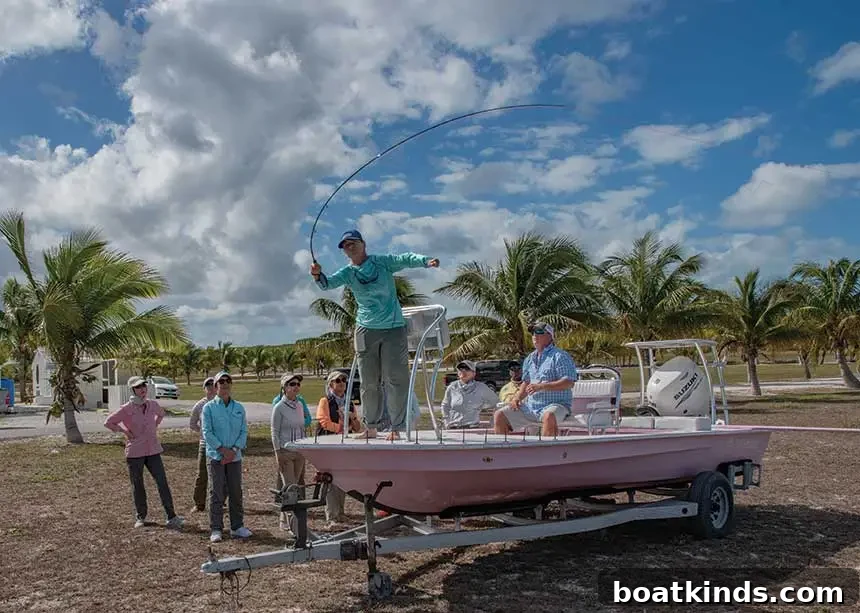
Gardner’s casting is now a thing of beauty. At a Fly Fishing Show in Edison, New Jersey, she warms up beside a casting pond, teaching tips that anglers can use immediately in the field. “Your backcast is as important as your forward cast,” she explains, demonstrating water-haul techniques and repositioning 70 feet farther than her first presentation. Her form is elegant, powerful and precise.
After building experience and a writing portfolio in the 1990s, Gardner fished with local guides, including Rob Pasfield at Harkers Island Fishing Center and Brian Horsley around Oregon Inlet. Those seasons taught her the fisheries and introduced her to the community that would become central to her life and work.
By 1996 she had moved to North Carolina, financed a Parker 18, and begun guiding the summer season at Oregon Inlet and fall off Cape Lookout. Her relationship with Horsley deepened, and they married in 1999 on Harkers Island with Lefty and other fishing luminaries in attendance.
Guiding can be demanding: eight to ten months a year on the water, long stretches without days off and stretches of solitude, especially at Oregon Inlet. To counterbalance the grind, Gardner found community at the local YMCA and embraced triathlon training. She completed a full Ironman in Texas in 2013 before back issues forced her to scale back, though she still values the friendships from those years.
Gardner is a passionate advocate for women in fishing. She runs an annual bonefish school for women at Blackfly Lodge in the Abacos, helped found Chesapeake Women Anglers and consistently welcomes female clients. “Fishing is becoming more inclusive,” she says. “There are so many great female anglers; I want to help women feel welcome and confident in the sport.”
Today Gardner and Horsley also host international trips to Mexico, Guatemala, Costa Rica, the Bahamas and South America, guiding clients for sailfish, roosterfish, marlin, dorado and yellowfin on the fly. Those winter and early-spring excursions break up their seasonal routine and bring together a dedicated group of returning anglers.
This year Gardner plans to guide at the Reel Action Alaska Lodge on the Kanektok River in Quinhagak, sleeping in a tent, facing mosquitoes, and chasing salmon and trout. “Brian and I fished there last summer and fell in love with it,” she says. “It’s an amazing challenge and opportunity.”
After Alaska she’ll return to Harkers Island for the fall false albacore run. “I’ll get back just as they start running again,” she says. “My fall book is full, and I’m excited for the next season. The unknown is one of the things I love about fishing.”
This article originally appeared in the May 2020 issue.