
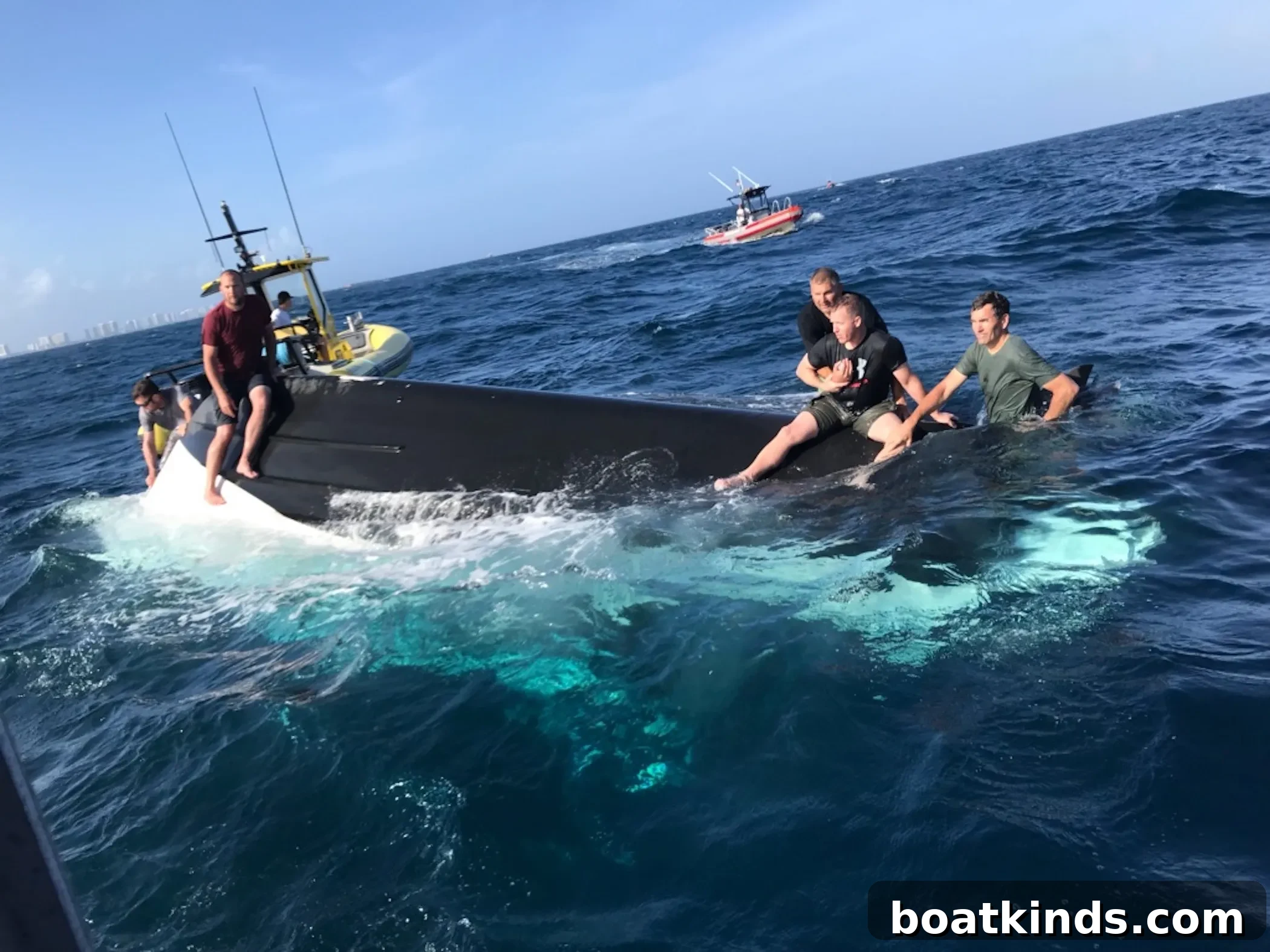
In my last post I promised not to drain the fun from your time on the water. I still mean that, but I also need to be blunt: nothing kills the enjoyment of boating faster than an emergency search that ends badly. The U.S. Coast Guard calls off searches for missing boaters every day. If you want to stay safe on the water, you need to accept one basic truth: the water we love is a hostile environment for humans.
Managing risk starts with understanding it. I’m restarting Lifelines with a clear focus on the element every boater shares—the water outside the boat. It creates hazards, and three primary characteristics of water combine to make it one of the most dangerous places to be. We depend on water to survive and we love being on it, but water will not sustain human life for long without the right preparation and gear.
Grasping these three hazards will help you decide which risks you won’t accept, which you can mitigate, and which you will take knowingly when you head offshore.
Hazard number 1: The water is almost always colder than you are
Outside of a few exceptional places, water will be colder than your body and it quickly strips heat away. In water under about 59°F (15°C), the risk of a fatality rises dramatically compared with warmer waters. As the temperature drops, the abilities that keep you alive—swimming, treading water, signaling, and even staying conscious—decline long before true hypothermia sets in. The real killer in cold-water incidents is the early incapacitation that precedes hypothermia.
If you haven’t read my previous piece on cold water, treat it as essential homework: it clarifies how misconceptions about how fast hypothermia develops, how quickly cold water can be deadly, and how long you might actually survive can lead to poor choices about protective clothing and survival tactics. Know the sea surface temperature where you boat. The local water temperature is posted in every Coast Guard station I served at—and you should check it too. The NOAA coastal water temperature tables can show you regional differences so you can outfit and plan appropriately.
To put it in perspective: water temperatures in Alaska and in some mid-Atlantic locations can be the same in winter, and waters off temperate shores can remain a significant threat well into the boating season. Cold isn’t the only problem; movement and energy loss amplify its danger.
Hazard number 2: The water moves
When someone goes overboard, separation from the boat can occur almost instantly. The quicker a person drifts away, the harder a recovery becomes—and losing sight of a person in the water is often fatal. Studies show a large fraction of people who become separated from their vessel are never recovered. This can happen at speed, but it also happens when a boat is drifting: wind, sail area, and hull profile cause the craft to move differently from a person in the water, making self-rescue difficult or impossible.
Currents, tides, and waves multiply risk by carrying a person away while also interfering with rescue attempts. Combined with cold water, motion turns a survivable fall into a life-threatening situation in short order.
Hazard number 3: Water drains your energy—and your resources
Being immersed takes a heavy physiological toll. Saltwater improves buoyancy slightly, but you will often still need to tread water to keep your airway clear. Hydrostatic pressure and immersion trigger fluid shifts in the body that increase urine output (immersion diuresis), promoting dehydration. Water cools the body about 25 times faster than air, which accelerates calorie burn. In short, water removes energy and fluids—two of the three essentials for survival.
Consider endurance swimming records for context: in September 2023 Matthieu Bonne spent 61 hours swimming in the Gulf of Corinth to complete an unassisted 80+ mile crossing. Temperatures ranged from about 70°F at night to 80°F during the day. He ate periodically and drank significant fluids, consuming roughly 10,000 calories and three gallons of water every 24 hours to maintain function. Even with planning and support, that effort was extreme and carefully managed.
By contrast, an accidental fall overboard leaves you with none of that support. Treading water may require a third of the energy of a full-stroke swim, but you still need thousands of calories and a gallon or more of water per day to stay functional. Dehydration and exhaustion can kill in warm water just as surely as hypothermia does in cold water. This is why the Coast Guard often suspends in-water searches after about three days: the physiological limits of an exposed person are finite.
None of this is meant to discourage you from boating. I love boats and I want you to enjoy the water as much as I do. But loving the sea includes respecting its dangers. The water outside the boat is magnificent and restorative, yet it won’t sustain you for long if you end up in it. Recognize that reality, and let it shape how you prepare—your clothing, flotation choices, communication and signaling gear, and plans for getting someone back aboard quickly.
Awareness and preparation make the difference between a great day on the water and a tragedy. Know the temperature where you boat, understand how currents and wind can separate you from your vessel, and accept how quickly energy and hydration disappear when you are immersed. These are the first steps toward safer boating that keeps the fun where it belongs—on the water, not searching for those we love.