
Mercury Marine Introduces the Avator: Its First Electric Outboard for Pleasure Craft
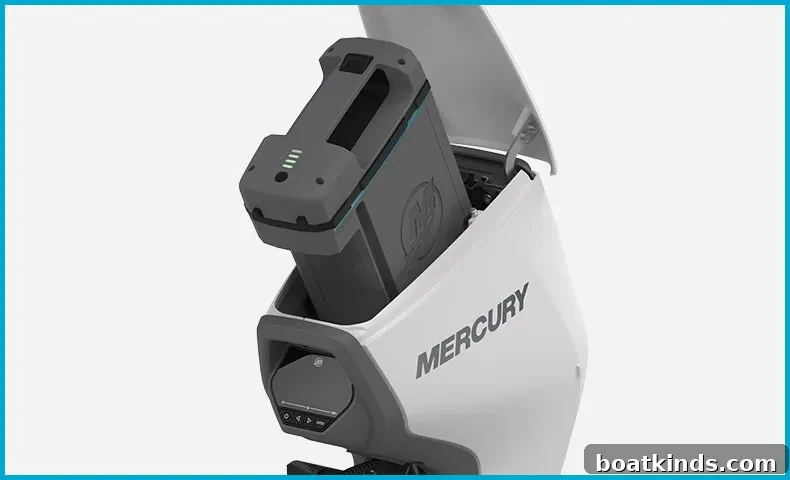
At the Miami International Boat Show, Mercury Marine unveiled the Avator, the company’s first electric outboard designed for pleasure craft. The Avator marks the beginning of a new product family that Mercury says will expand into several additional models in the coming months. This launch represents a strategic extension of Mercury Marine’s expertise into electric propulsion for recreational boating.
From High-Power Combustion to Quiet Electrification
Mercury’s announcement is notable because it arrives only a year after the company released the 600-hp V12 Verado, currently the largest combustion outboard on the market. The contrast highlights Mercury’s dual-track approach: continuing to refine high-performance combustion engines while also investing in electric outboard motor technology. Chris Drees, president of Mercury Marine, framed the Avator program as the next evolution of the company’s leadership in the marine industry:
“The Mercury Avator electric outboard program is the next evolution of our leadership in the marine industry. The innovations we’re exploring with this program give us a bold look at what electrification can mean for the future of boating. We intend to deliver another way for people to enjoy the best experience on the water while also building on Mercury’s commitment to sustainability.”
Design Priorities and System-Level Thinking
Mercury has emphasized that the Avator benefits from the company’s long experience in hydrodynamics, corrosion resistance and vessel integration. According to the company, the design process focused on fit and finish, ease of use, and system-level efficiency, with the goal of maximizing time on the water for boaters using electric propulsion.
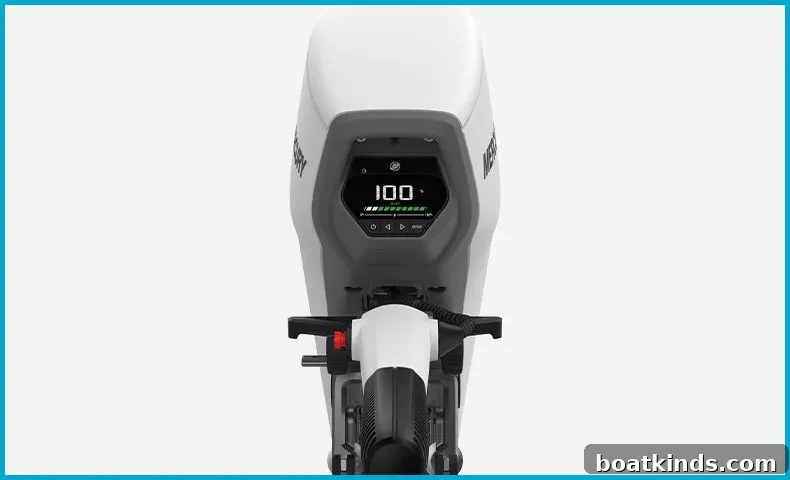
Rather than positioning the Avator as a direct substitute for high-horsepower outboards, Mercury appears to have targeted a low- to moderate-power segment suited to smaller boats and easy transport. The unit shown at the show includes an integrated display that prominently indicates battery status, and the hood houses a removable and interchangeable battery system intended to simplify recharging and battery swaps.
What We Know — and What Mercury Has Not Yet Released
Mercury has not published complete technical specifications for the first Avator model. The company describes the product as an easily transportable electric outboard with a removable battery, an integrated battery-level screen, and a focus on user experience and durability. Specific details such as power output, range, charging times and weight have not been disclosed and will likely be revealed closer to the product’s ordering and delivery timeline.
Availability and Environmental Goals
Mercury plans to open orders for the Avator in September 2022, with deliveries scheduled to begin in 2023. While those dates reflect Mercury’s original timeline, the company also communicated broader environmental ambitions: it is working toward an 80 percent reduction in outboard emissions by 2025, a target that the Avator lineup is expected to support significantly.
Why the Avator Matters
- Electric outboards like the Avator highlight a shift in recreational boating toward quieter, cleaner propulsion options.
- Removable and interchangeable batteries are aimed at improving usability, enabling faster recharging workflows and greater flexibility for boat owners.
- Mercury’s emphasis on fit, finish and system efficiency indicates a focus on delivering a refined customer experience rather than simply swapping internal combustion for electric motors.
As Mercury develops the Avator family of electric outboard motors, boaters and industry observers will be watching for further technical details, model variants and real-world performance data. For now, the Avator represents a clear signal that one of the marine industry’s largest outboard manufacturers is committing resources to electric propulsion and to meeting evolving environmental targets while maintaining familiar standards of quality and integration.