
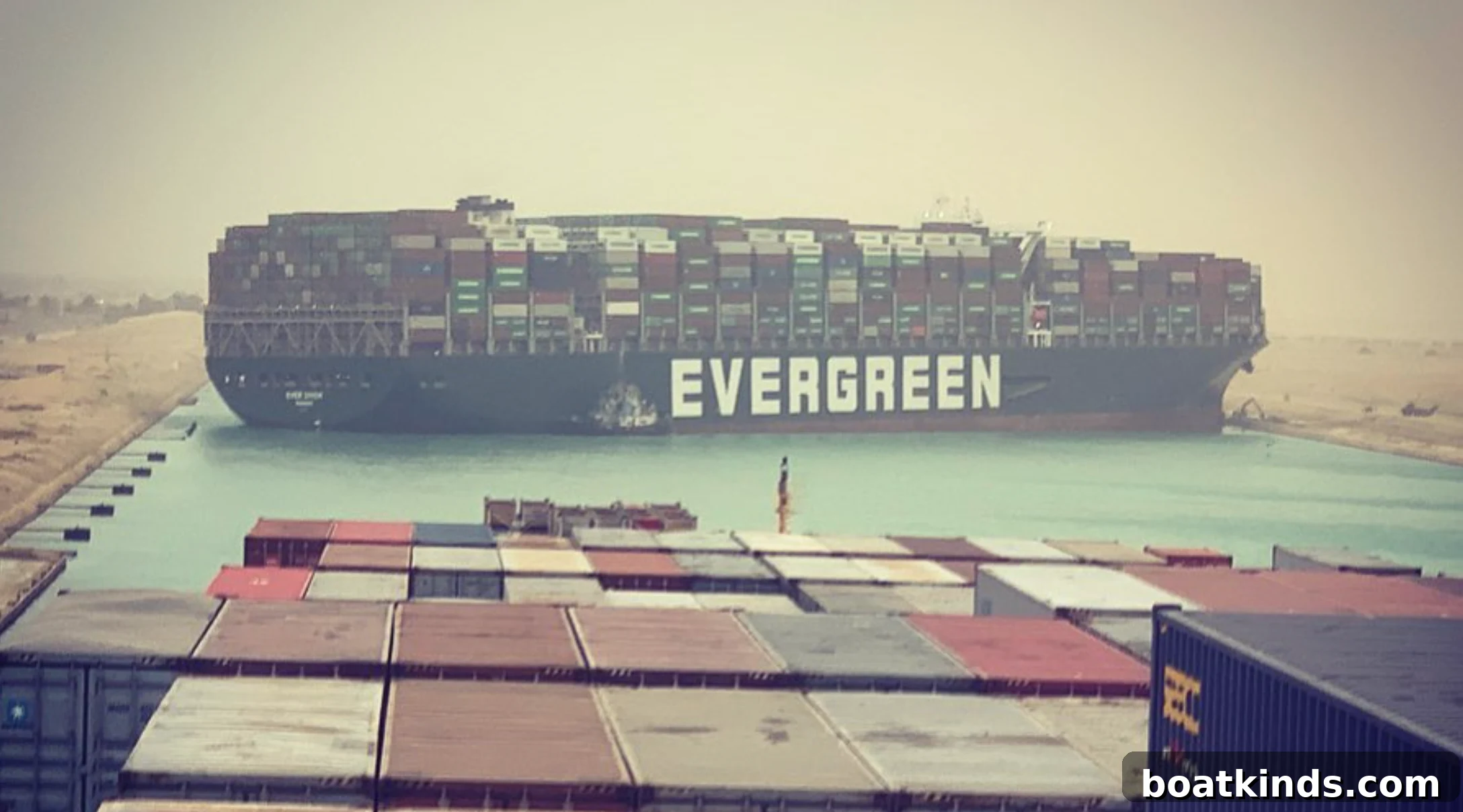
Ever Given Blocks Suez Canal, Threatening Major Disruption to Global Shipping
A 1,312-foot-long containership has run aground in the Suez Canal and could obstruct roughly 10 percent of global shipping for days. The vessel, the Ever Given, was en route from China to the Netherlands when it lost steerage during a severe sandstorm, driving its bulbous bow into one bank of the channel while its stern swung into the opposite bank and effectively jamming the waterway.
The grounding occurred on a Tuesday evening, and within 24 hours more than 100 vessels were reported waiting at both the northern and southern approaches, unable to transit the canal while salvage and tug teams work to free the ship. The blockage has created an immediate backlog of container ships, bulk carriers and tankers that normally rely on the canal’s fast connection between Europe and Asia.
The Suez Canal, about 120 miles long, is one of the world’s busiest maritime routes and serves as a critical shortcut between the Mediterranean and the Red Sea. By allowing vessels to bypass the long voyage around the southern tip of Africa, the canal significantly shortens sailing time and reduces fuel consumption for trade between Europe and Asia. Any sustained closure or slowdown therefore carries consequences for global supply chains.
In the days following the accident, oil tankers are expected to accumulate at the canal’s southern entrance, which could put pressure on refined fuel and crude oil movements from the Persian Gulf toward European and North American markets. The Suez Canal functions as a principal artery for those shipments, and even a temporary disruption can ripple through energy logistics and pricing if delays persist.
Salvage crews made some progress by Wednesday, and the ship was partially refloated; however, authorities had not confirmed when the canal would be fully reopened to traffic. A short delay of a few days would likely be manageable for many shippers, who can reroute some cargoes or absorb limited schedule slips. But a prolonged closure would force decisions with greater economic impact—rerouting vessels around the Cape of Good Hope adds significant distance, time, and cost and could ripple through just-in-time supply chains and port schedules worldwide.
Beyond immediate scheduling headaches, the incident highlights vulnerabilities in a global trade system that depends on a handful of chokepoints. Ports, carriers and logistics managers will be watching the situation closely to estimate the backlog, reschedule sailings, and prioritize cargoes. Companies that rely on timely shipments of components, finished goods, or fuel may face short-term shortages or increased freight rates depending on how long the canal remains obstructed.
Authorities and maritime responders are focused on dislodging the vessel safely and reestablishing normal transits as quickly as possible while taking care to avoid environmental damage or harm to crew and salvage teams. Shipowners, insurers and freight operators must also assess damage to the grounded ship and any potential legal or financial claims that arise from the incident.
For now, carriers are monitoring developments and considering contingency plans. Shippers and supply chain managers should expect ongoing updates and possible schedule changes over the coming days, and they may need to communicate revised delivery estimates to customers and partners until the canal is confirmed clear and traffic resumes at normal levels.