
A Loyal Reader
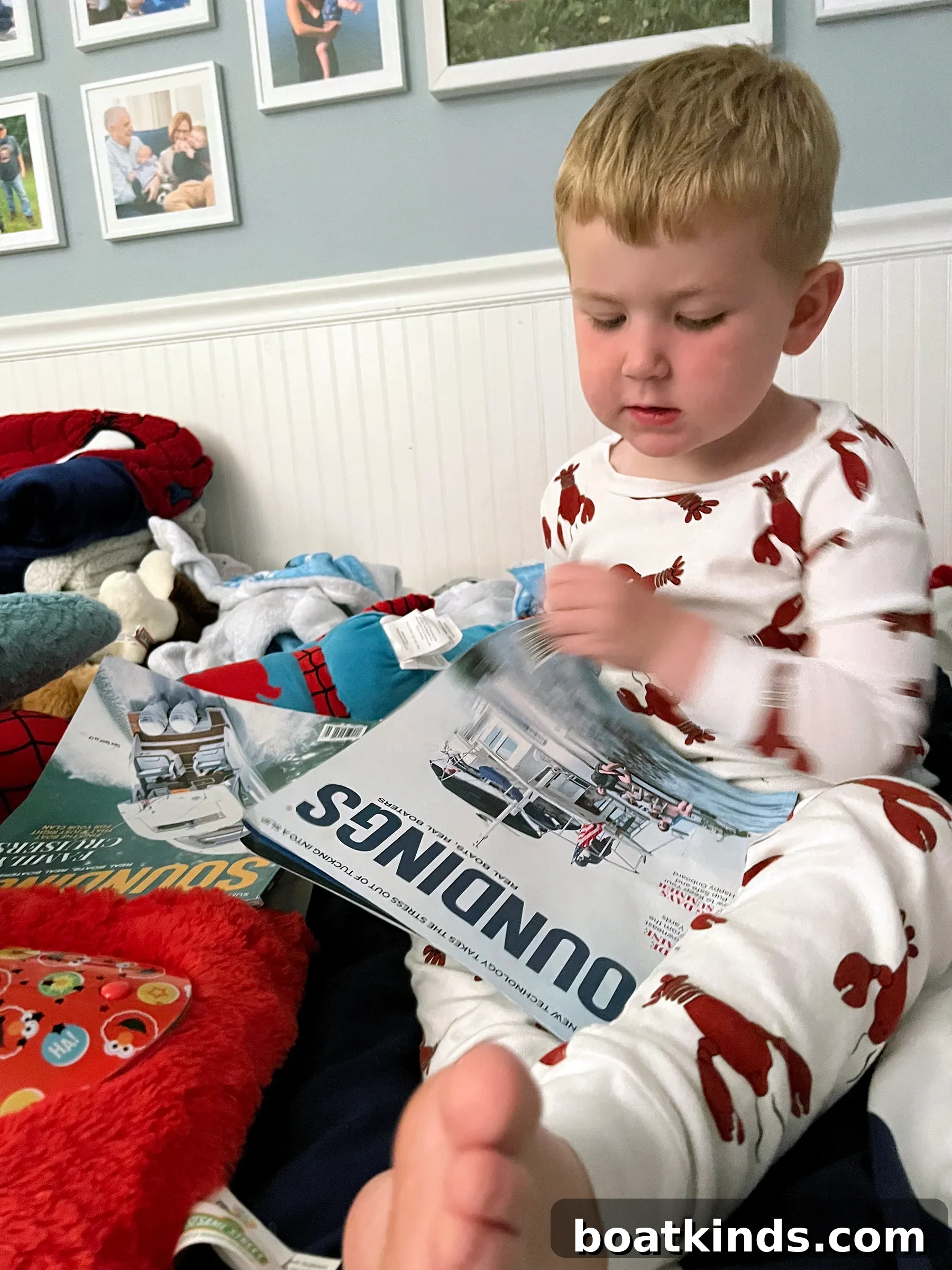
Every time a new issue of Soundings arrives, I make a ritual of reading it from cover to cover. After I’ve savored the articles and photos, I send the magazine on to my young grandson, Charlie. He knows the envelope and often hears the sound of it being opened before he even sees the cover; that little rustle seems to spark genuine excitement. The photo here captures the moment his mother hands him the magazine: his eyes fix on the pages, there’s a quiet focus in his expression, and you can almost see curiosity working its way in. For our family, the magazine has become more than printed pages—it’s a way to connect across generations, to share discoveries, and to invite a child into the long, tactile pleasure of reading a magazine.
There is something almost magical about watching a child encounter content for the first time. The glossy photographs, the maps and diagrams, the short features and longer essays—each element offers an opportunity for conversation. Passing along a physical copy encourages us to linger together over an image, to ask questions, to point out details and to tell related stories from our own experience on the water. For readers who value both tradition and the joy of learning, maintaining this small ritual of sharing a printed magazine can be a meaningful family habit.
Heart of the Matter
Pim Van Hemmen’s story, A Boat for Anne, struck a chord with me. The account of Rik’s creativity in shaping the yacht Aberration for his wife, Anne, is an elegant example of how design and devotion can come together. What stands out is not only the technical ingenuity that went into this tailor-made boat but also the sensitivity Rik shows in meeting Anne’s need for engagement and stimulation. That combination of practical craftsmanship and deep personal care is a rare and moving thing to witness in print.
As someone facing a somewhat similar situation in my own family, I found the piece instructive and inspirational. It demonstrates how attentive design—whether in a home, a garden, or a boat—can become a vehicle for connection and continued participation in life’s pleasures. I sincerely wish Anne and Rik all the best as they enjoy the fruits of that thoughtful collaboration. — David King, Charlestown, Massachusetts
I also appreciated the simple testimony sent by Kurt Voss: he first noticed the piece while thumbing through the new issue and, after setting it aside, returned to read it more carefully. What began as a casual glance turned into one of the most heartwarming stories he had read in some time. That response speaks to the power of well-told human stories: they can surprise us, linger with us, and invite us to reflect more deeply than we expected to when we first opened a magazine.
Captain’s Log
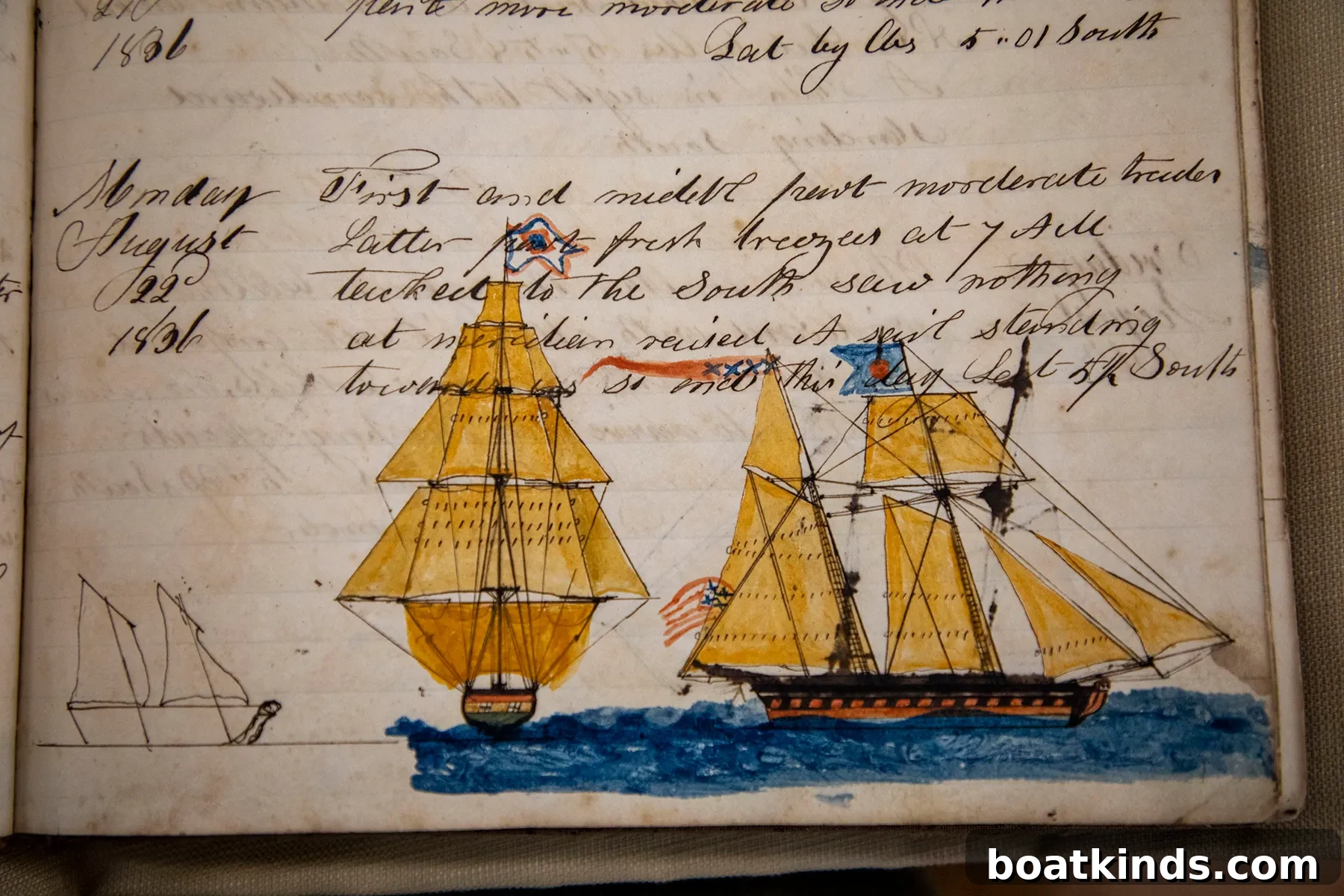
The article A Whale of a Find resonated with me on multiple levels. It described how researchers are carefully combing through whaling ship logbooks in New Bedford, Massachusetts, to extract long-term observations that are now helping inform studies of climate change. That work brilliantly demonstrates how historical documents—kept for practical purposes by captains and clerks centuries ago—have become a scientific resource for understanding environmental shifts over time.
Reading about that effort brought me back to my first year in graduate school at the University of North Carolina, roughly thirty years ago. My advisor, Professor Robert Gallman, an economic historian, was already working on these same New Bedford whaling records. As a new research assistant, I was asked to read ship logs and record routine metrics—barrels of oil, crew counts, voyage dates—the kind of meticulous bookkeeping that, at the time, felt like dry data entry. But as the summer went on, the logs’ narrative details—the accounts of storms, wrecks, and daily life at sea—began to come alive. They revealed the human story behind the statistics and underscored how quantitative records and qualitative experiences intertwine.
Gallman eventually wrote the seminal study In Pursuit of Leviathan, and those early assignments taught me how primary sources can bridge disciplines: economic history, maritime studies, and environmental science. Today’s researchers continue that tradition, using the same carefully kept ship logs to draw insights about historical weather patterns, whale populations, and human responses to changing conditions. It’s a powerful reminder that detailed record-keeping—whether it’s a captain’s logbook, a scientist’s field notes, or family journals—can be of enduring value to scholars across generations.
When historians and climate scientists collaborate, documents once intended for navigation or commerce take on new life as pieces of a larger environmental puzzle. That transformation is inspiring: it shows how knowledge accumulates in unexpected ways and how the past can inform our understanding of the present and future. — Craig J. Richardson, Winston-Salem, North Carolina
This article was originally published in the March 2023 issue.