
Long-Distance Boat Trailering: Lessons from a 1,200-Mile Haul
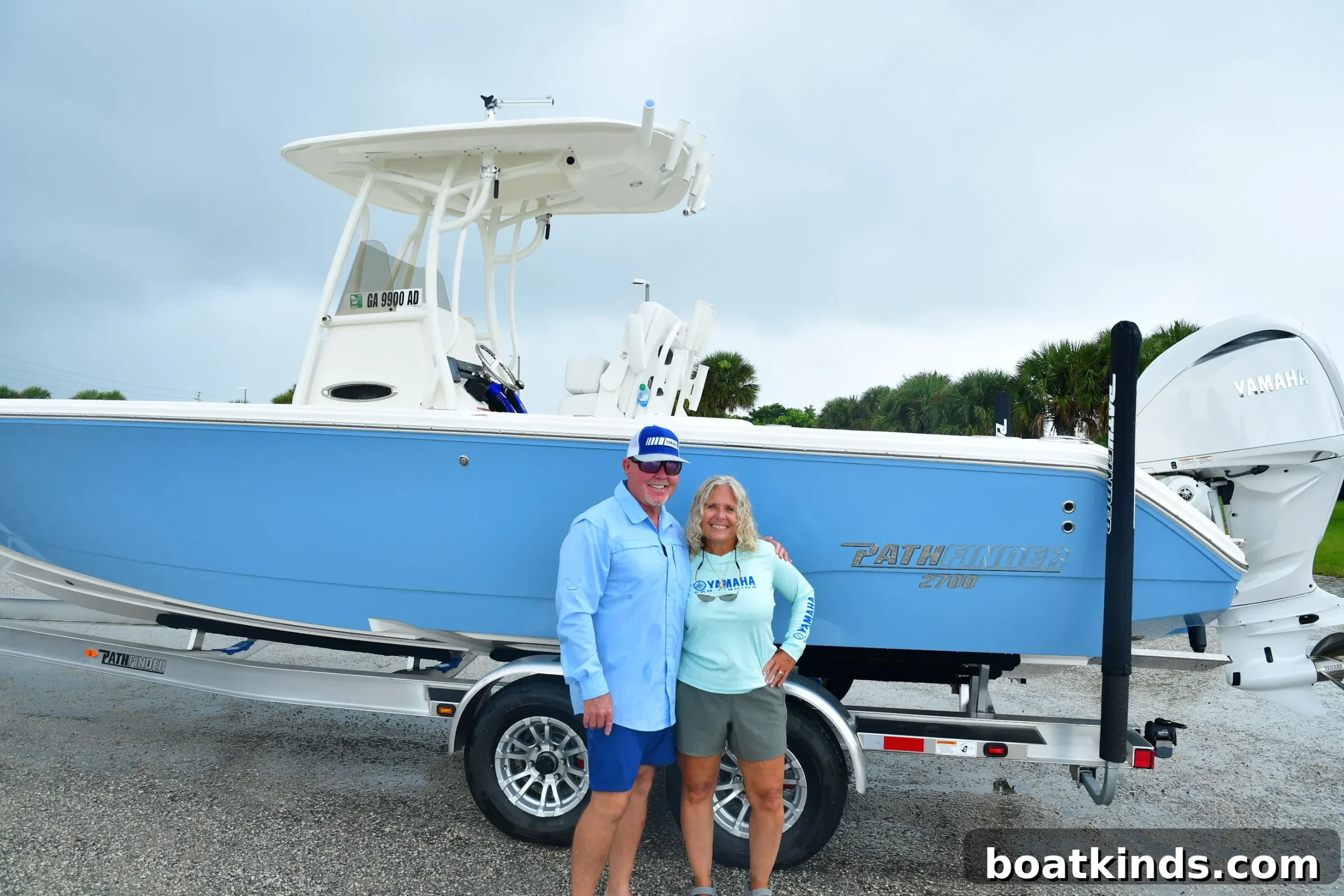
Trailering a boat to a neighborhood launch ramp is one thing; trailering it across several states is another. The farther you travel and the larger the boat and trailer, the more details and challenges you’ll face. I learned that the hard way when I hauled a 27-foot Pathfinder 2700 Open from Florida back to New Jersey.
I ordered the boat toward the end of the pandemic, and delays in construction and delivery left my new boat waiting on an Amera Trail trailer at the Maverick Boat Group facility in Fort Pierce, Florida. I asked about picking it up myself. The company’s marketing manager, Charlie Johnson, offered a trade: they could use the boat for a shoot in Florida if I let them, and in return they would help prep everything needed for the long haul home. I agreed.
My tow vehicle was a Ram 1500 with a 5.7-liter V-8, a Class V receiver, a hitch bar and a correctly sized ball. I packed basic tools and a hydraulic jack, upgraded trailer insurance, and figured my years of pulling a 23-foot center console would translate. That boat had an 8-foot beam; the Pathfinder measured 27 feet with a 9-foot, 3-inch beam. The trip proved to be more demanding than I expected.
Fully loaded, my truck, boat and trailer totaled about 51 feet in length, 9 feet 6 inches wide and 12 feet 6 inches tall. The Ram handled the weight well, and the truck and trailer brakes gave solid stopping power. Still, the extra mass and length change how the rig accelerates, turns and, most importantly, slows. Long-distance towing requires constant attention, both on the interstate and on smaller roads.
Fuel economy changed dramatically. On the southbound run with just the truck and my wife Ginger as co-pilot, we averaged about 22 mpg and fueled roughly every 400 miles. Towing northbound, fuel economy dropped to about 10 mpg, forcing stops every 200 miles. More frequent fueling also means more opportunities for problems—tight gas stations can be awkward or impossible for a long rig. We quickly learned to favor truck stops, and Ginger used a route-planning app to steer us toward locations with wide lanes and easy access.
Width and height were fine on most highways, but there were tense moments—like passing through the Baltimore Harbor Tunnel at 55 mph with inches to spare on each side. Tolls are another expense and logistical issue: many toll systems charge dual- and triple-axle trailers at higher rates than single vehicles. An electronic pass, such as E-ZPass, simplifies payments; if Florida is part of your trip, arrange a SunPass ahead of time.
We completed the trip in two long days with an overnight stop in Raleigh, North Carolina. The drive was doable, but it highlighted that larger boats add another layer of complexity. For perspective on heavy-duty long-haul trailering, I spoke with Capt. Dave Schunke of Point Pleasant, New Jersey, host of the Fish Circus show. He regularly trailers monohulls and catamarans up to 42 feet and has logged more than 100 hauls up and down the East and Gulf Coasts.
“If you’re towing a boat over 9 feet, 6 inches, you’ll need permits in most states,” Dave says. “Our 42-foot Prowler is 12 feet wide and 14 feet high, so we need oversized-load permits everywhere and also deal with height restrictions.”
Permits can be obtained two ways: handle each one yourself, which is time-consuming and complex, or use a permit service. Dave uses J.J. Keller Permit Service. “They apply for all the permits and provide comprehensive route planning based on the dimensions of the truck and trailer,” he says. Wide-load permits often come with extra rules—special lighting, restrictions on nighttime or weekend travel, or requirements for escorts. Rules can even be reversed depending on the route; for example, in certain locations like the Keys, towing may only be allowed at night with a police escort.
Maintenance is critical for long trips, especially with big boats. Dave insists on a professional trailer inspection and service before every long haul. He focuses on hub bearings and brake rotors, replacing and greasing bearings as needed, checking tires for wear and proper inflation, and inspecting suspension components. Dave carries an infrared laser thermometer and checks wheel hubs and rotors at each fuel stop to catch overheating early. He also travels with spare hub and rotor assemblies and has become skilled at roadside replacements.
He recommends joining a trailer-towing membership service and buying solid towing insurance. If something goes wrong, getting your rig to a safe, reputable repair facility quickly can spare you from risky roadside situations or unreliable service providers.
Whether you’re towing something under or over 9 feet, 6 inches, long-distance trailering demands more planning than short trips. Choose an appropriate tow vehicle, keep your trailer in top condition, plan fuel and permit logistics in advance, and make conservative travel choices. With preparation and the right support, you can successfully trailer a boat across states.
This article was originally published in the September 2024 issue.