
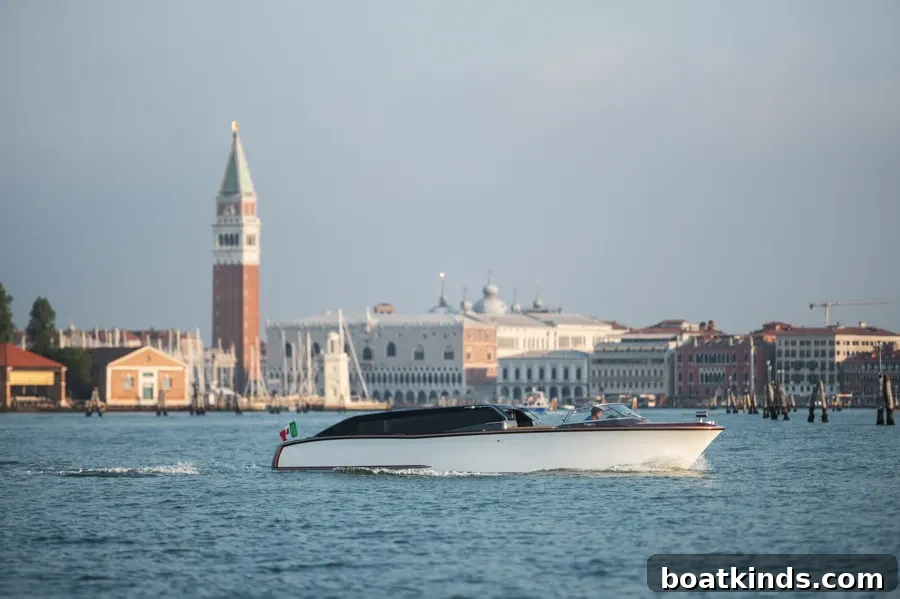
Hybrid Water Taxi Certified for Venice Canals: A Cleaner, Quieter Option
In a city where centuries-old traditions shape daily life, persuading local water taxi operators to move away from internal combustion engines is no small task. Venice’s reliance on motorized boats has long contributed to noise, air pollution and subtle structural wear along its fragile waterways. To tackle these issues, Venetian designers have developed a hybrid luxury water taxi now certified for use on the city’s canals.
Designers and Purpose
Carlo Nuvolari and Dan Lenard of Nuvolari Lenard, a Venice-based design studio known for superyachts, created the hybrid water taxi specifically to reduce the environmental and acoustic impact of urban marine transport. Their concept mixes practical performance with sensitivity to Venice’s unique heritage: diesel power for open-water crossings and electric propulsion for quiet, zero-emission cruising inside the canal network.
How the Hybrid System Works
The diesel-electric arrangement is designed to balance range and sustainability. On longer legs — for example, crossing open water to reach the airport — the vessel runs on diesel where it can operate efficiently and allows onboard batteries to recharge. Once inside the city’s canals, the system switches to electric drive, minimizing noise and direct emissions when the boat is navigating the dense urban fabric of Venice.
The Prototype and Testing
The prototype, named Thunder, was constructed at the Cantieri Vizianello shipyard in Venice. After extensive sea trials, Nuvolari Lenard reports that the project completed about a year of testing before securing certification for canal use. The successful trials demonstrated the practicality of hybrid propulsion for routine urban transport and provided real-world data to refine the installation, acoustics and handling for shallow, narrow waterways.
Materials and Aesthetic
Nuvolari Lenard maintained a strong link to Venetian boatbuilding tradition by using classic wooden materials, while integrating modern systems and finishes where appropriate. The designers aimed to preserve the familiar look and feel of a traditional water taxi, so the vessel feels at home in historic surroundings even as its propulsion becomes more advanced and sustainable.
Local Impact and Industry Response
Nuvolari Lenard hopes the certified hybrid will persuade transport companies — often conservative in their choices — to consider cleaner alternatives. “As Venetians, Dan and I feel a strong connection with the city and have experienced first-hand the damage that is being caused to its delicate structures, through air and noise pollution as well as physical erosion,” Nuvolari says. “We felt that it was crucial to address the problems facing our beautiful hometown, through a unique project dedicated to helping Venice.”
Reducing noise and tailpipe emissions in busy canal zones can improve the quality of life for residents, protect sensitive masonry and foundations, and make the city more attractive to visitors who value a quieter, cleaner environment. The hybrid model aims to be a pragmatic compromise: retaining the operational flexibility transport companies need while significantly cutting local environmental impacts.
Commercial Interest and Future Directions
Early commercial interest suggests the design may find applications beyond urban taxi services. Nuvolari Lenard has already received a request to adapt the 30-foot version of the concept as a limousine tender for a superyacht client. Additionally, the firm is in discussions with an Asian automotive manufacturer to explore hydrogen fuel propulsion as an alternative zero-emission option for future vessels.
These enquiries indicate broader market appetite for low-impact marine transport solutions that combine heritage styling with modern propulsion. Whether applied as a private tender, a tourist service, or a public water taxi, the platform provides a versatile template for cleaner, quieter operations.
Design Philosophy and Long-Term Vision
Nuvolari Lenard describes their work as a continual effort to push the boundaries of design and technology in marine transportation. By developing practical, attractive alternatives to conventional fossil-fueled boats, the studio seeks to protect Venice’s character and infrastructure for future generations while demonstrating commercially viable pathways to sustainability in coastal and urban waterways.
The certified hybrid water taxi represents a concrete step toward greener mobility in Venice: a blend of tradition and innovation that respects the city’s history while addressing pressing environmental concerns. If adopted more widely, this approach could become a model for other historic port cities looking to balance preservation, tourism and everyday transportation needs.