
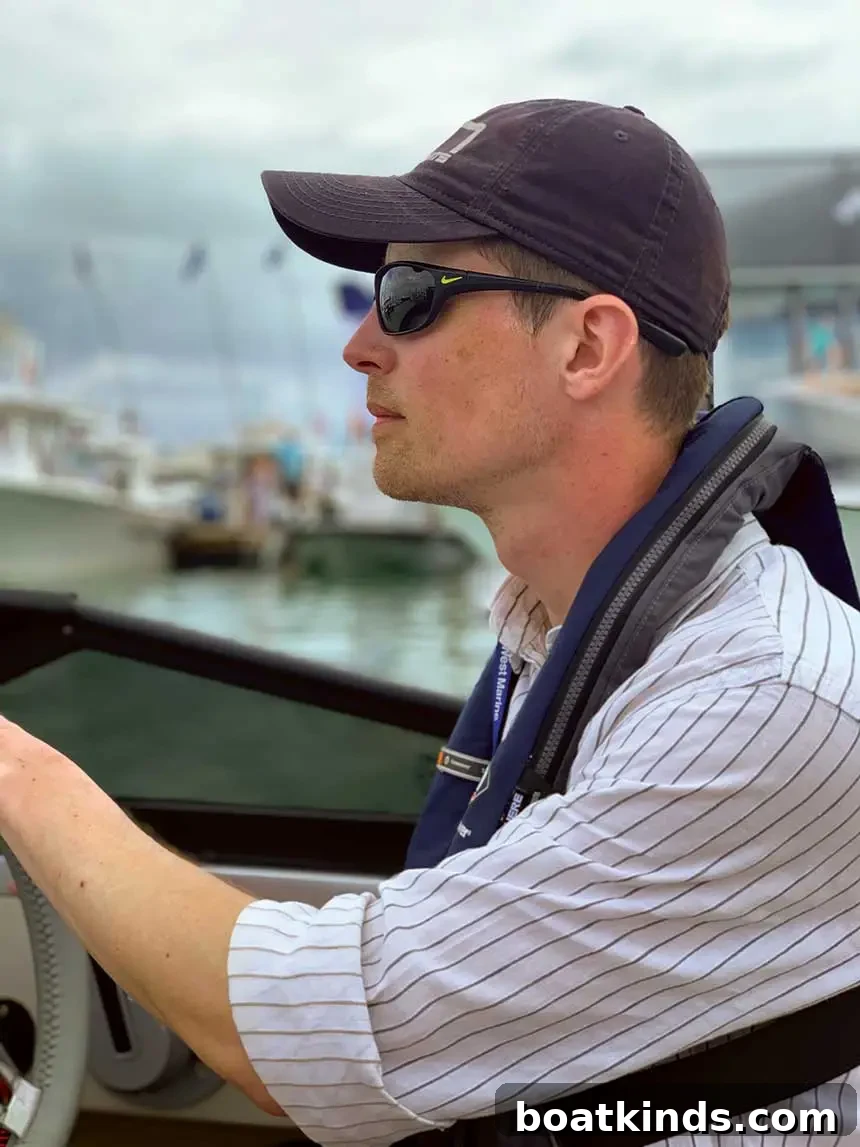
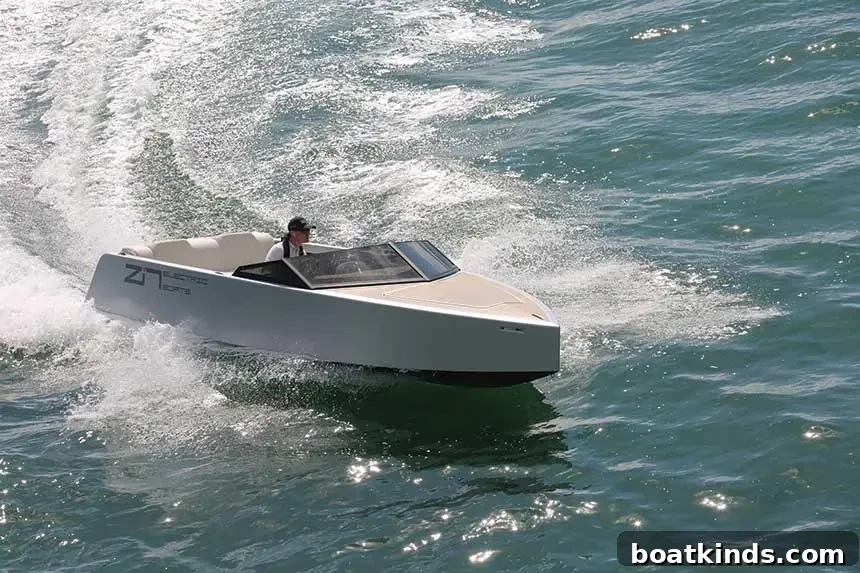
Piotr Zin is personable, articulate and remarkably inventive—some might even call him delightfully obsessive about boats. At 42, the industrial designer who founded Zin Boats is steering his electric Z2R through the Miami South Channel, a boat he conceived to prove that electric propulsion can deliver performance, style and efficiency without compromise.
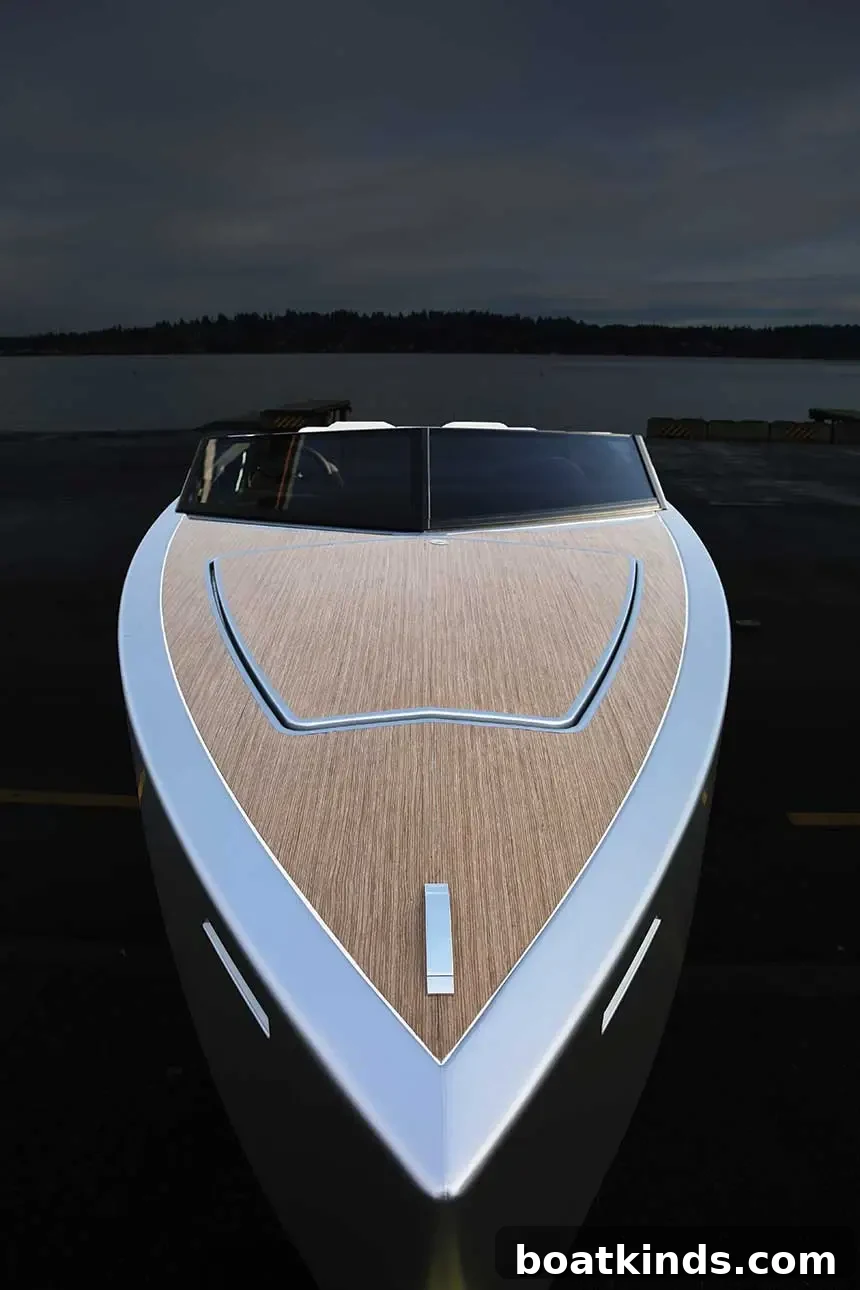
Zin’s love of floating machines began in Poland and evolved over two decades of living and working across the United States. He has worked on automotive and marine projects for leading companies, but the Z2R is the first boat produced under his own brand, Zin Boats. The 20-foot, all-carbon electric runabout combines a striking profile with high performance: a cruising range of 80–100 miles and a production top speed around 30 knots.
He first fell for boating at 15. After university studies in Krakow and a scholarship to the University of Pennsylvania to study law—an idea he soon abandoned—Zin cut his teeth at sea. He sailed schooners, raced one-design boats and worked on deliveries. Later he focused on industrial design, earning a scholarship to the College for Creative Studies in Detroit and gaining early professional experience with General Motors.
Zin’s path took him through several major design studios and marine manufacturers. At U.S. Marine, a division of Brunswick, he helped reshape popular models such as the Bayliner 175 bowrider and redesigned the boxy 242 into the sleeker 246 Discovery. After the 2008 recession cost him that position, he took on independent projects and ultimately joined BMW Group DesignworksUSA, where he broadened his portfolio to include automotive, marine and other industrial designs. At Designworks he contributed to projects ranging from outboard engine profiles to airline interiors and exercise equipment, and absorbed lessons from leading designers that shaped his aesthetic and technical approach.
Following a stint at Microsoft and a desire to return to a smaller, more agile environment, Zin launched Zin Boats in 2018 with Ross Carmichael as vice president. Carmichael, a longtime collaborator, provides engineering expertise and production know-how. The company formed shortly after the birth of Zin’s first child and a move onto a floating home on Seattle’s Lake Union—choices that also sharpened his focus on environmental impact and sustainable boating.
Motivated by a love for pristine waters and a desire to leave them intact for future generations, Zin set out to design an electric motorboat that did not sacrifice speed, handling or comfort. He attended the boot Düsseldorf show to evaluate propulsion systems and ultimately selected Torqeedo, in part because Torqeedo incorporates BMW’s 360-volt battery architecture. That battery design allows smaller cables to carry higher currents and delivers the torque and top-end performance Zin wanted. Torqeedo adapted the i3 battery for marine use with a modified battery management system, waterproofing to IP67 and added shock mitigation to protect lithium cells from vibration.
Battery placement and weight distribution were central to the Z2R’s design. Zin mounted the 612-pound battery beneath the stern bench and positioned the motor and chargers forward to balance the boat fore-to-aft. The goal was a neutral trim at speed rather than the stern-heavy bias common in many gasoline boats.
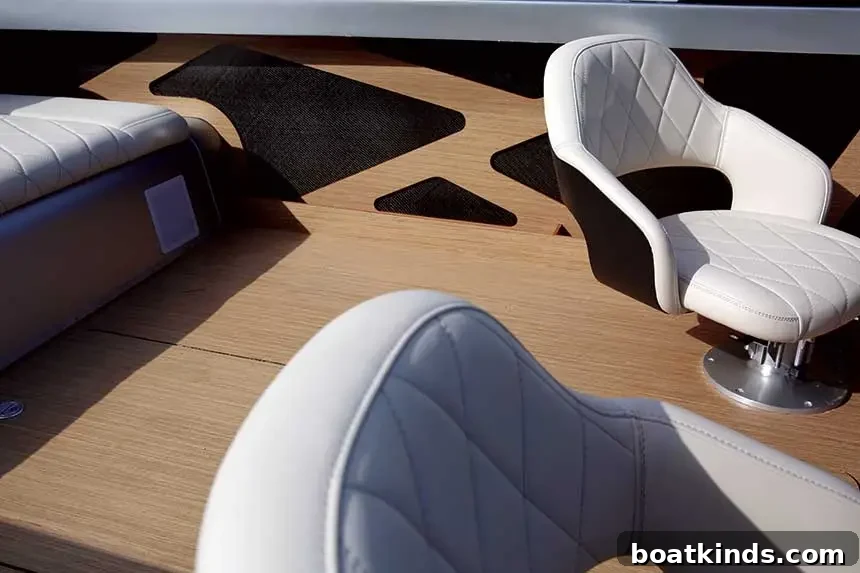
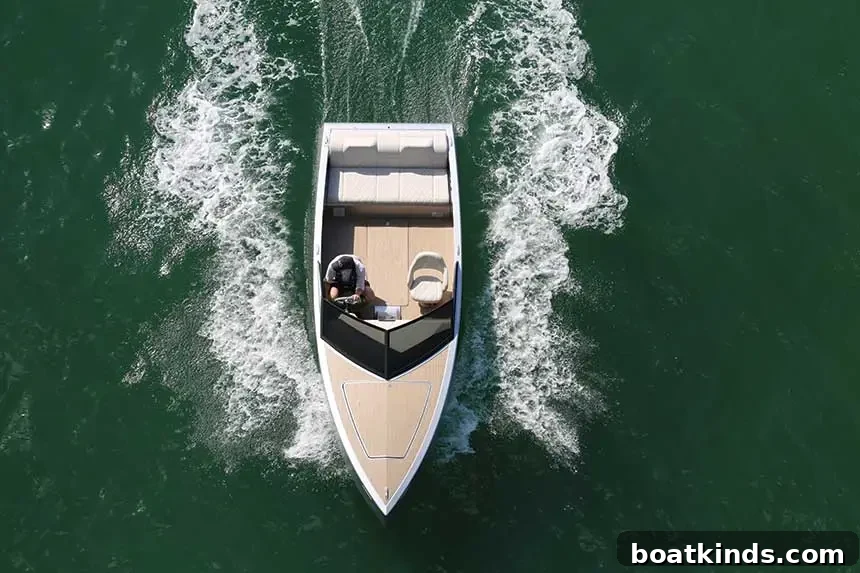
The hull form blends a relatively flat bottom for efficient planing with a steep entry to handle seas. Its variable deadrise measures about 12 degrees at the transom, making the Z2R suited for lakes, intercoastal waters and use as a tender. Constructed entirely of carbon fiber to maximize strength and minimize weight, the dry hull weighs just 341 pounds; the fully equipped boat comes in around 1,750 pounds. Every structural element is carbon, the hull is finished with Awlgrip and a matte metallic vinyl wrap for durability and an elegant look, and the deck features laminated oak veneer for warmth and refinement. CNC-routed interior patterns and sculptural bucket seats complete the high-end fit and finish.
During early trials, a stripped-down setup with an aggressive prop recorded bursts up to 50 knots, demonstrating the hull’s potential. The production configuration uses a different prop and a 4:1 reduction ratio that reduces the motor’s 7,000 rpm to about 1,800 rpm at the prop. In normal trim the Z2R reaches a top speed near 30 knots and benefits from instant electric torque—excellent for quick acceleration and waterskiing—while maintaining composure in a one- to two-foot chop or larger seas when required.
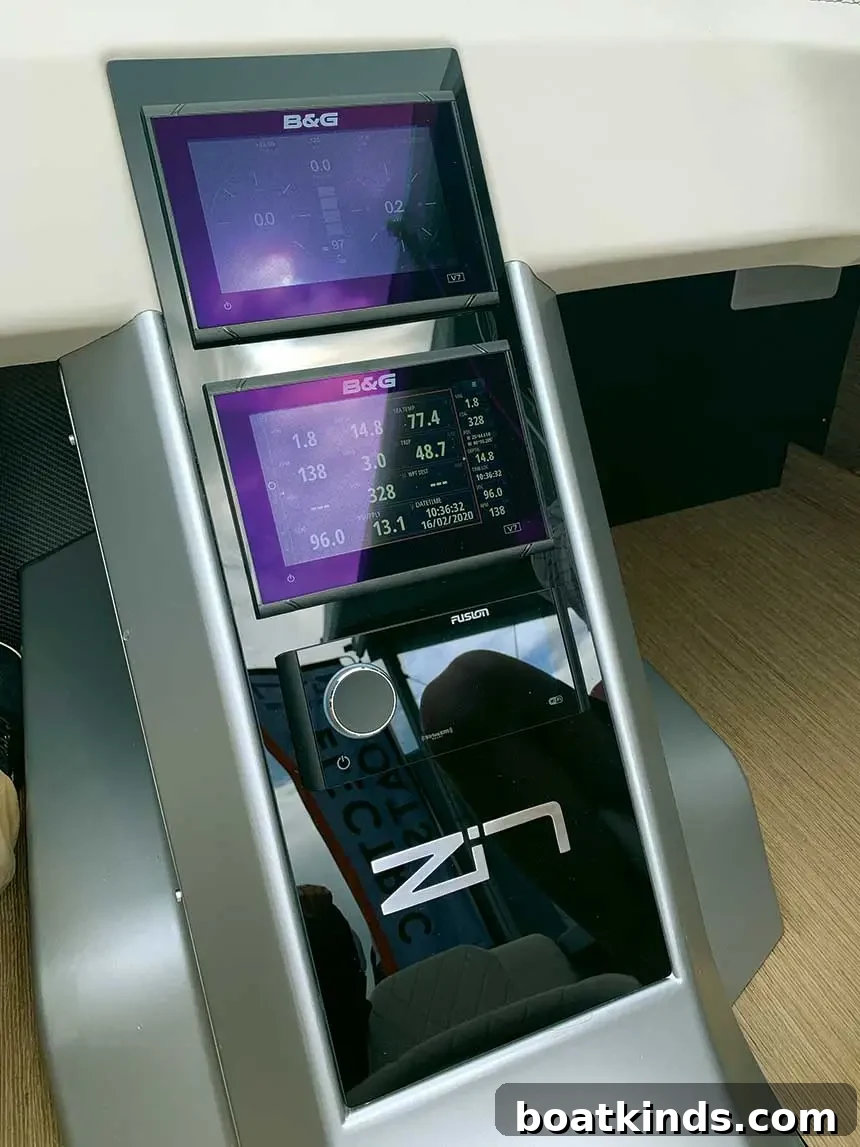
On Miami waters the Z2R demonstrates rapid planing: with three adults aboard, nearly 600 pounds total, the boat planes to 25 knots within seconds. The Torqeedo system’s GPS-based throttle continuously estimates power consumption and remaining range, addressing common concerns about running out of charge in a way that feels familiar—just as boaters today would call for a tow if they ran out of fuel.
Zin emphasizes selling the benefits of electric boating by highlighting performance first: faster acceleration, quieter and cleaner operation, and lower operating costs—then adding the environmental advantages as a clear bonus. He credits companies like Tesla for shifting public perception by proving electric vehicles can be high-performance and stylish, and he expects battery technology to continue improving rapidly.
Looking ahead, Zin plans to expand the lineup. The next model, the Z2T, will be a tender based on the Z2R hull, followed by larger electric cruisers aimed at longer range and comfortable performance. Zin envisions a future where electric cruisers can travel hundreds of miles affordably while remaining light, strong and quiet—bringing high performance and sustainability to mainstream boating.
As we return to the dock and pass a gas-powered boat burning fuel at hundreds of gallons per hour, Zin points out the operating cost contrast: the Z2R can be fully charged for just a few dollars. For him, that is proof of a broader revolution underway in boating—one that pairs design, carbon-fiber construction and advanced electric propulsion to create fast, refined and environmentally responsible boats for a new generation of boaters.