
Northeast Marlin Migration: Why Big-Game Anglers Are Chasing White Marlin North
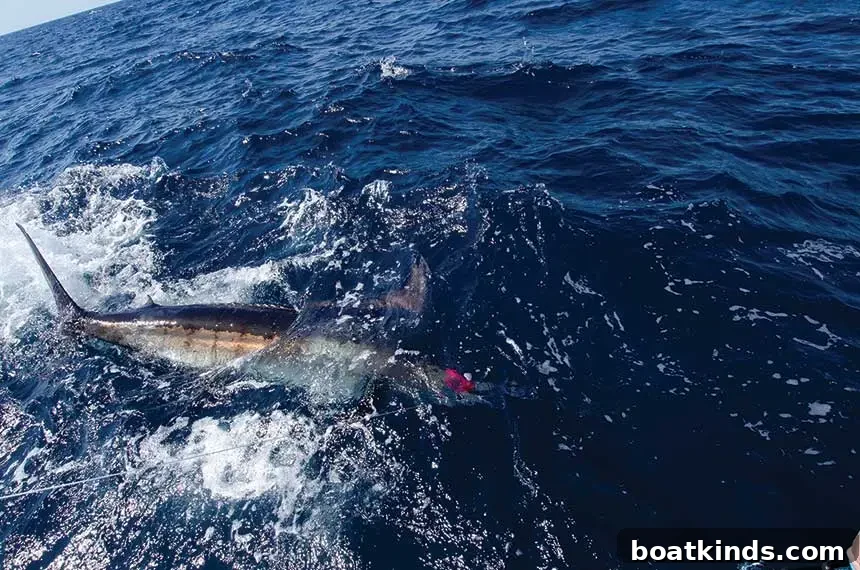
Blue skies, cobalt water and puffy white clouds can make these Northeast fishing grounds look like the Caribbean, but the scene is real and increasingly familiar: high-powered sportfishing boats spread baits and teasers across open ocean, anglers stand in cockpits of multimillion-dollar yachts, and white marlin break the surface in explosive strikes. In recent seasons a dedicated fleet of marlin-focused boats has followed warm water north, turning parts of the Northeast into world-class big‑game fishing grounds.
Warmer water pushed farther up the coast has carried billfish, including white marlin, into areas once considered outside their regular range. A handful of committed anglers and captains chase them wherever the fish go, sometimes cruising hundreds of miles from home to find the warm eddies and deep structures that hold billfish. For these crews, the payoff is the challenge and exhilaration of hooking and releasing marlin in waters that were rarely fished for them just a few decades ago.
White marlin are prized for several reasons: they inhabit offshore territories most anglers cannot reach, they demand precise rigging and polished presentation, and their surface strike—fast, violent and spectacular—delivers unmatched excitement. “We’re seeing more fish moving north,” says Capt. Rich Barrett, who has seen crews chase marlin as far as Montauk, New York, and Hyannis Port, Massachusetts. Barrett grew up fishing the New Jersey coast with his father, Pete, and today runs Shark Byte, a 76-foot Bayliss custom yacht built specifically for high-end sportfishing. With 5,000 horsepower, nearly 3,000 gallons of fuel and advanced electronics, Shark Byte is designed to find, hook and release big fish on long-range trips.
Targeting marlin in the Northeast often means long runs in search of warm-water patches and offshore structure. “I’ve run as far as 225 miles,” Barrett notes. Fishing from Rumson, New Jersey, his trips have covered the coast from New England down to the Outer Banks. Over the years he’s seen a shift in water temperatures—where 77–78°F used to be considered warm, crews are now finding fish in 80°F water—and that shift has changed where and how marlin behave and where they turn up.
The same warm currents that attract marlin also bring a diverse mix of pelagic species: yellowfin tuna, bluefin, bigeye, wahoo and mahi-mahi can all show up with the billfish, creating what Barrett calls “a fish bowl with some of the best fishing in the world.” For marlin anglers, this abundance raises the stakes and the opportunity for mixed‑species days that test every skill on board.
Timing matters. Barrett says the season shapes up gradually: tuna arrive in early summer and marlin typically show up by late summer, often following warm-water eddies into offshore canyons and other structure. Crews who stay alert and mobile can capitalize when conditions align.
Capt. Blain Champlin of Canyon Lady—an experienced marlin captain from a family of anglers—says seasonal abundance has grown dramatically. “In the eighties we might catch 20 white marlin in a season. Now, releasing 100 marlin in one summer is the new benchmark,” he says. When the water is right, Champlin has even connected with large blue marlin and trophy bigeye tuna in the same trip. His boat is set up to work the same global tactics that have proven successful in other marlin grounds.
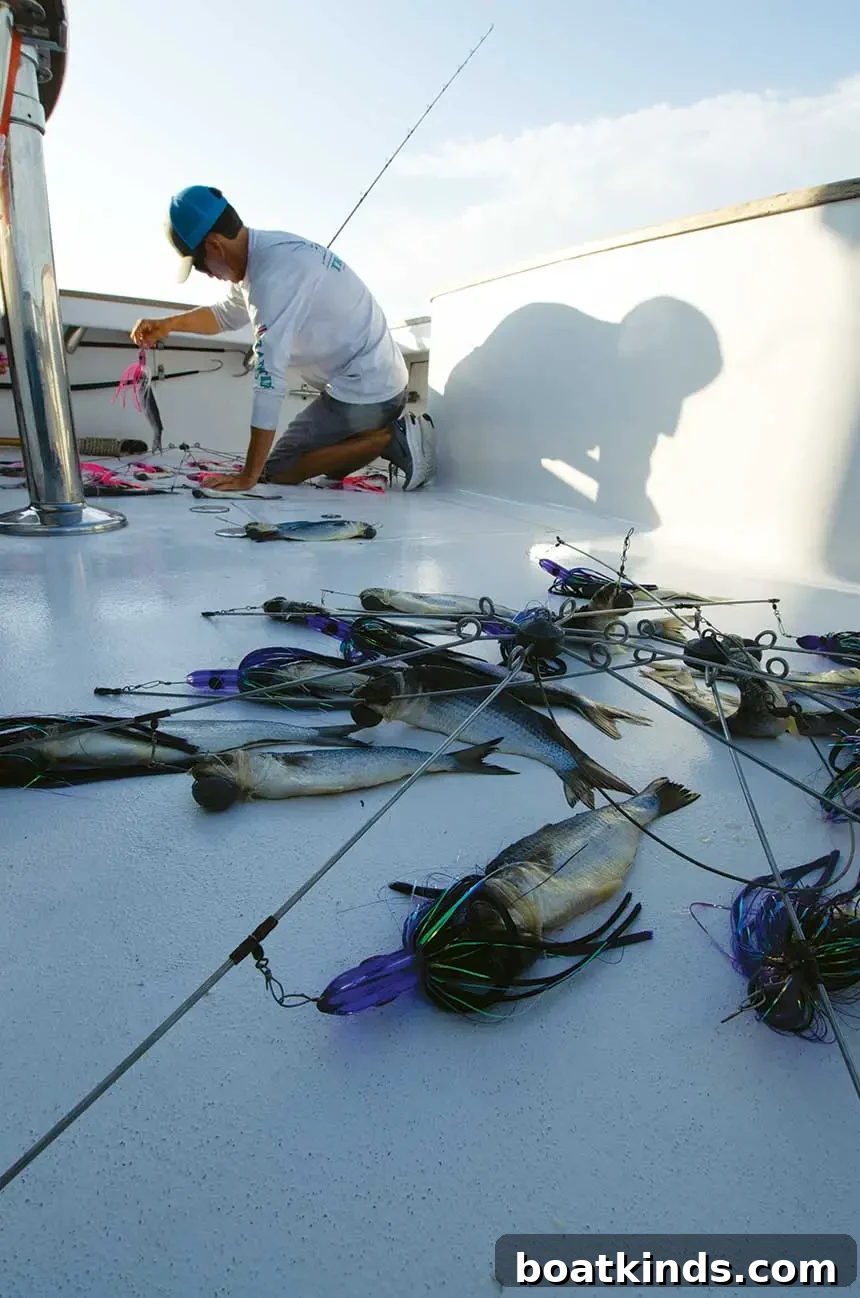
Champlin’s standard spread focuses on small ballyhoo presented around dredges and rubber squid teasers to invite the fish into striking range. A dredge—a metal framework that pulls many natural and artificial lures with no hooks—and a chained teaser of rubber squid are used to draw billfish up and follow the boat. When a marlin commits to the spread, crews strip away teasers and present a hooked bait.
On Canyon Lady, Champlin runs a three-tier dredge on each side of the boat, often mixing ballyhoo, mullet and 9-inch swim shads for variety. His primary bait lanes carry small ballyhoo on circle hooks from the long riggers and flatlines. Typical rigging includes a 30-pound rod-and-reel combo, 50-pound braided backing topped with 25‑pound mono, an Albright knot to 25 feet of 80‑pound clear mono, a swivel, and 5 feet of 60‑pound leader to a 7/0 circle hook—rigging designed to present a natural bait while protecting the fish and maximizing hook-up rates.
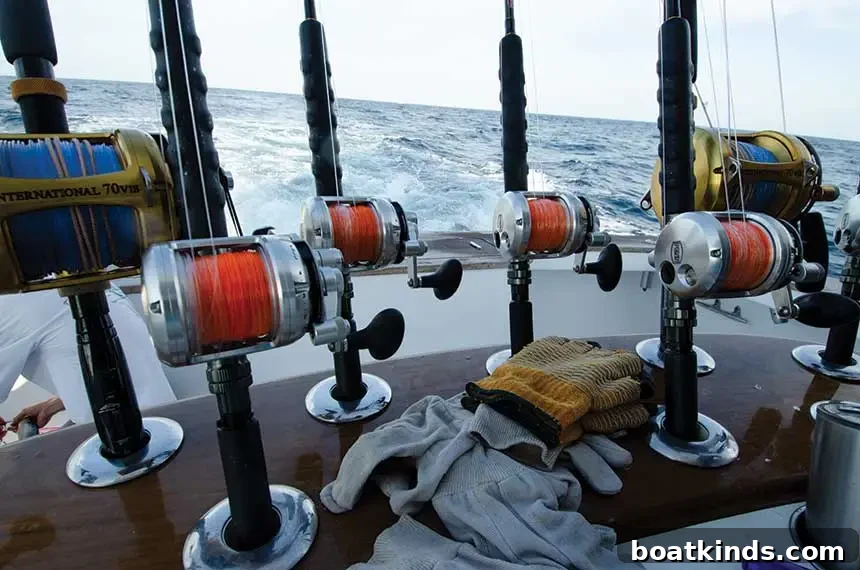
When a marlin eats, the sequence is precise: the crew frees the teasers, the angler takes the reel out of gear and lets the line run so the fish can turn and swallow the bait, then gradually applies drag to set the hook and bring the fight to life. The captain maneuvers the boat to capitalize on the strike and, if possible, to maintain a live spread to tempt additional fish. Once boated, or when releasing, the mate carefully handles the leader so the fish can be returned to the ocean quickly and safely.
For captains and crews who dedicate their lives to chasing billfish, the long runs, meticulous gear work and patient hours on the ocean all add up to moments of pure adrenaline when a marlin explodes on the surface. “It’s all we do,” Champlin says. “We base our lives around marlin fishing.” For anglers willing to run offshore, the Northeast’s expanding marlin season now offers some of the most exciting pelagic fishing on the eastern seaboard.
This article originally appeared in the June 2020 issue.