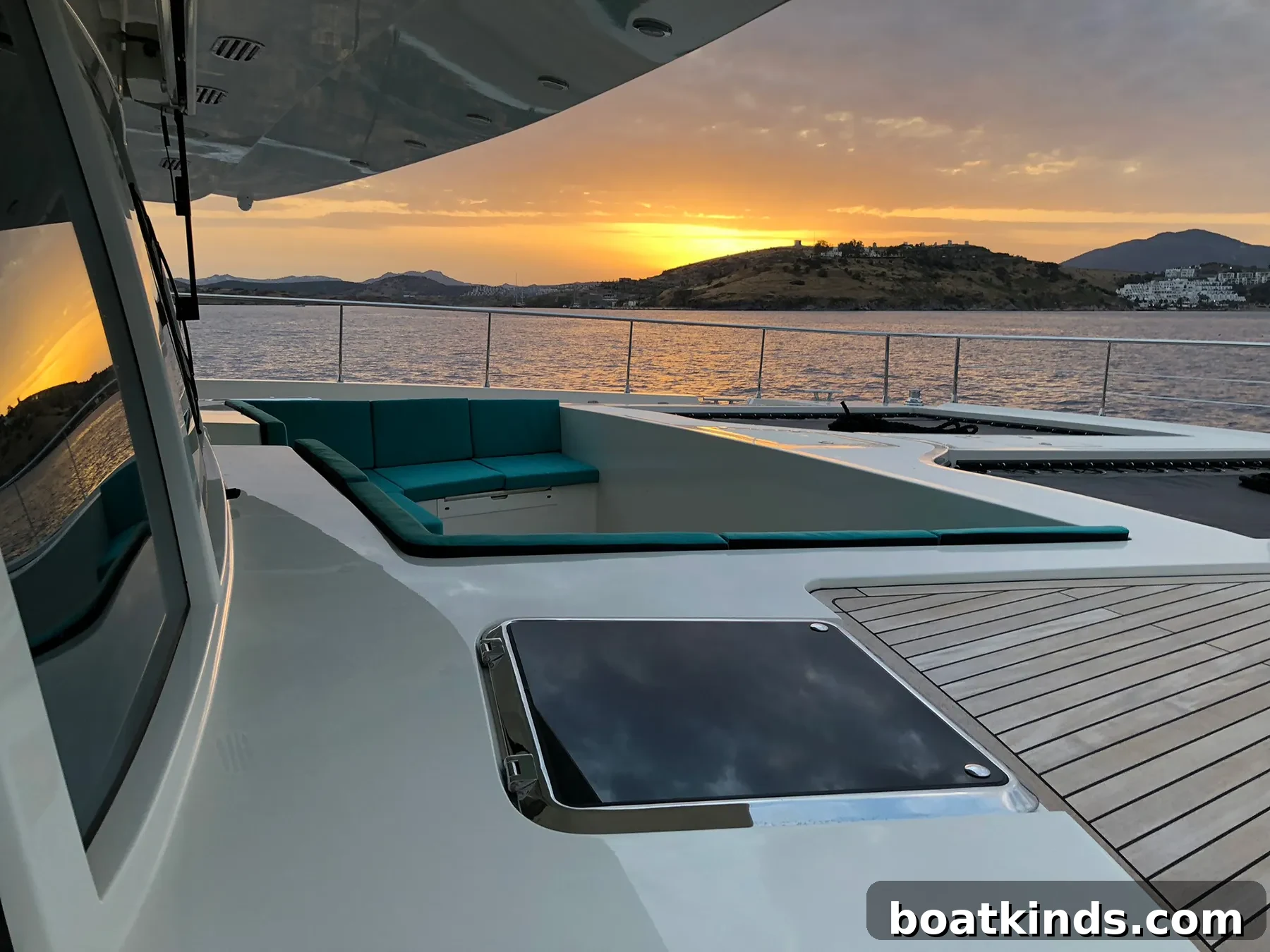
At first glance the Serenity 64 resembles many other luxury power catamarans: generous open areas, an expansive aft cockpit and multiple places to lounge in the sun — on the bow, on the stern and up on the flybridge. Inside, the layout emphasizes volume and comfort with a 320-square-foot salon, a large galley and four custom staterooms in addition to a crew cabin. Elegant finishing touches include shower walls faced with slate thin enough to curve around corners, but what truly distinguishes this ocean-capable catamaran is its quiet solar-electric propulsion system.
Designed and built by Boyd Taylor and Elizabeth Neville, the first Serenity 64 was completed in 2018 in Turkey’s free-trade zone and made its initial public appearance at the Cannes boat show. Earlier this year the pair brought hull number two to the Miami Boat Show to introduce the model to an American audience. The couple resides in Orlando, Florida; Elizabeth Neville practices environmental law, while Boyd Taylor brings a varied background that includes journalism, translation, investigation and work in media. Their combined experience and shared interest in sustainable technologies motivated them to create a practical, ocean-capable solar-electric yacht for people who want to move away from diesel propulsion without sacrificing long-range cruising ability.
While they are not the first to explore solar-electric propulsion — other builders, including Austrian Silent-Yachts, introduced similar concepts and sold large flagship models even during the pandemic — Taylor and Neville believe there is ample room for the Serenity 64 in the marketplace. Their line also includes a 74-foot model designed to cruise efficiently at 7 to 9 knots. “We welcome the competition,” Taylor says, reflecting confidence in their design choices and market positioning.
The owners report real-world success: hull one completed a three-month Mediterranean passage powered primarily by solar energy and batteries. The trip began at the Turkish yard and included stops in Greece, Italy and Spain. According to Taylor, the boat ran on solar power and stored battery energy throughout the voyage, demonstrating the practicality of the system for extended coastal and international cruising.
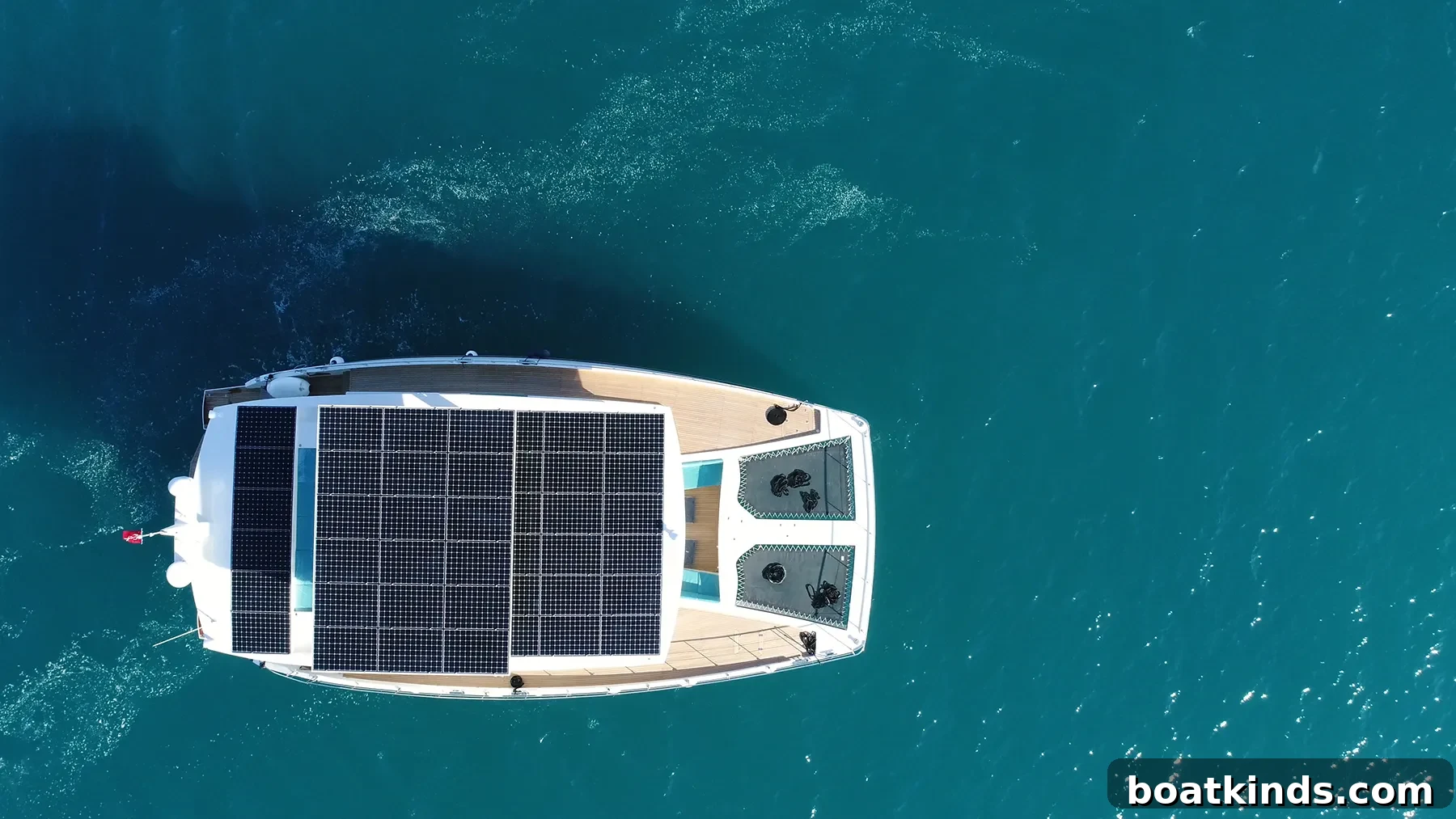
The Serenity 64’s energy system centers on more than 700 square feet of solar panels mounted across the salon roof and the hardtop over the flybridge. Forty-two high-efficiency SunPower modules generate more than 15 kWh at peak production. That output, Taylor explains, is sufficient to support all-day cruising while still charging the battery bank enough to power the boat through the night — including onboard loads such as air conditioning. Solar energy is stored in a 142 kWh battery bank composed of four 35.5 kWh modules. Additional separate battery banks provide house, emergency, engine start and bow thruster power. Most onboard systems, including the electric propulsion motors, operate on a 96-volt architecture; inverters and step-down chargers supply 24-volt power for the remaining systems.
Propulsion comes from two 18 kW TEMA hand-wound marine electric motors with internal air cooling, which deliver a comfortable cruising speed of about 5 to 6 knots on electric power. The hull form favors efficiency: rather than classic canoe hulls, the Serenity 64 uses wave-piercing hulls and extensive use of carbon fiber in the structure. According to Taylor, the all-carbon construction produced a weight saving of approximately 16,000 pounds. To maximize solar harvest and streamline performance, the hardtop over the upper helm can be hydraulically lowered when that station is not in use, improving aerodynamics and reducing shading on the coachroof solar array.
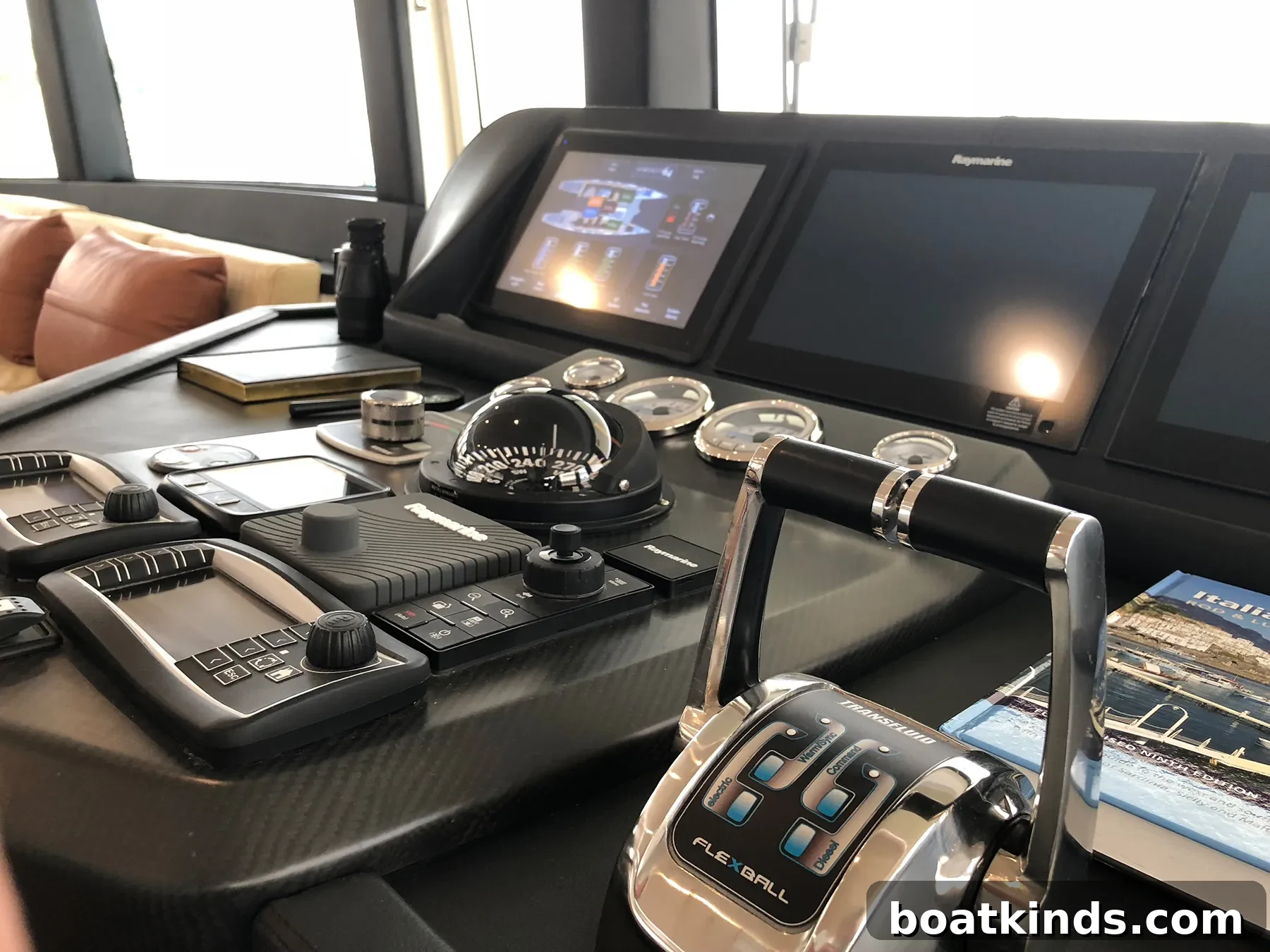
Although the company plans to offer fully all-electric iterations in the future, the initial boats include auxiliary diesel power for extended offshore capability. Each of the first two hulls is fitted with twin Volvo Penta D3 diesels rated at 200 hp, connected to the driveshafts to provide a top speed of around 16 knots and dependable backup for ocean passages. A diesel generator is also installed to charge the batteries when solar input is insufficient for prolonged periods. Taylor notes that despite the lengthy Mediterranean cruise, diesel use was minimal: the generator logged only about 15 hours total, of which 8 hours were recorded while the boat remained in the yard, and the boat did not require shore power after departing Turkey.
With its large solar array and significant battery capacity, the Serenity 64 offers a form of near-continuous renewable energy for onboard systems, giving owners the potential for extended range and endurance under favorable solar conditions. “It’s ludicrous,” Taylor says of the abundance of free energy at sea. “Who doesn’t want free power?” The Serenity 64 blends roomy liveaboard comfort with a modern, low-emission propulsion philosophy suitable for owners seeking quieter cruising and reduced fuel dependence.
Specifications:
LOA: 64’0”
Beam: 31’0”
Draft: 3’7”
Displ. (light): 48,000 lbs.
Power: (2) 18-kW TEMA electric drives; (2) Volvo Penta 200-hp D3 diesels
Fuel: 405 gals.
Water: 435 gals.
Price (loaded): $3.3 million