
Essential Backup Gear Every Boater Should Keep in Pairs
My older brother and I have a perpetual game of phone tag—usually several missed calls and a few teasing voicemail jabs before one of us answers. So I was surprised last month when he picked up on the first ring. He sounded frazzled.
“Hey, Bro. We’re moving a 54-foot cruiser for a friend and the GPS just went out,” he said. “I can’t figure where I am. I’m trying to get it back—can I call you later?”
I suggested checking the antenna for corrosion and rebooting the unit, then added that a boat owner moving a big cruiser should have a cheap spare GPS on board. He said he’d “look in a drawer” and hung up. I never did get that callback, so clearly things worked out. But the brief exchange reminded me how valuable inexpensive backup gear can be. Below are practical, high-impact items boat owners should consider carrying in duplicate.
Handheld GPS. No modern chartplotter can hurt, but a small handheld GPS and an up-to-date paper chart are indispensable backups. Handheld units are affordable—typically from about $70 to a few hundred dollars depending on features—and they provide reliable latitude and longitude when you need them. While many smartphones include GPS chips and mapping apps, I don’t recommend relying on them as primary emergency navigation tools because maps and location services can depend on cellular coverage and cloud services. Choose devices designed for the marine environment and learn to use them alongside traditional paper charts.
Personal Locator Beacon (PLB) as a backup to your EPIRB. Your vessel likely carries an EPIRB, but that unit won’t help if it fails, isn’t accessible, or if circumstances keep you from getting to it. A personal locator beacon (PLB) worn on a life jacket or kept within reach provides a separate, portable distress signal. PLBs are a sensible redundancy for anyone who spends significant time on the water; many cost under $250. Like your boat’s EPIRB, a PLB should be registered and periodically checked so it will perform when needed.
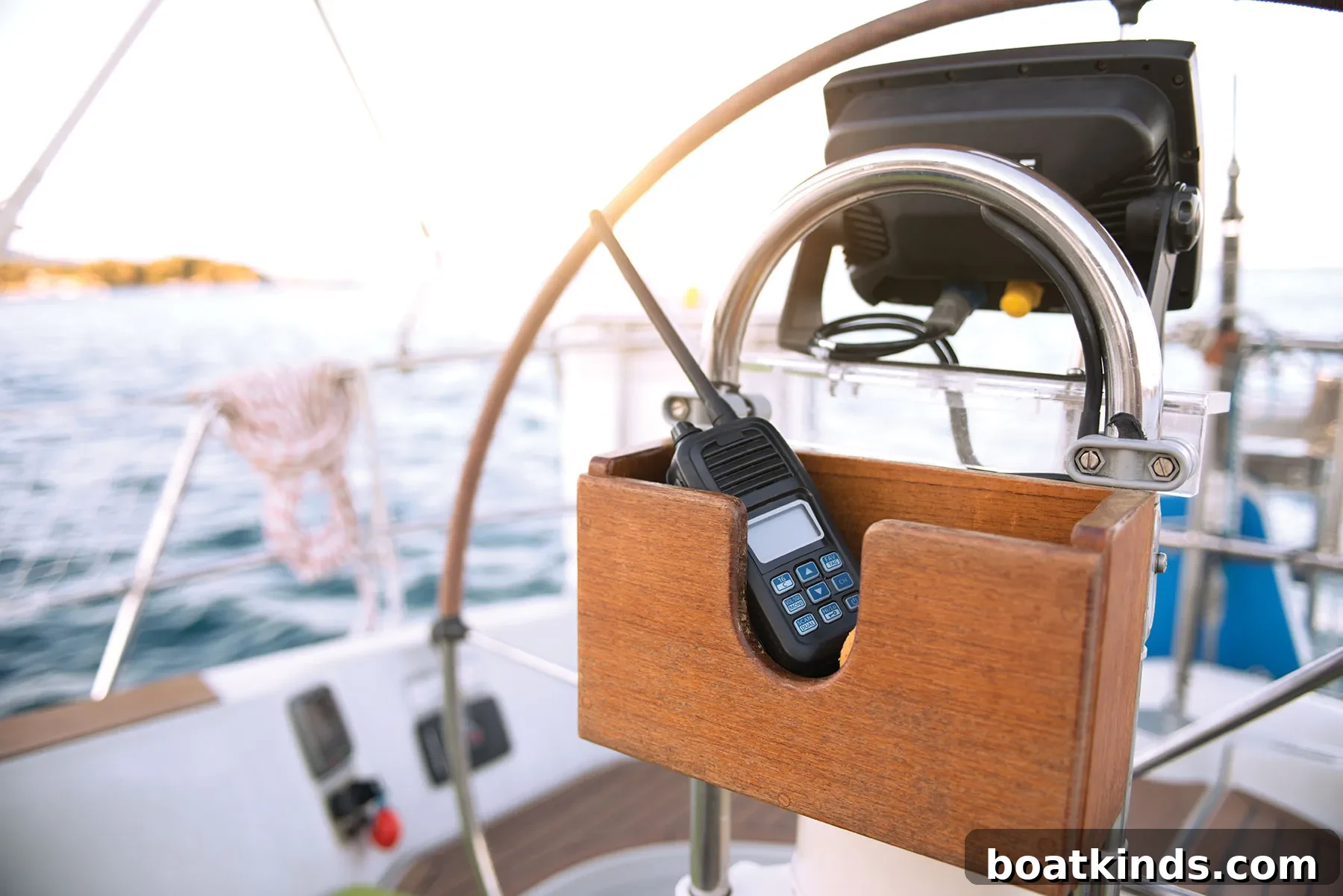
Handheld VHF radio. Many larger boats have multiple fixed radios, but a handheld VHF gives you a communications lifeline independent of the vessel’s electrical system. If a DC fault or other electrical failure knocks out fixed gear, a waterproof, floating handheld radio can still get you help. Look for a model that is rugged, floats, and includes DSC and internal GPS capability so you have both voice and digital distress options plus basic positioning without another device. A compact handheld also doubles as a convenient backup when moving between vessels or when someone is outside the cockpit.
Redundancy isn’t limited to electronics. Think about spare batteries, backup power packs, and duplicate fuses or circuit breakers for critical systems. Keep spares organized in a clearly labeled, waterproof container and store them where they’re easy to reach in an emergency. Periodically replace batteries and test devices so they don’t fail when you need them most.
Having backups also means knowing how to use them. Carrying a handheld GPS is only helpful if you and your crew know how to read coordinates and reference a paper chart. Practice switching to battery-powered gear and rehearse simple emergency procedures so that when something goes wrong you won’t be learning on the fly.
In short, when something as small as a $70 handheld could save you hours of frustration or a dangerous situation, redundancy pays for itself quickly. Electronics fail, batteries drain, and wiring corrodes—so plan for those realities. If you equip your boat with a spare GPS, a PLB in your life jacket, and a dependable handheld VHF (plus the spare batteries and training to use them), you’ll be far better prepared for unexpected problems while underway.
And hey, big brother—if you’re reading this, give me a call back. If I don’t pick up, leave a message.
This article was originally published in the November 2020 issue.