

It’s easy to forget how basic recreational boating communications were when Soundings began 60 years ago. Today, marine VHF radios are standard on boats, but before the 1960s recreational mariners had very limited ways to communicate. For millennia, sailors relied on speaking trumpets to project their voices across short distances. In 480 BC, Athenian commander Themistocles used one to direct oared warships, but this method only worked when vessels were close together. By the 18th century ships exchanged messages with signal flags, and in 1836 Morse code enabled line-of-sight communication with blinker lamps. Beyond line of sight or in poor visibility the only reliable signaling was firing a cannon.
The development of wireless telegraphy by Guglielmo Marconi around the turn of the 20th century changed long-distance marine communication. Using Morse code, Marconi laid the foundation for radio telegraphy. Voice radio arrived later: vacuum-tube radiotelephony emerged in the 1920s, and during Prohibition the U.S. Coast Guard collaborated with the early electronics industry to develop one of the first radiotelephones, the T-1. Those early systems used amplitude modulation (AM) and were vulnerable to atmospheric and man-made interference.
VHF marine radio traces its roots to World War II convoy operations in the Battle of the Atlantic. Allied escorts used Talk-Between-Ships (TBS) on VHF and UHF bands for short, line-of-sight communication. The limited range helped reduce the chance of detection by enemy submarines, and the higher frequencies produced clearer signals. After the war, some pleasure boaters repurposed surplus military gear, but low-frequency AM radios were unreliable for close-range communications because their signals could skip off the ionosphere and travel hundreds of miles.
The real transformation arrived in the 1960s with transistors, which made radios smaller, more affordable and far more dependable. That decade set the stage for the modern mix of VHF radios, satellite services and, eventually, broadband at sea.
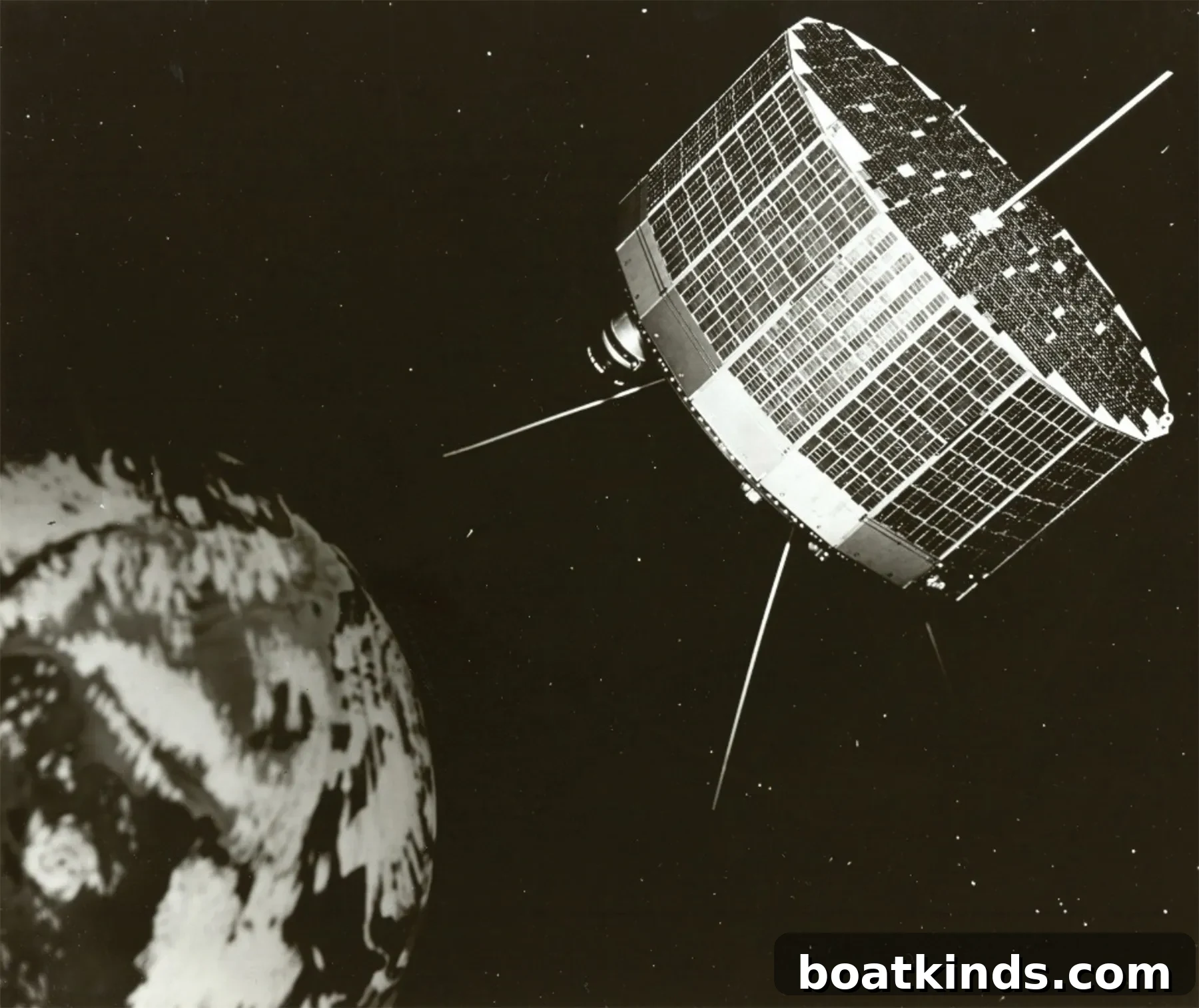
Early 1960s
The Commercial Telecommunications Satellite Act opened the door for satellites to support global telecommunications—technology that would take decades to reach recreational boaters. During this period cruisers also adopted Single Sideband (SSB) radios for long-distance voice communication. More efficient and clearer than AM, SSB let sailors exchange weather reports and valuable offshore information across ocean basins.
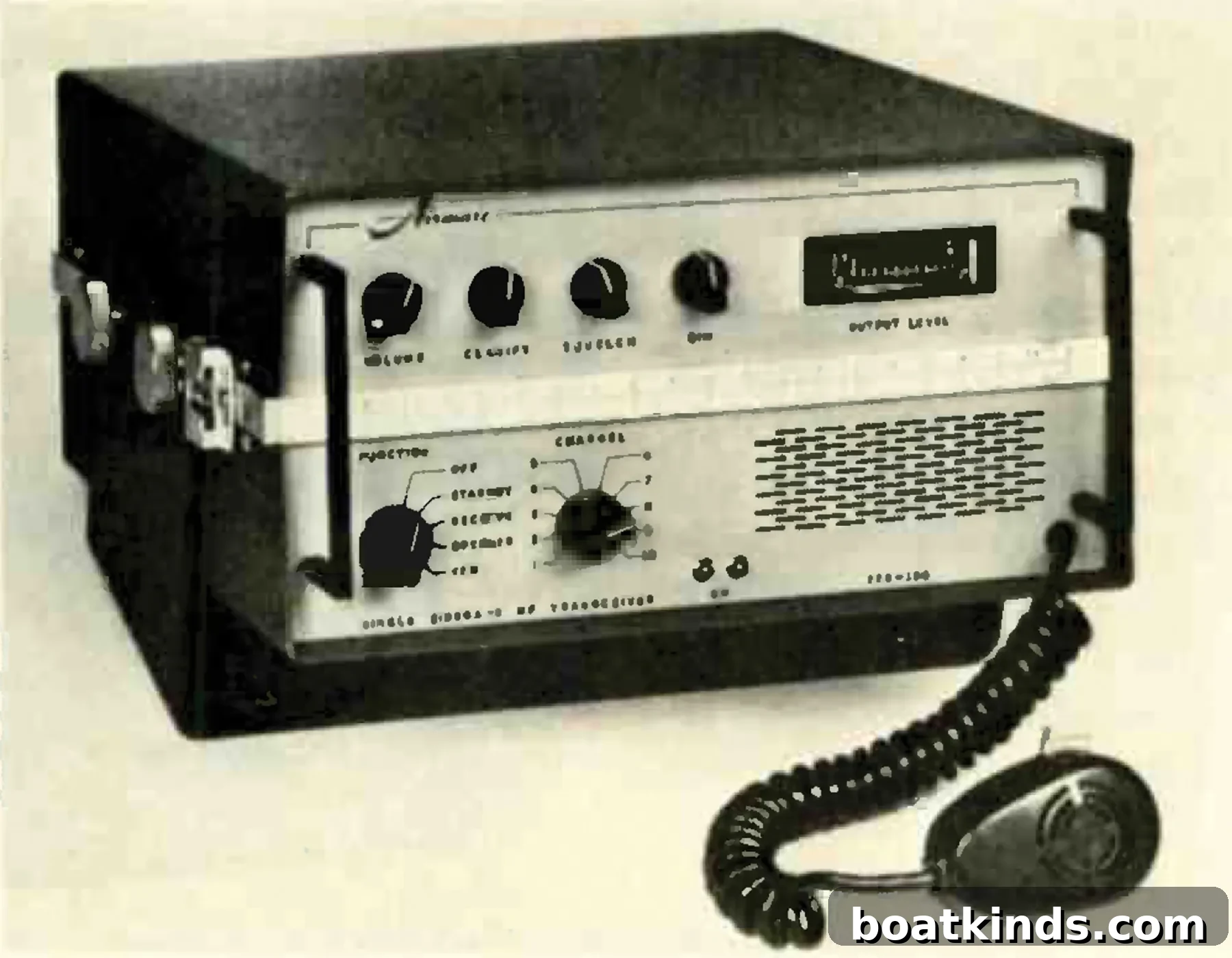
1962
In 1962 the FCC encouraged both pleasure craft and commercial vessels to adopt the newer 18-channel VHF/FM marine band for ship-to-ship and ship-to-shore traffic, easing congestion on the 2182 kHz distress and calling frequency. New transistorized VHF radios were smaller and more economical than their vacuum-tube predecessors.
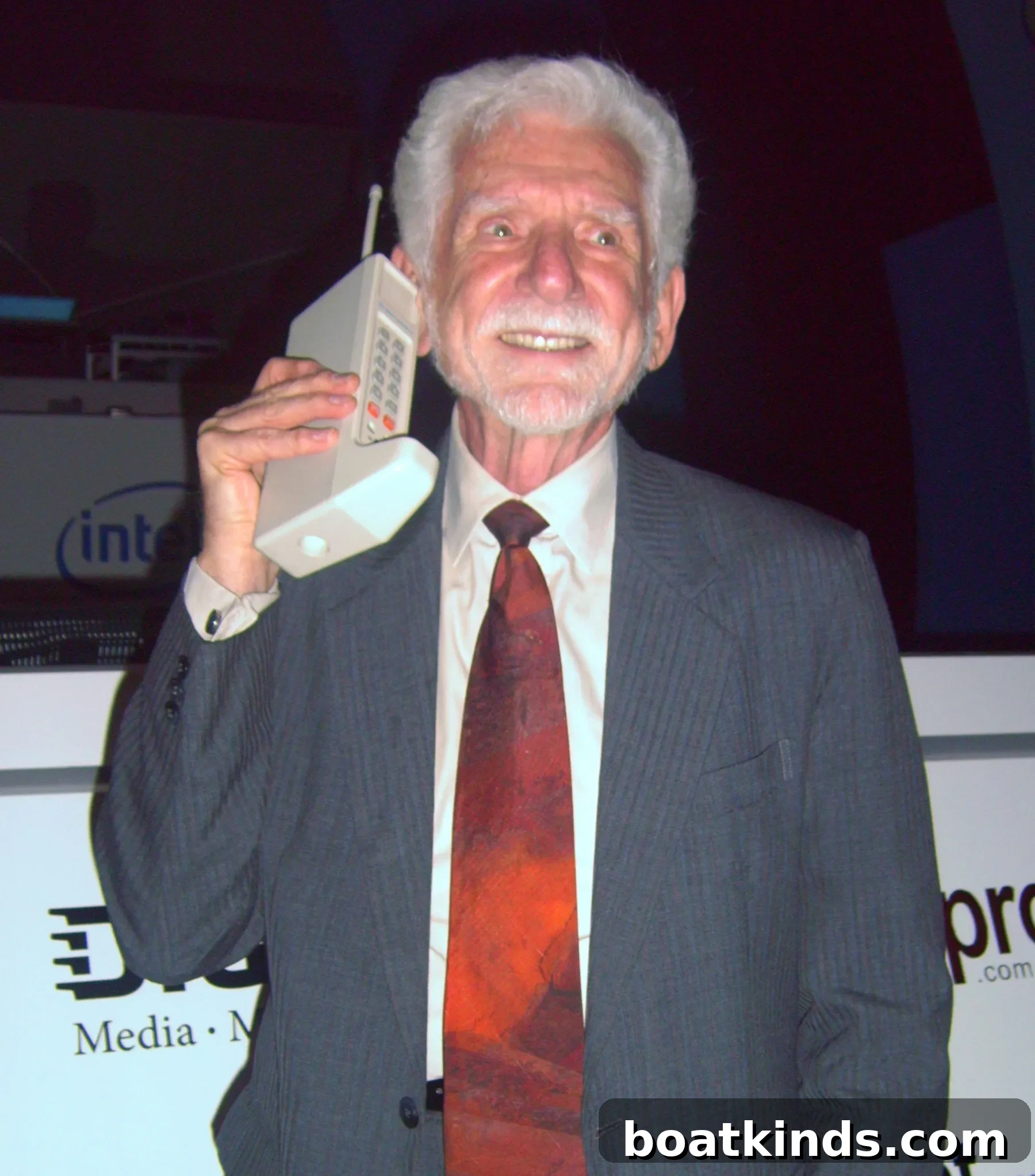
1973
Mobile telephony made headlines when Motorola engineer Martin “Marty” Cooper placed the first public handheld mobile phone call in 1973 using a 2.5-pound handset. That milestone foreshadowed a future when cell phones and later mobile data would become part of the boater’s communication toolbox, allowing owners to check on and connect to vessels from shore.
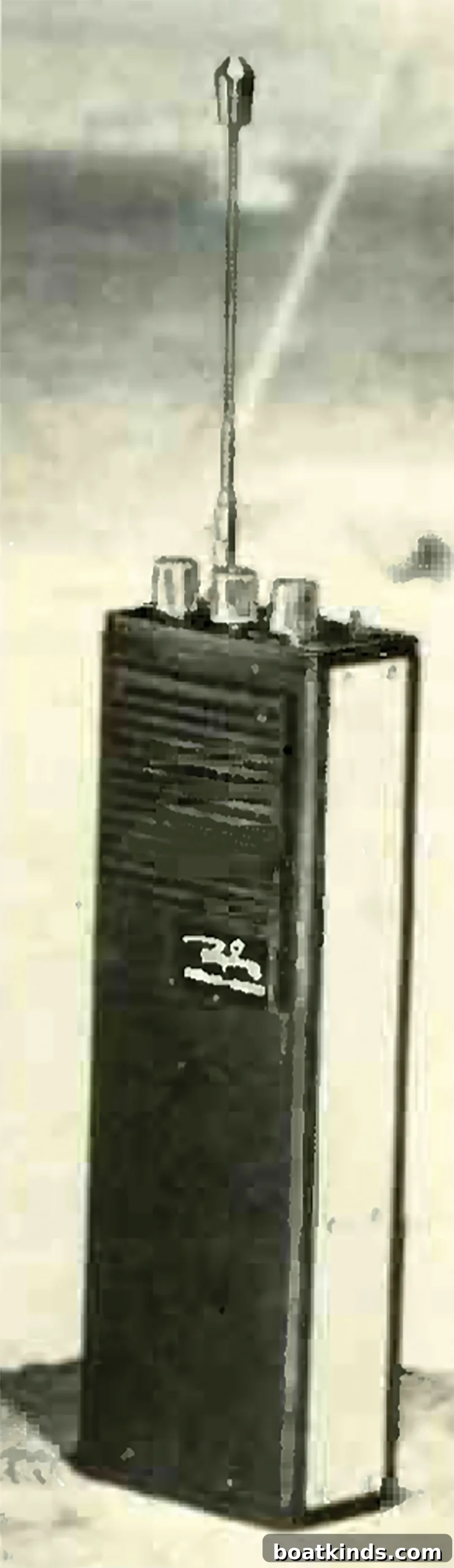
Regency Electronics introduced the Aqua-Com, a portable, battery-powered marine radio. Marketed as weatherized and corrosion-resistant, it ran on a NiCad battery and produced about 2.2 watts on five channels—an early step toward compact handheld marine VHF devices.
Mid 1970s
Citizen Band (CB) radio grew rapidly in popularity on land and, to a lesser extent, among sailors. CB used AM frequencies and had limited range, but its affordability made it attractive despite being inferior to marine VHF. Manufacturers even made marine CBs with weather bands. The U.S. Coast Guard briefly monitored CB for safety but later discontinued that practice.
1977
AM marine radio was phased out by regulation; high-seas communication moved to VHF/FM and SSB, improving clarity and reliability for shipboard communications.
1979
Inmarsat launched ship-to-shore satellite services, offering long-range maritime communication. Early satellite services were powerful for commercial shipping but remained expensive for most recreational sailors.
1992
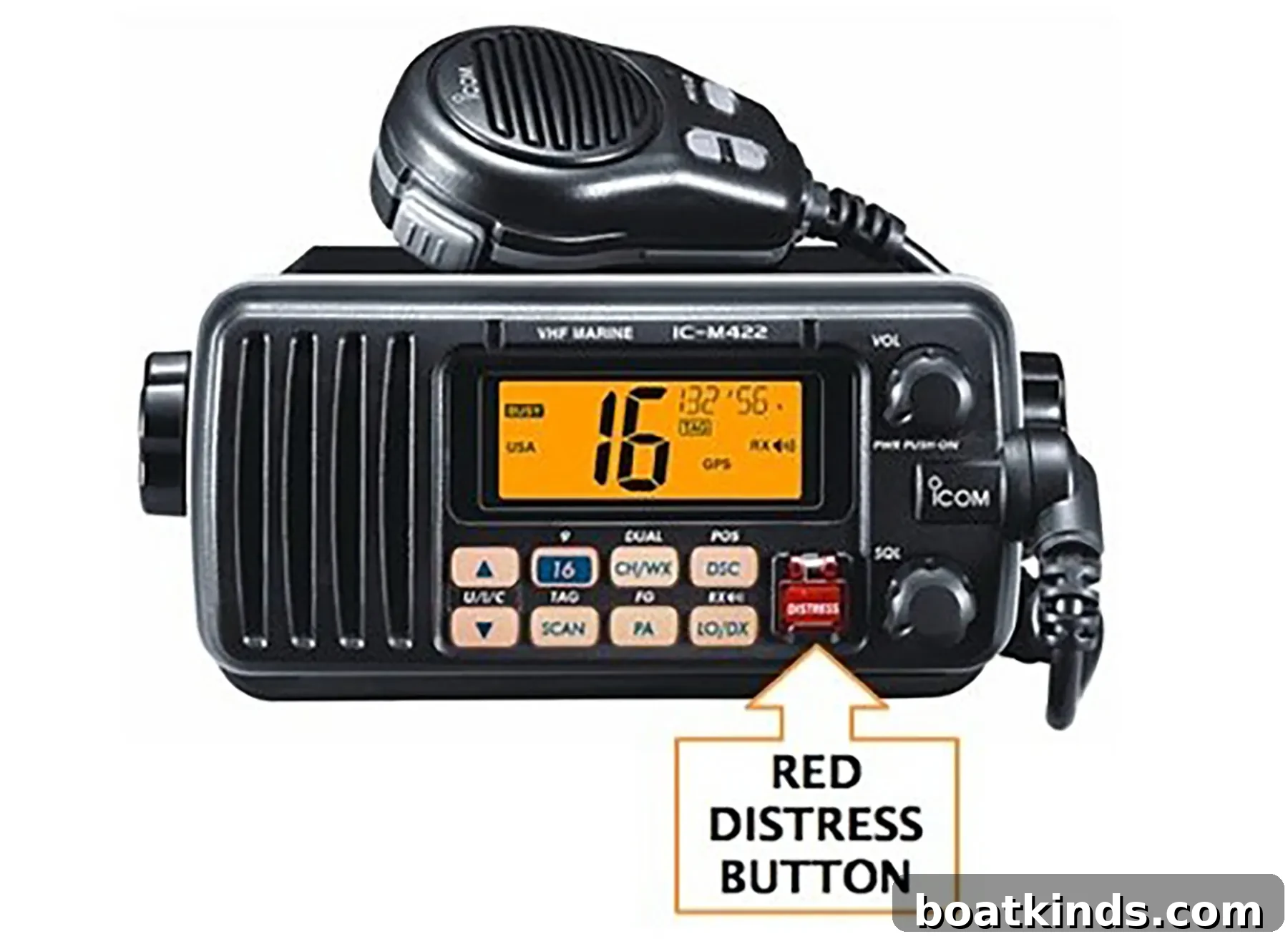
Digital Selective Calling (DSC) became part of the Global Maritime Distress and Safety System (GMDSS). DSC added digital signaling to maritime radios using a unique Maritime Mobile Service Identity (MMSI), enabled automated digital distress alerts, and—when paired with GPS—allowed a vessel’s position to be transmitted automatically with a distress call. DSC gradually became standard on VHF radios, greatly improving maritime safety and distress response.
1996
Jim Corenman and Stan Honey developed SailMail, an email system designed for sailors. SailMail eventually incorporated a variety of ocean-capable networks—Iridium, Inmarsat, VSAT, Globalstar, Thuraya, terrestrial cellular networks, WiFi and SSB-Pactor radio—so offshore users could send and receive email and weather files nearly anywhere. The founders later established the SailMail Association as a nonprofit to operate the service.
1998
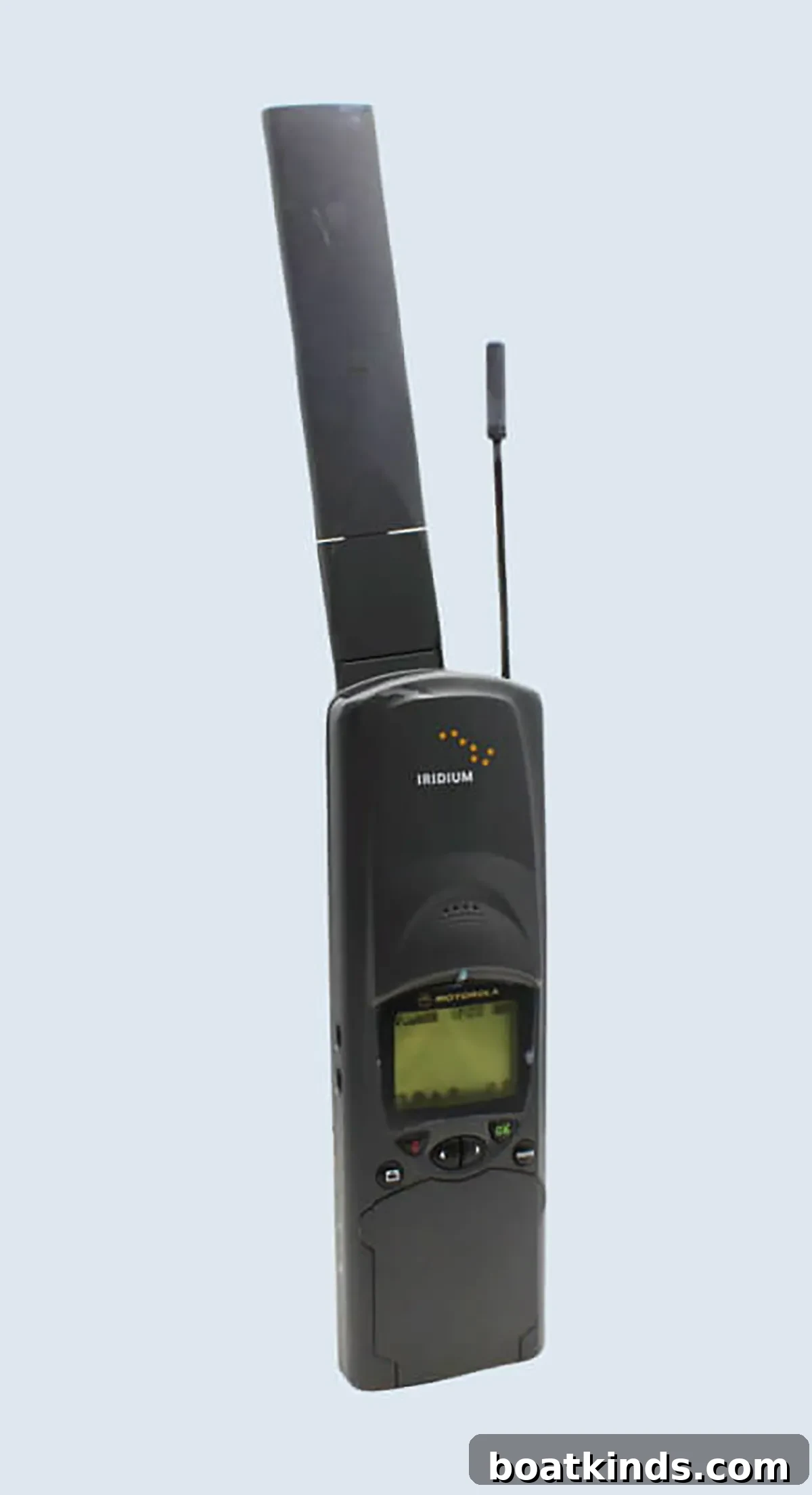
Iridium deployed a satellite phone network that provided coverage worldwide, including at sea. Early adopters faced challenges: high costs, difficulty in obtaining a stable connection, and slow data speeds when downloading GRIB weather files or email attachments.
1999
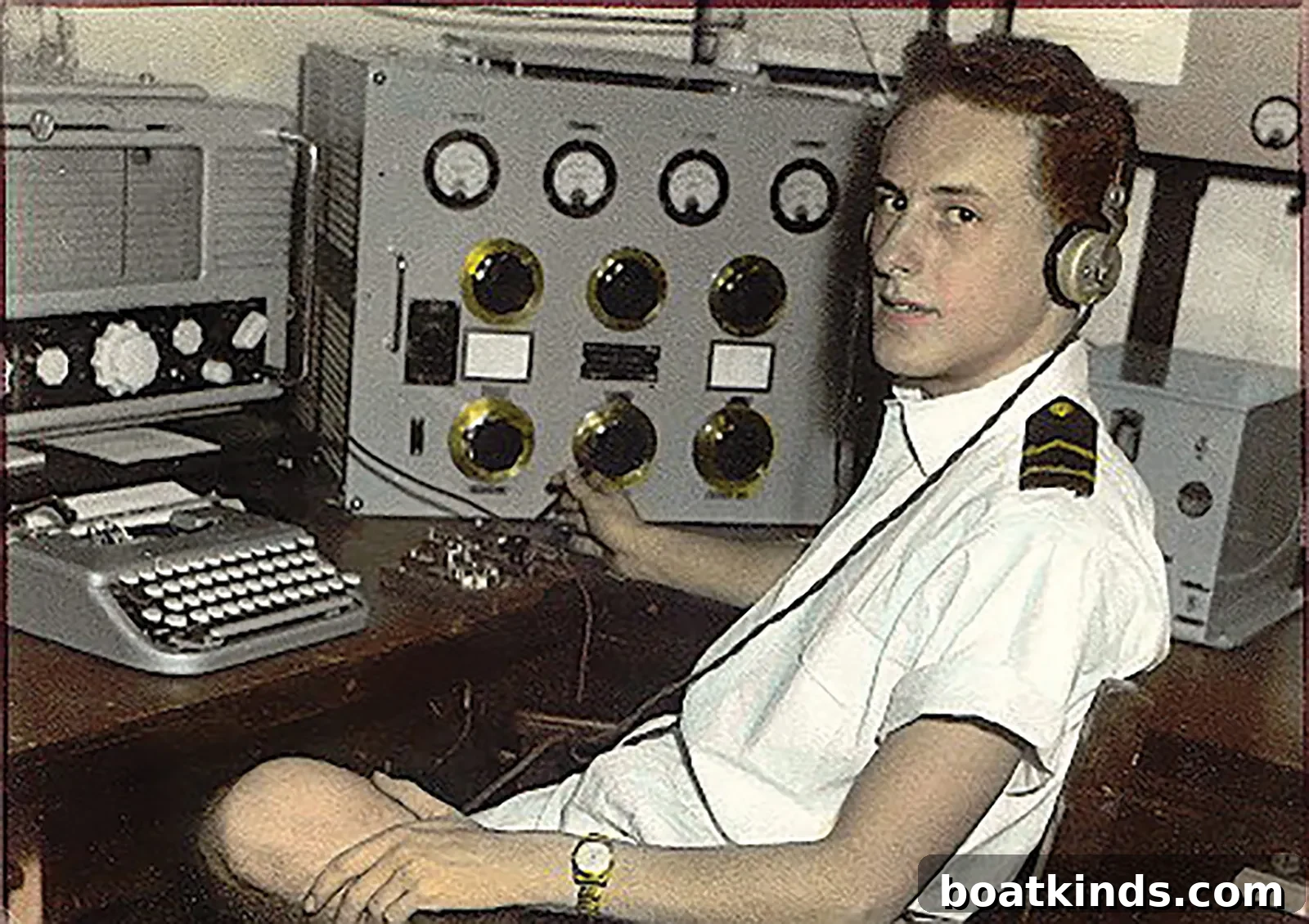
The Global Maritime Distress and Safety System (GMDSS) was fully implemented, marking the end of Morse code as a required distress method and reducing the need for dedicated shipboard radio officers. The century-long evolution from Marconi’s first wireless distress signal culminated in a modern, computerized, international safety system.
2007
The introduction of the iPhone in 2007 and subsequent smartphones transformed communications again. Mobile data, apps, and improved connectivity would become important tools for boaters as satellite services and onboard networks evolved to support internet access at sea.

2013
In 2013 SES of Luxembourg entrusted SpaceX with a geostationary communications satellite launch, signaling the start of a more aggressive launch environment. That era would accelerate the deployment of many more communications satellites into low Earth orbit, ultimately making satellite-based internet more accessible and affordable for mariners.
2020
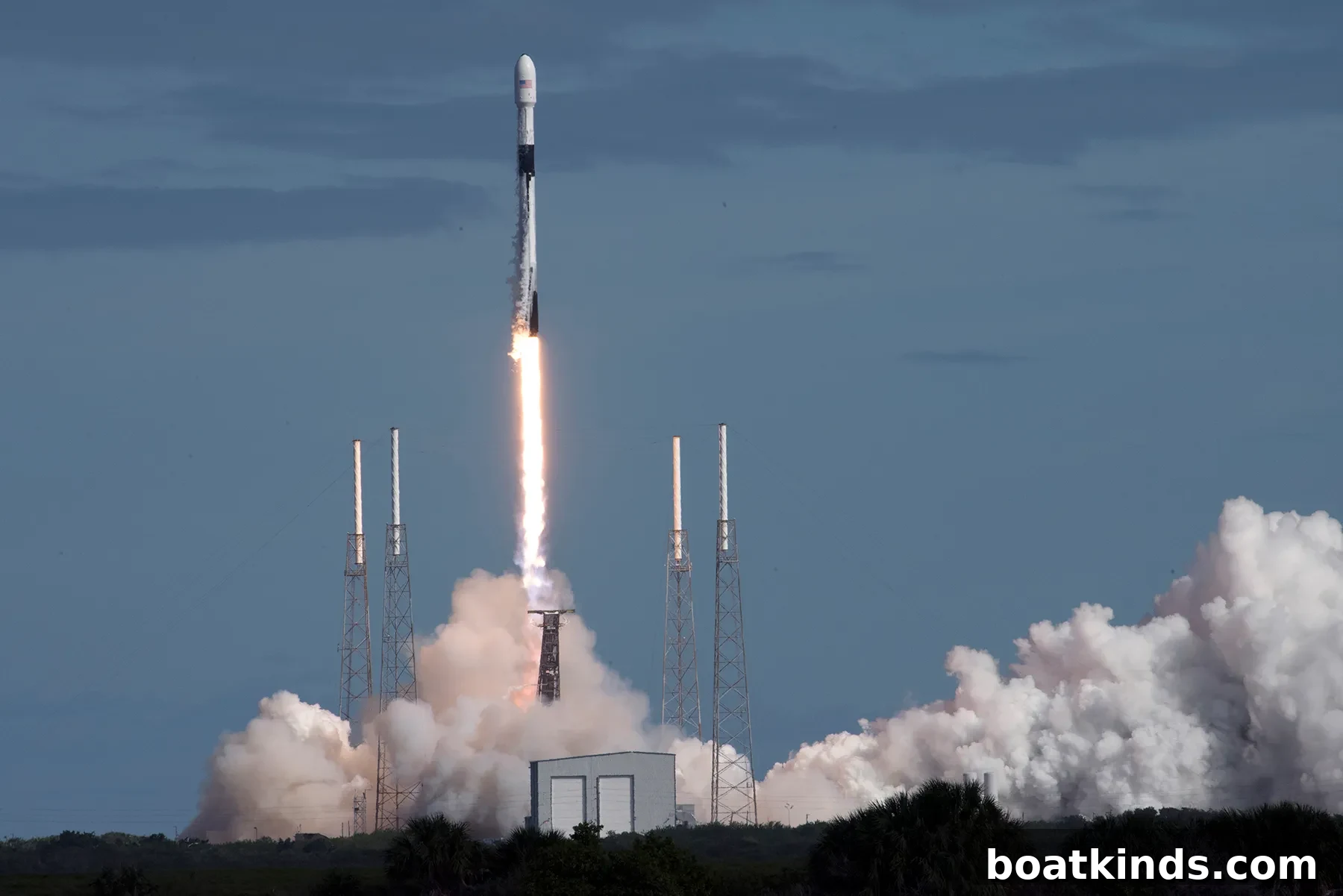
Starlink, SpaceX’s low-Earth-orbit satellite internet service, began beta testing in 2020 and opened to the public the following year in North America. A marine version was offered, and many cruisers adopted terrestrial units as a less costly option. Starlink’s constellation—part of a plan to field many thousands of satellites—aims to deliver continuous, low-latency internet across the globe.
Today
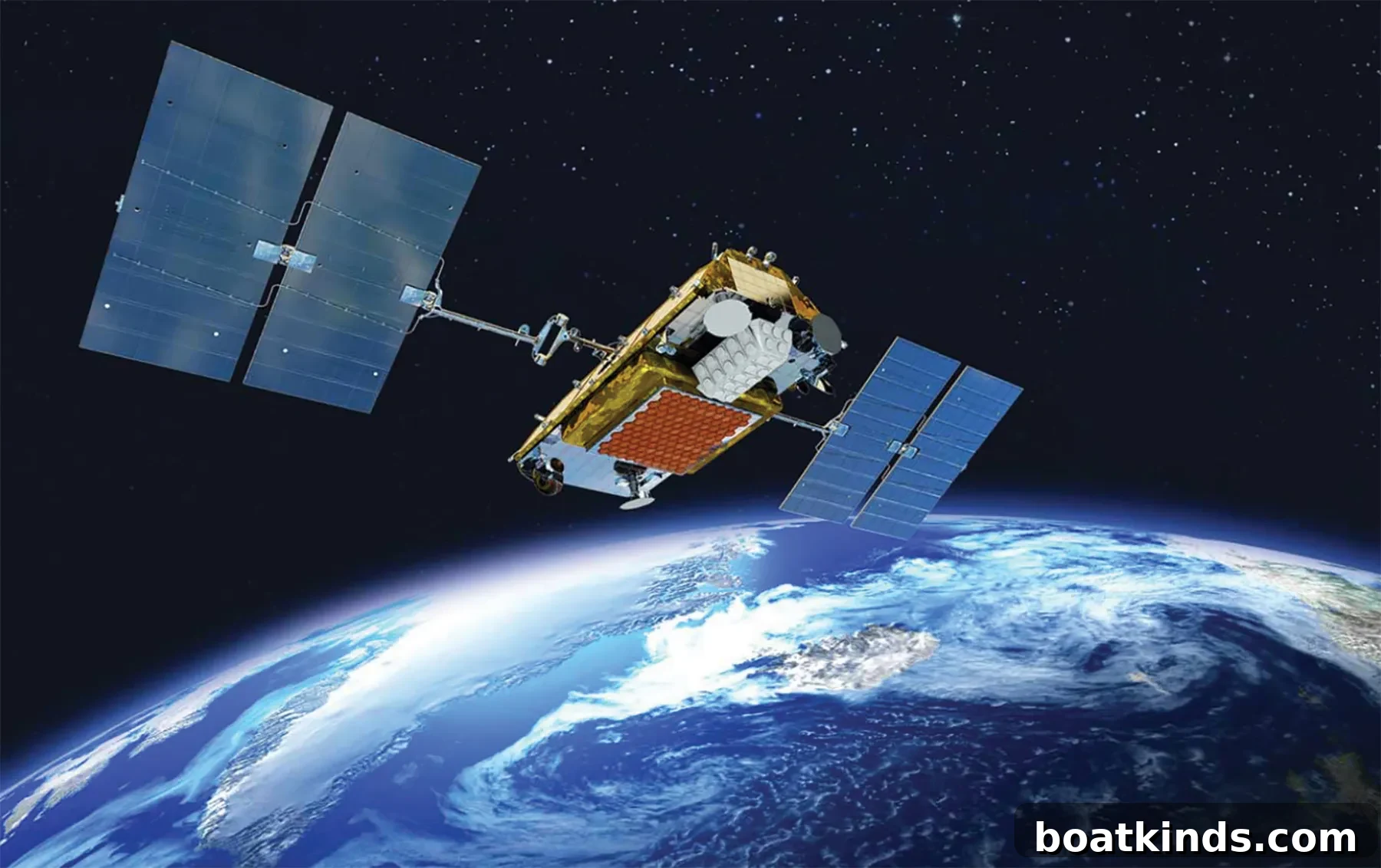
Over six decades VHFs have become indispensable on recreational vessels, while satellite communications, cellular networks and WiFi have increasingly merged to offer reliable voice, data and safety services at sea. Modern systems let sailors switch seamlessly between satellite links, fast cellular broadband and marina WiFi to check weather, manage navigation, communicate with loved ones, and monitor their boats remotely. Although satellite bandwidth still trails the fastest terrestrial connections, the proliferation of low- and medium-Earth-orbit constellations from providers like OneWeb, Starlink, Iridium and Inmarsat is closing that gap. Streaming, real-time apps and global messaging are now feasible far offshore—capabilities that would have been unimaginable when Soundings was founded.

This article was originally published in the May 2024 issue.