
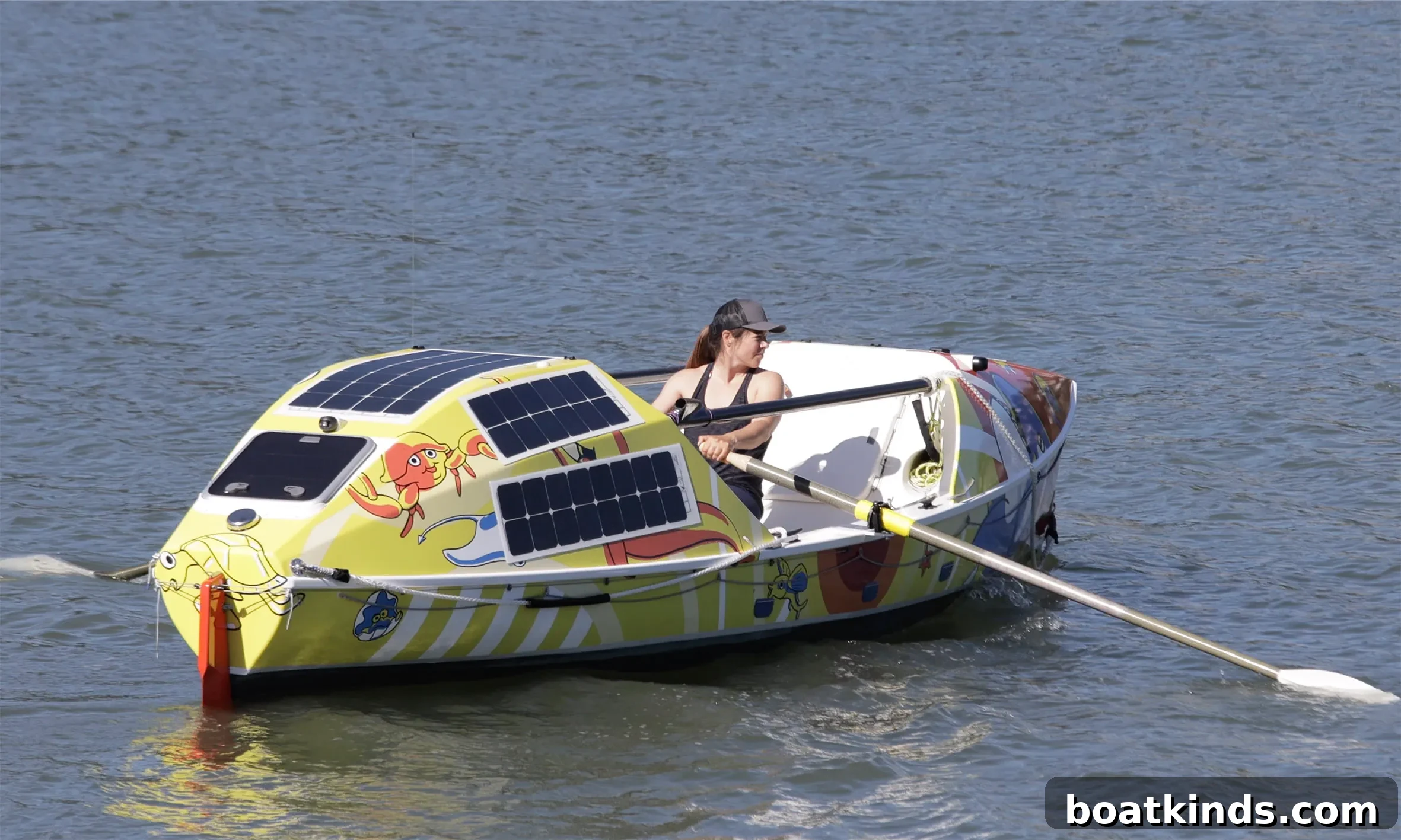
Lia Ditton’s Near-Disaster While Rowing Solo from San Francisco to Hawaii
Rowing across an ocean is one of the most demanding endurance challenges a person can attempt, and for British ocean rower Lia Ditton the reality of that challenge nearly turned catastrophic. On July 6, during her solo crossing attempt from San Francisco to Hawaii, Ditton’s 21-foot rowing boat capsized in the darkness. The incident forced her to fight for survival and to rely on every ounce of training, strength and resolve she had.
Ditton had already spent the first month of her voyage contending with relentless currents, stiff winds and waves she described as mountainous. These conditions tested her boat, her equipment and her mental stamina. Then, in the pre-dawn hours of July 6, a rogue wave slammed into the vessel and rolled it over. Despite the violent overturning and immersion, Ditton managed to climb onto the overturned hull and, through sheer force and determination, roll the boat back upright and climb back inside.
The episode reads like a scene from an adventure novel: a solo rower knocked into the ocean, battling the elements alone in the night, and hauling herself back into a small craft in the teeth of a storm. Yet this was not fiction. It was a raw and dangerous reminder of how quickly conditions at sea can change and how precarious any solo ocean crossing can be. Ditton’s survival speaks to her experience and resilience as much as to the unpredictable nature of the ocean itself.
Added to the physical and psychological strain of this near-capsize was a fresh, tragic reminder of the risks other ocean rowers face. Only days earlier, on June 22, fellow rower Angela Madsen died while attempting a similar route to Hawaii. That loss was felt deeply within the ocean rowing community and underscored the high stakes of long-distance solo endeavors. For Ditton, the news of Madsen’s death would have been an additional burden to carry while she continued to face the elements alone.
Ocean rowing requires not only physical fitness but also careful preparation, situational awareness and an ability to respond under extreme stress. A single rogue wave, equipment failure, or momentary lapse in judgment can have life-threatening consequences. Ditton’s experience highlights the thin margin between a successful crossing and a disaster, and how critical it is for rowers to be prepared for sudden changes in weather and sea state.
For those following the sport, Ditton’s capsize is a stark illustration of why safety, experience and respect for the ocean are paramount. Solo rowers typically train for months or years, learn to read the weather, and rehearse emergency procedures so they can react quickly if something goes wrong. When a small, open boat overturns at sea, the window of opportunity to recover the craft and get back on board is often brief, especially at night or in heavy seas. Ditton’s ability to right her boat and re-enter it demonstrates both preparedness and an extraordinary calm in a life-threatening situation.
As Ditton continues her voyage, the wider ocean rowing community will watch closely—both out of concern and admiration. Her survival from the July 6 capsize is a testament to human endurance and the strength needed to pursue extreme challenges. It also serves as a sobering reminder of the risks involved and the respect owed to the ocean.
To follow Lia Ditton’s ongoing journey and to read her own account of the capsize and recovery, see her website at rowliarow.com for updates and first-person reflections.