
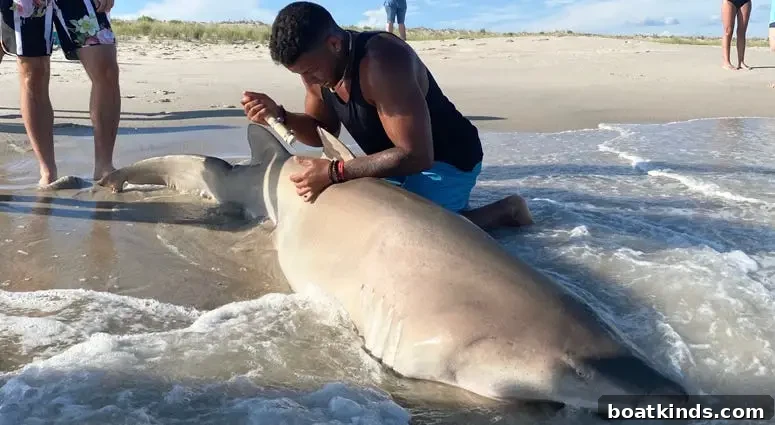
Shark Tagging in the Surf: Conservation, Controversy, and the Rise of Social Media Anglers
For decades, surf fishermen along New York’s beaches have occasionally landed sharks as bycatch while targeting other species. More recently, a visible new subgroup of surf anglers has emerged: people intentionally targeting sharks from the shore, documenting their catches on social media, tagging the animals and releasing them as part of citizen science efforts. The practice has drawn both praise and criticism, raising questions about shark conservation, animal welfare, and the role of recreational anglers in scientific data collection.
Who’s Doing It and Why
A recent New York Times feature profiled two Long Island anglers, Vinny Cericola and Chris Stefanou, who regularly seek out sharks in the surf. They tag and release the animals as participants in a NOAA-affiliated citizen science program, collecting location and size data that can help researchers track movements, seasonality and other aspects of shark ecology. Those who support surf shark tagging say the activity engages the public, spreads awareness about declining shark populations and produces useful data that government and academic scientists might otherwise lack.
Claims of Conservation and Public Awareness
Supporters argue that when anglers post photos and videos, they raise public awareness about shark populations and the threats sharks face. The content often reaches audiences who would not encounter scientific reports or conservation messaging, sparking conversations about endangered species and marine ecosystem health. As one reader comment noted, exposure through social media can introduce many people to species they previously knew little about and create public sympathy and support for conservation measures.
Concerns from Experts and Animal Welfare Issues
Not everyone agrees that surf tagging is net positive. Some marine biologists and conservation professionals caution that bringing large, stressed animals onto the beach increases the risk of harm. Sharks landed on sand are out of the water and at risk of overheating, internal injuries, and barotrauma from rapid pressure changes. Prolonged handling can damage the skin and protective slime layer, and hooks and fighting can cause significant trauma to mouths and internal tissues. Even when anglers promptly tag and release, post-release mortality can be higher than it appears in footage or photos.
Balancing Data Collection with Animal Safety
Citizen science can provide valuable information—migration paths, habitat use, size distribution and seasonal patterns—but only when data collection follows strict protocols that minimize stress and injury. Best practices commonly recommended by experienced researchers and conservation groups include minimizing out-of-water time, supporting the shark in the water when possible, using wet gloves or towels to reduce abrasion, removing hooks quickly with proper tools, and using circle hooks and other gear that reduce deep-hooking. Carefully recorded metadata—time, location, species, estimated length and condition on release—also improve the scientific value of each encounter.
Regulation, Training and Accountability
Another dimension of the debate is oversight. Recreational anglers who tag sharks as part of established, permitted programs typically receive training and are required to follow specific handling protocols and reporting procedures. Independent or unregulated tagging and targeting of sharks raises concerns about inconsistent methods and potential legal issues, especially in areas with rules aimed at protecting vulnerable species. Strong partnerships between scientists, fishery managers and the angling community can help ensure that citizen science contributes to conservation without compromising animal welfare.
Public Perception and the Role of Media
Photos and videos of large sharks being landed on beaches provoke strong reactions. For some viewers, the images are thrilling and educational; for others, they are disturbing and perceived as exploitative. Social media amplifies both reactions and can unintentionally reward risky behavior when posts prioritize dramatic visuals over careful handling. Media coverage that highlights both the potential conservation benefits and the welfare risks can help create more informed public debate about the practice.
Conclusion
Shark tagging by surf anglers sits at the intersection of citizen science, recreation and conservation awareness. When conducted under the guidance of established programs and with careful attention to animal welfare, surf tagging can provide useful scientific data and raise public awareness of threats to shark populations. However, legitimate concerns remain about the potential for harm when sharks are landed on beaches, mishandled or targeted without proper training and oversight. The future of surf shark tagging will depend on better education, clear protocols, and stronger collaboration between anglers, scientists and resource managers to ensure that efforts intended to help sharks do not inadvertently put them at greater risk.