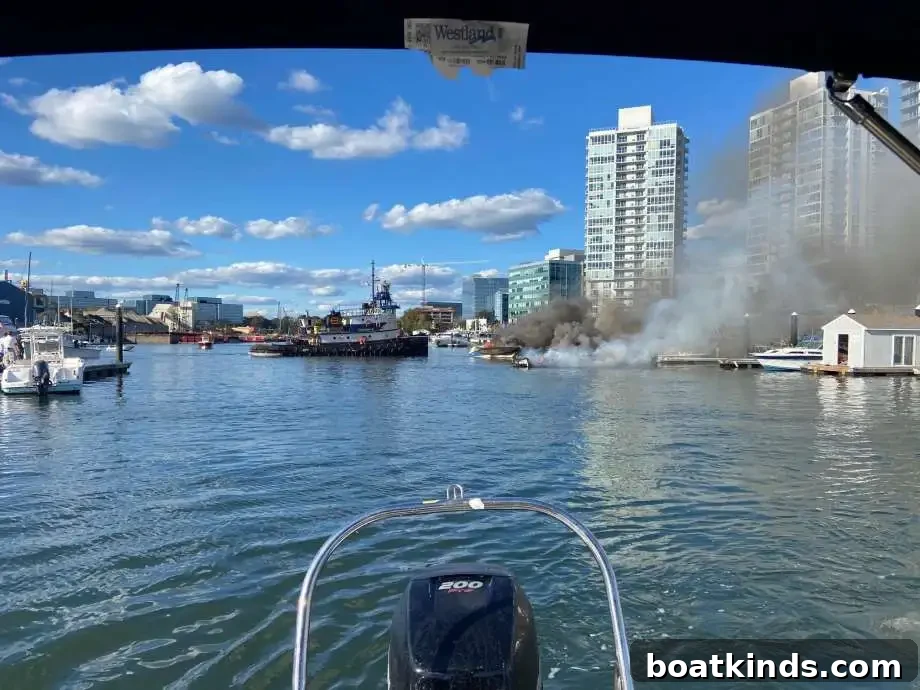
Boat Fire at Hinckley Yachts Dock in Stamford Causes Significant Damage
On a Saturday afternoon at the Hinckley Yachts dock in Stamford, Connecticut, a 24-foot 1978 Sea Ray with a gasoline-powered inboard engine caught fire immediately after its owner started the engine. The blaze quickly consumed the vessel and spread to nearby boats and dock structures, ultimately destroying four other boats and a waterfront structure known locally as Capt. John’s Tiki hut. Local officials estimate the damage at more than $500,000. Fortunately, the boat’s owner and a passenger evacuated before the fire spread; no injuries were reported.
What happened at the dock
According to initial reports from Stamford fire officials, the boat had been refueled at the Hinckley dock earlier that afternoon. After starting the engine, flames erupted almost immediately. Witnesses and first responders worked to cast the burning vessel off the dock to prevent further damage to marina infrastructure, but the fire had already spread to adjacent boats and the tiki hut before crews could contain it. A northwest wind carried the burning boat to the east side of the harbor, where it eventually sank. The disabled vessel is leaking gasoline, and the U.S. Coast Guard is coordinating efforts to remove it safely from the harbor.
Likely cause and investigation
The exact cause of ignition remains under investigation, but Fire Chief Trevor Roach told reporters that gasoline vapors associated with the inboard gas engine are the most likely source of the blaze. Chief Fire Marshal Walter Seely also noted that lingering fuel vapors in the bilge could have been ignited by a single spark from the starter, distributor, spark plug, or a carburetor backfire, even if the owner believes a blower was used before starting the engine. Historically, gasoline inboard engines have been implicated in numerous boat fires, a pattern that led many boat designers and owners to prefer diesel inboards because diesel is less volatile than gasoline.
Response and environmental concerns
Responders prioritized containment of the fire and protection of people in the marina area. With the burning hull sunk on the east side of the harbor and gasoline leaking into the water, environmental and navigational safety concerns are now central to the recovery operation. The Coast Guard and local authorities are working to develop a recovery plan that will safely remove the sunken vessel and mitigate fuel contamination to the harbor. Authorities have not reported injuries, and marina operations were temporarily disrupted as crews addressed the incident and its aftermath.
Context and safety reminders for boaters
Incidents like this underscore the fire risks associated with gasoline engines and the importance of safety procedures for anyone who operates or maintains a boat with an internal combustion engine. Key precautions widely recommended by safety professionals include:
- Ventilate engine compartments and bilges thoroughly before starting the engine; run blowers according to manufacturer instructions and wait the recommended time.
- Perform regular fuel-system inspections to check for leaks, loose fittings, cracked hoses, or saturated insulation that can conceal fuel vapors.
- Maintain ignition components—starter, distributor, spark plugs—and carburetors to reduce the chance of sparks or backfires.
- Install and routinely test bilge blowers, fuel-shutoff valves, and a properly rated fire extinguisher or fixed suppression system appropriate for the vessel’s size and engine type.
- Develop and practice an emergency plan with all passengers, including how to shut off fuel supplies, deploy extinguishers, and evacuate safely.
Aftermath
Local authorities continue to investigate to determine the precise ignition sequence and contributing factors. The damaged boats and dock infrastructure will require assessment and repair, and the salvage and environmental mitigation work to remove the sunken Sea Ray and address the fuel leak remains a priority. While this incident resulted in significant property loss, the absence of injuries highlights the value of prompt evacuation and quick action by those on scene.
This event serves as a reminder for all boat owners and marina operators to prioritize fuel-system safety and to remain vigilant about the hazards associated with gasoline-powered inboard engines.