
Iceboating: A Brief History and the Thrill of Racing Across Ice
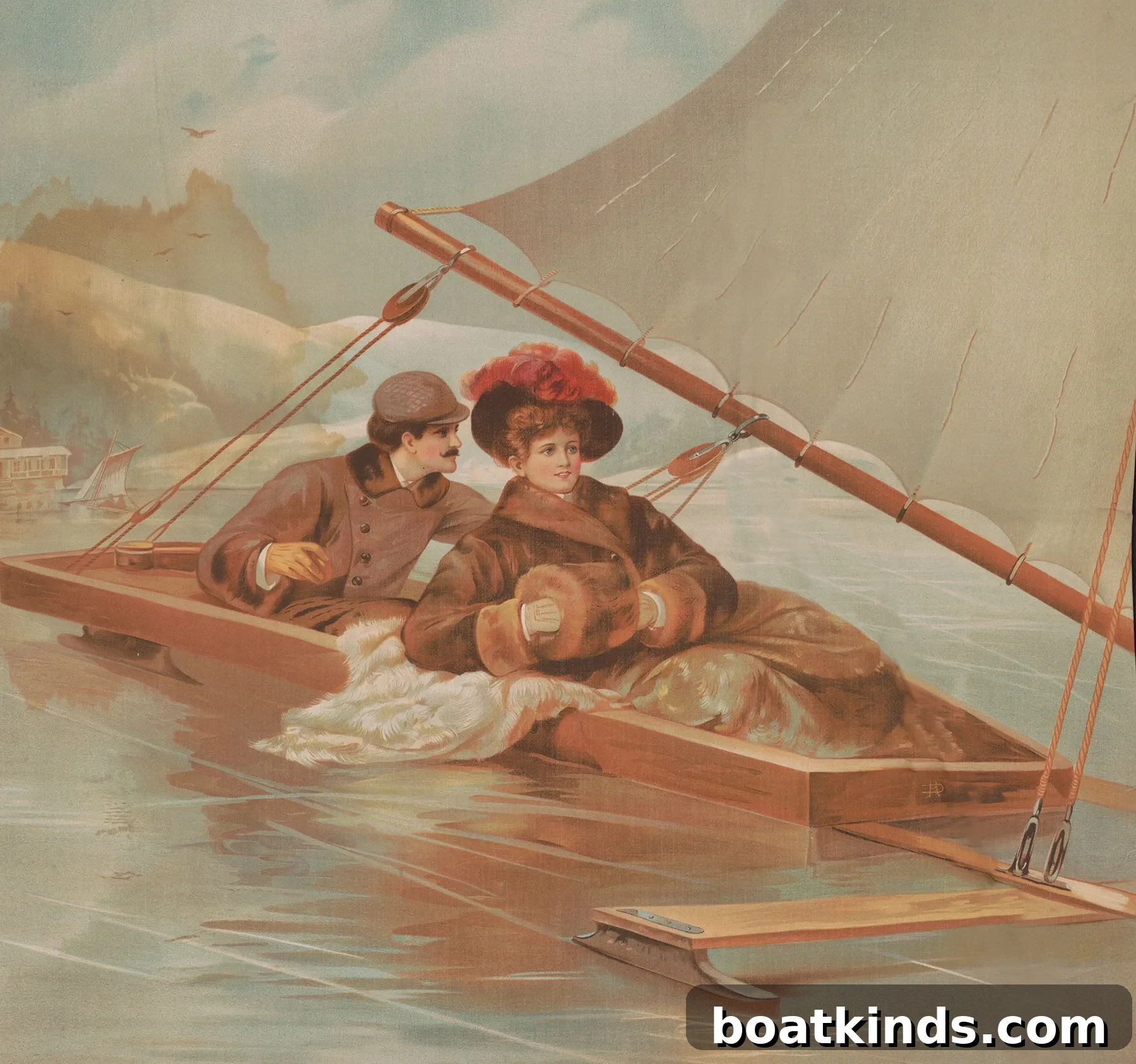
This evocative photograph shows a fashionable Victorian couple prepared for a winter outing on an iceboat. Their composed appearance masks the intensity of a sport that has challenged and thrilled sailors for more than two centuries. Once heralded as the fastest man-made conveyance on Earth, the iceboat has a rich history rooted in practical travel and later transformed into an advanced, high-speed racing discipline.
Origins and Early Development
Iceboating arrived in North America from Europe in the late 1700s. In countries such as Holland, Scandinavia and Russia, the craft began as a utilitarian means of transport on frozen canals and rivers. Practical designs—simple hulls mounted on runners and powered by sail—allowed people to move efficiently across winter ice.
In the United States, one of the earliest developments took place on New York’s Hudson River. Around 1790, boatbuilder Oliver Booth experimented with a design that combined a boxy hull atop skate-like runners, a tiller-runner steering arrangement, and a basic sail. That early contraption demonstrated the potential of wind-driven travel on ice and inspired further refinements.
Growth into a Competitive Sport
By the mid-1800s, iceboating had attracted a devoted following. Clubs formed, regattas became common, and designers began to refine hull shapes, rigging, and steering mechanisms. The fundamental layout that emerged featured a long, narrow hull with a cockpit attached to a transverse runner plank. Two skate-like runners were fixed to that plank, and a third runner with a tiller provided steering at the stern in earlier designs. As the sport evolved, so did the engineering and the size of the rigs.
In the late 19th century, some iceboats were enormous. The so-called “stern steerer” designs could carry huge sails—up to several hundred square feet—and sail triangular courses at speeds that often exceeded the wind. A famous example from 1885, the vessel Icicle, was a 69-foot craft that reportedly reached an astonishing 107 mph on an upstate New York lake, a speed few human-made vehicles had matched at that time.
Midwestern Traditions and Notable Sailors
Iceboating expanded beyond the East Coast and found strong followings on the frozen lakes of the American Midwest, where inland waters freeze early and offer long, open surfaces ideal for the sport. Several accomplished sailors trace their roots to iceboating; for example, Buddy Melges, who later gained fame in sailboat racing, spent his early years sailing on Wisconsin iceboats, learning balance, sail trim and the thrill of speed as a child.
Modern Classes and Design
Contemporary iceboats typically use a bow-runner steering arrangement and are sorted into several main classes to accommodate different skill levels and competitive formats. Popular classes include the Ice Optimist for beginners, the International DN which is widely sailed around the world, and the Skeeter class, often called the “Formula One” of iceboating for its advanced designs and high performance. These classes reflect decades of refinement in materials, sail plans, and safety practices, offering options for novices and experienced racers alike.
The Experience: Speed, Silence and Focus
For passengers and pilots alike, iceboating delivers a unique sensory experience. Cruising across a vast sheet of clear ice, the only sound may be the thin, steady whisper of runners on ice and the rush of wind in the sails. Speeds of 40 to 50 knots are common on well-designed boats under favorable conditions, and at those velocities focus narrows to the craft, the wind and the ice—everything else falls away, leaving an intense, exhilarating sense of freedom.
Safety and Community
Despite its thrills, iceboating requires respect for safety and local conditions. Ice thickness, surface quality and weather can change rapidly, so sailors and clubs place a strong emphasis on preparedness, reliable equipment and group support. Clubs and regattas not only provide competitive platforms but also help new participants learn best practices, connect with experienced sailors and maintain the community that keeps the sport vibrant.
This article was originally published in the November 2020 issue.