
98.4-Foot Wave Recorded Off Ireland as Hurricane Epsilon’s Remnants Pass
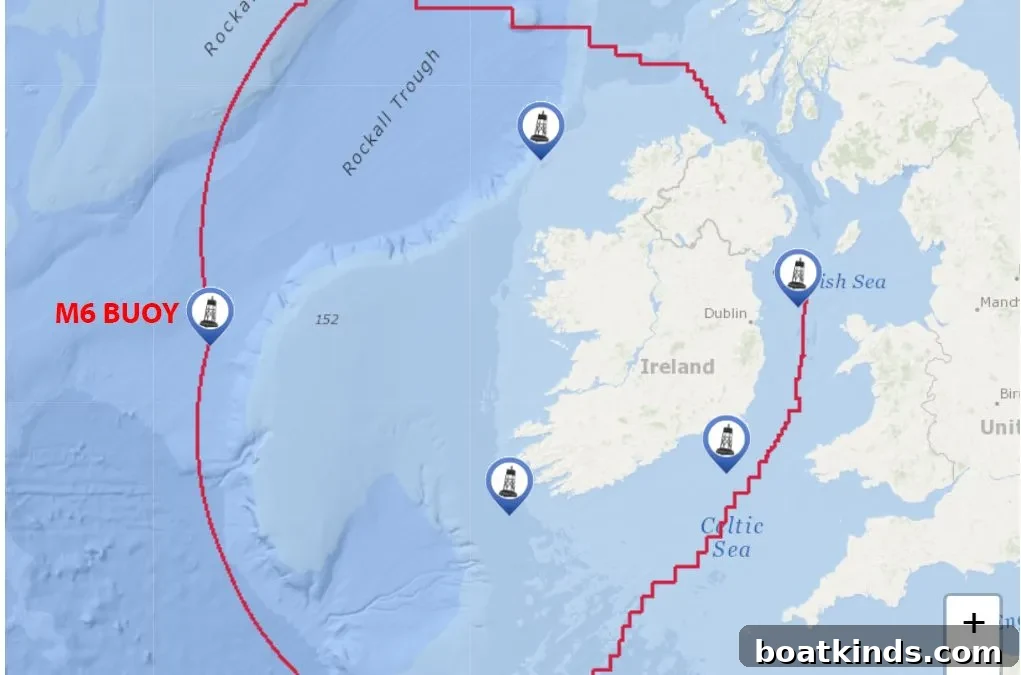
Offshore monitoring systems registered a massive wave measuring 98.4 feet (about 30 metres) in the waters west of Ireland last week. The extraordinary reading came from an offshore weather buoy and has been described as one of the largest waves ever recorded in Irish waters. Meteorologists say the extreme swell was driven by the trailing energy of Hurricane Epsilon as it moved away, stirring the North Atlantic and producing exceptional wave heights along Ireland’s western seaboard.
Buoy measurements like this are significant because they provide an objective, instrument-based record of sea state far from shore. When a buoy reports a wave close to 100 feet, it draws immediate interest from researchers, meteorologists and the maritime community. Waves of this magnitude are formed when powerful storm systems transfer energy to the ocean surface over long distances and durations, allowing swells to grow in height. In this case, the persistent winds and pressure gradients associated with the hurricane’s remnants generated unusually large, long-period swell that propagated toward Irish waters.
How Hurricane Remnants Create Extreme Swell
Hurricanes and post-tropical cyclones can produce dramatic wave conditions even after they have weakened. As a storm moves through the ocean, strong, sustained winds blow over wide areas and for extended periods, transferring energy to the sea. That energy travels outward as swell, and when swells converge or encounter favorable bathymetry near continental slopes and islands, individual wave heights can amplify. The 98.4-foot reading reflects not only the raw energy of the storm system but also how that energy interacted with the local ocean environment west of Ireland.
It’s also worth noting that buoy-recorded values represent the highest individual wave measured at the buoy location and can sometimes capture extreme, unexpected crests that exceed the significant wave height reported for the same period. Significant wave height is a statistical measure representing the average of the highest one-third of waves, while an individual crest can be substantially larger.
Impact on Coastal Conditions and Safety
Such extraordinary wave events create dangerous conditions for shipping, offshore operations and coastal communities. Even well offshore, towering waves pose serious hazards for vessels and structures, and long-period swell can produce strong, unpredictable surf and powerful currents along the coast. Authorities and mariners typically monitor buoy data and forecasts closely during and after powerful storm systems to reduce risk and issue appropriate warnings.
Along Ireland’s coastline, dramatic surf images and videos often circulate after major swell events. In this instance, reports noted that an Irish big-wave surfer ventured out to attempt rides on waves reportedly up to 60 feet. While big-wave surfing is a precisely honed and extremely risky sport, observers caution that conditions generated by post-hurricane swells are unpredictable and can be fatal for anyone caught unprepared.
Why This Measurement Matters
Measurements of extreme waves help scientists improve understanding of ocean dynamics and risk assessment. Documenting rare events contributes to long-term records used for coastal planning, maritime safety and climate research. Every verified extreme reading from monitoring buoys refines models that predict how storms and ocean systems interact, and helps emergency planners prepare for similar incidents in the future.
Although individual, exceptional wave records attract public attention, they are part of a larger context of storm-driven ocean dynamics. The 98.4-foot wave recorded west of Ireland underscores how powerful storm systems—even in their weakening stages—can produce remarkable and dangerous sea conditions. Observers and coastal users should treat such events with respect and follow official guidance from weather services and maritime authorities.
This measurement has been highlighted in media reports and by monitoring networks as an illustration of the extreme marine conditions that can follow major storm activity. It serves as a reminder of the ocean’s power and the need for continued monitoring, research and caution when venturing into storm-affected seas.