Shrink-Wrap Recycling: Building a Circular Economy for Marine Shrink-Wrap
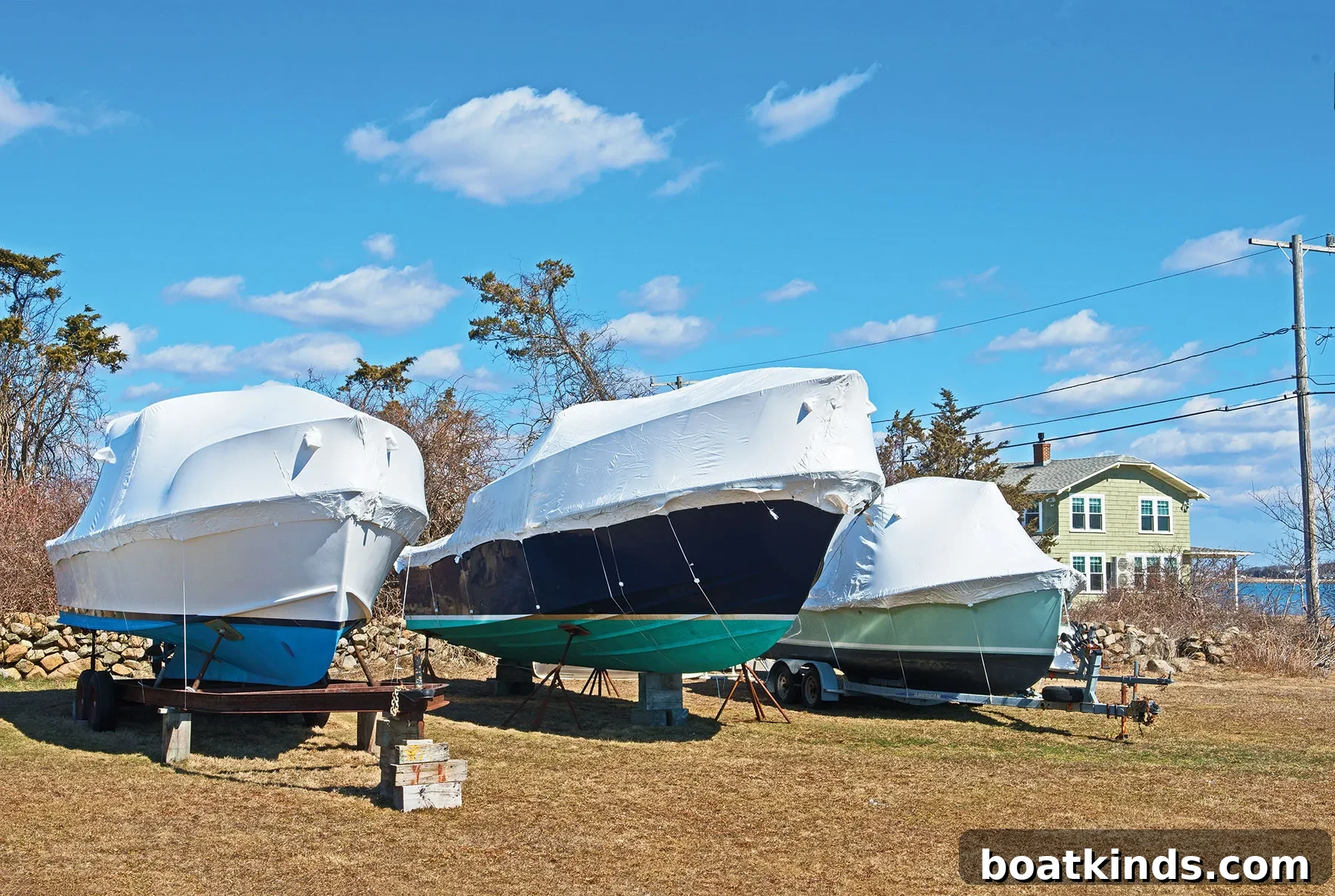
What becomes of all that plastic shrink-wrap once your boatyard crew takes it off and you launch in the spring? That’s the central question behind a Rhode Island nonprofit’s effort to change how the marine industry handles shrink-wrap waste.
Clean Ocean Access launched its Shrink Wrap Recycling and Life Cycle Analysis program in April 2019 and recently expanded the effort through a partnership with TerraCycle, a New Jersey recycler that specializes in collecting hard-to-recycle plastics and converting them into raw materials for new products. The initiative aims to make shrink-wrap collection and domestic recycling both practical and economically viable.
“When we looked at it in 2019, roughly 3 million metric tons of low-density polyethylene were produced in the United States,” says Max Kraimer, project coordinator for Clean Ocean Access. Low-density polyethylene (LDPE) is the flexible plastic used in bread bags, grocery bags and many kinds of shrink-wrap. Shrink-wrap used by the marine industry represents a relatively small portion of that total—about 4,000 metric tons—but it’s a clear, manageable target for building a circular system.
Clean Ocean Access has begun deploying roughly $87,000 from an 11th Hour Racing grant to create incentives and infrastructure for a circular economy specifically for marine shrink-wrap: collecting used wrap, consolidating it, and ensuring it is recycled domestically into new shrink-wrap rather than shipped overseas or sent to landfill. The program works with marinas, waste haulers and collection services to compress discarded wrap into roughly 1,800-pound blocks that can then be sold to processors.
Kraimer explains why the grant money is necessary: virgin plastic remains much cheaper than recycled material, so without financial incentives there’s little market motivation to process collected LDPE domestically. Market prices for bulk bales of LDPE have fallen sharply over the past decade—what once could sell for around 15 cents per pound now fetches as little as one cent per pound domestically, or about five cents per pound on international markets. That margin makes recycling economically challenging without subsidies or guaranteed off-take agreements.
Clean Ocean Access is using grant funds to subsidize waste haulers, create convenient drop-off points for boaters, and encourage processors to accept and turn the collected material back into shrink-wrap. The hope is that a successful pilot focused on marine shrink-wrap will become a scalable model for other LDPE products across the boating and coastal economy.
“If we can build a working prototype that demonstrates a circular economy for this material, it becomes a building block for broader systems,” says Dave McLaughlin, executive director of Clean Ocean Access. “Scaling it up will require linking partners across the supply chain—haulers, processors, manufacturers and end users.”
Nationwide, only an estimated fraction of LDPE is collected and reused—Kraimer suggests roughly 10 percent gets diverted into recycling streams. Much of that collected LDPE is turned into composite materials used for outdoor products like benches, decking and playground equipment, rather than being remade into the same product type. By contrast, Clean Ocean Access’s goal is to see recycled shrink-wrap returned to the same application when possible, closing the loop on the material lifecycle.
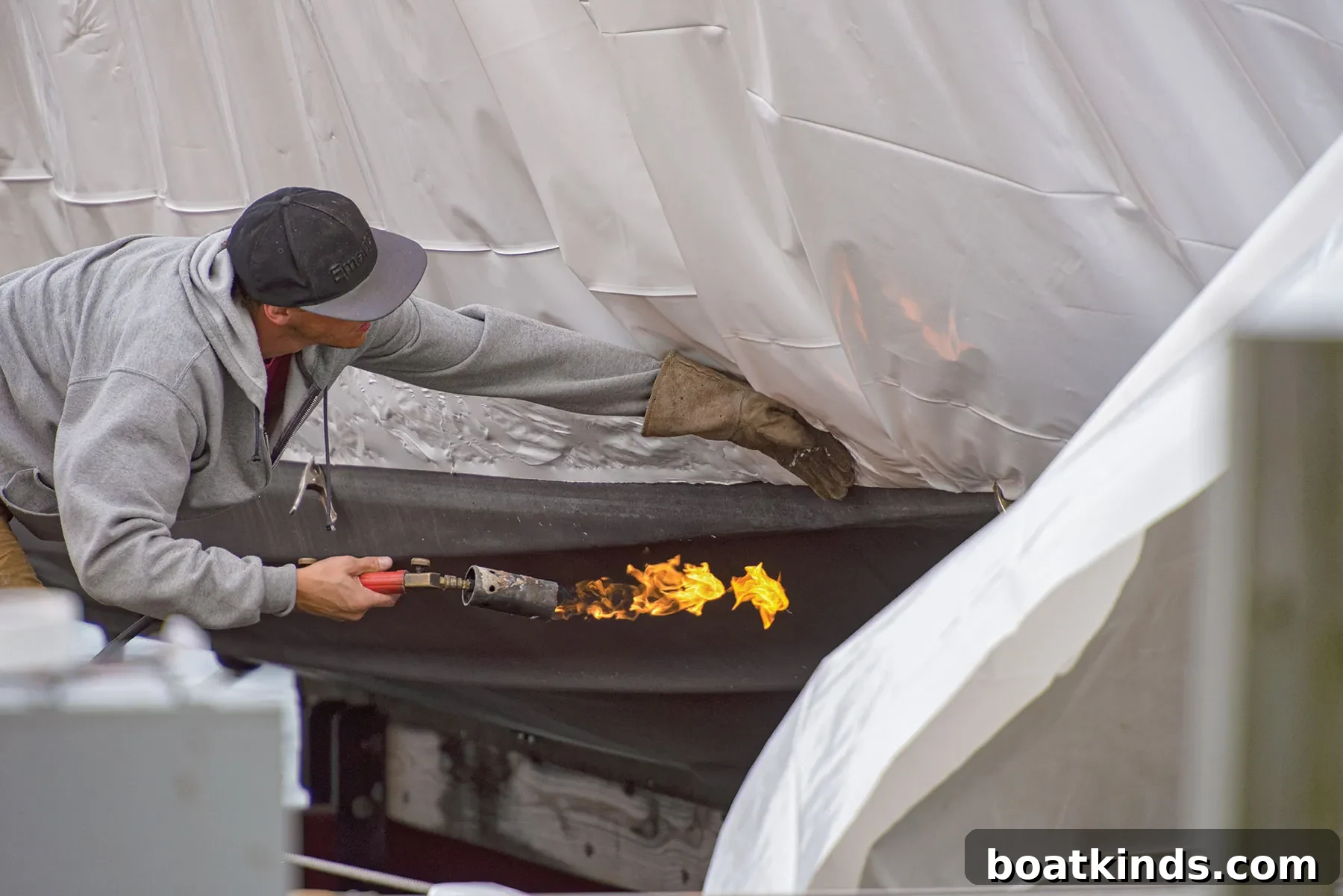
There are practical differences between recycling a grocery bag and recycling a boat’s shrink-wrap. A single boat’s shrink-wrap can weigh around 30 pounds or more, and while supermarkets commonly provide drop-off bins for plastic bags, comparable infrastructure for shrink-wrap is less widespread. Some states, including Rhode Island, have had collection programs for years, but the global recycling landscape shifted when China stopped accepting most plastic waste shipments. That policy change forced U.S. programs to find domestic solutions for processing collected materials.
Clean Ocean Access’s approach emphasizes accountability: collected material should not only be kept out of landfills and oceans, but ideally returned to the manufacturing stream as the same type of product. “In today’s day and age, a lot of what recycling means is ‘I’m not throwing it out,’” McLaughlin says. “We’re trying to change that paradigm to one of responsibility. If you’re paying for it and you think it’s being recycled, it should turn back into the material that it started as.”
To expand the pilot and gather data, Clean Ocean Access is asking boat owners to report what happens to the shrink-wrap removed from their boats this spring. Boaters who want to help can use the organization’s website to share information about their local disposal pathways, whether they know where the wrap goes or simply pay a contractor without knowing how the material is handled.
Collecting this information will help identify gaps in the collection network and build demand signals for haulers and processors to offer domestic recycling services. If enough boat owners and marinas request responsible recycling, the program hopes that waste haulers will respond by adding collection and processing options—and that grant funding will help bridge the early costs until the market for recycled shrink-wrap becomes self-sustaining.
This article was originally published in the January 2021 issue.