
Northwest School of Wooden Boatbuilding: Training Shipwrights on the Quimper Peninsula
Located about 40 miles north-northwest of Seattle on the Quimper Peninsula, between Port Townsend and Discovery Bays, the Northwest School of Wooden Boatbuilding (NWSWB) sits at the heart of one of the Pacific Northwest’s most active traditional boatbuilding communities. The region hosts timber suppliers, metal casters and a cluster of boat shops and yards—activities that support a thriving local maritime craft economy.
Nearby marine businesses such as Edensaw Woods, Port Townsend Foundry, Port Townsend Shipwrights Co-op, Haven Boatworks LLC and Cape George Marine Works help sustain a skilled network of craftspeople and trades. In Port Hadlock, NWSWB occupies a seven-acre waterfront campus on South Port Townsend Bay and is widely respected for its focused vocational training in both traditional and contemporary boatbuilding as well as marine systems.
History, Mission and Accreditation
Founded in 1981 by Puget Sound shipwright Bob Prothero, educator Libby Palmer and artist-designer Henry Yeaton, the school began as a response to the decline in wooden boatbuilding skills as fiberglass and metal construction became dominant. Today the fully accredited school maintains a staff of roughly a dozen and enrolls about 40 students annually. Many students trade backpacks for tool aprons and classroom pencils for chisels and planers, emerging with diplomas or associate degrees that open doors in marine trades and beyond.
Sean Koomen, a 2004 graduate who has served as the school’s chief instructor since 2011, explains the school’s offerings: “We provide 12-month accredited associate programs in contemporary or traditional boatbuilding and a six-month marine systems diploma. Our student body ranges from beginners to those with prior boating or marine experience.”
Campus, Facilities and Project Work
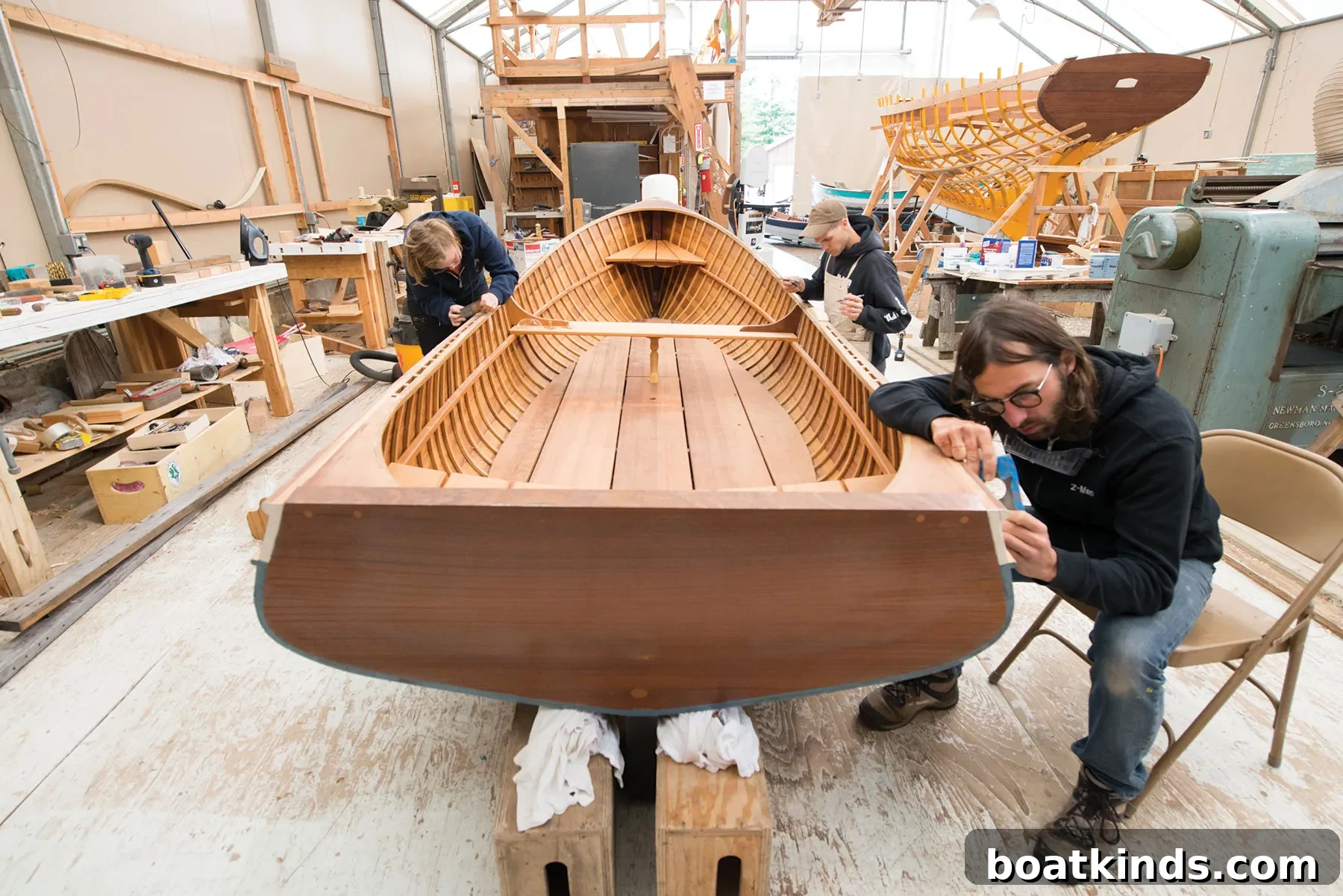
The campus overlooks South Port Townsend Bay and includes multiple boatshops, a metal shop, a library, administration spaces and a marine systems building nearing completion. Facilities support lumber milling, woodworking, metalwork and multiple boatbuilding bays—allowing the school to construct a wide variety of vessels.
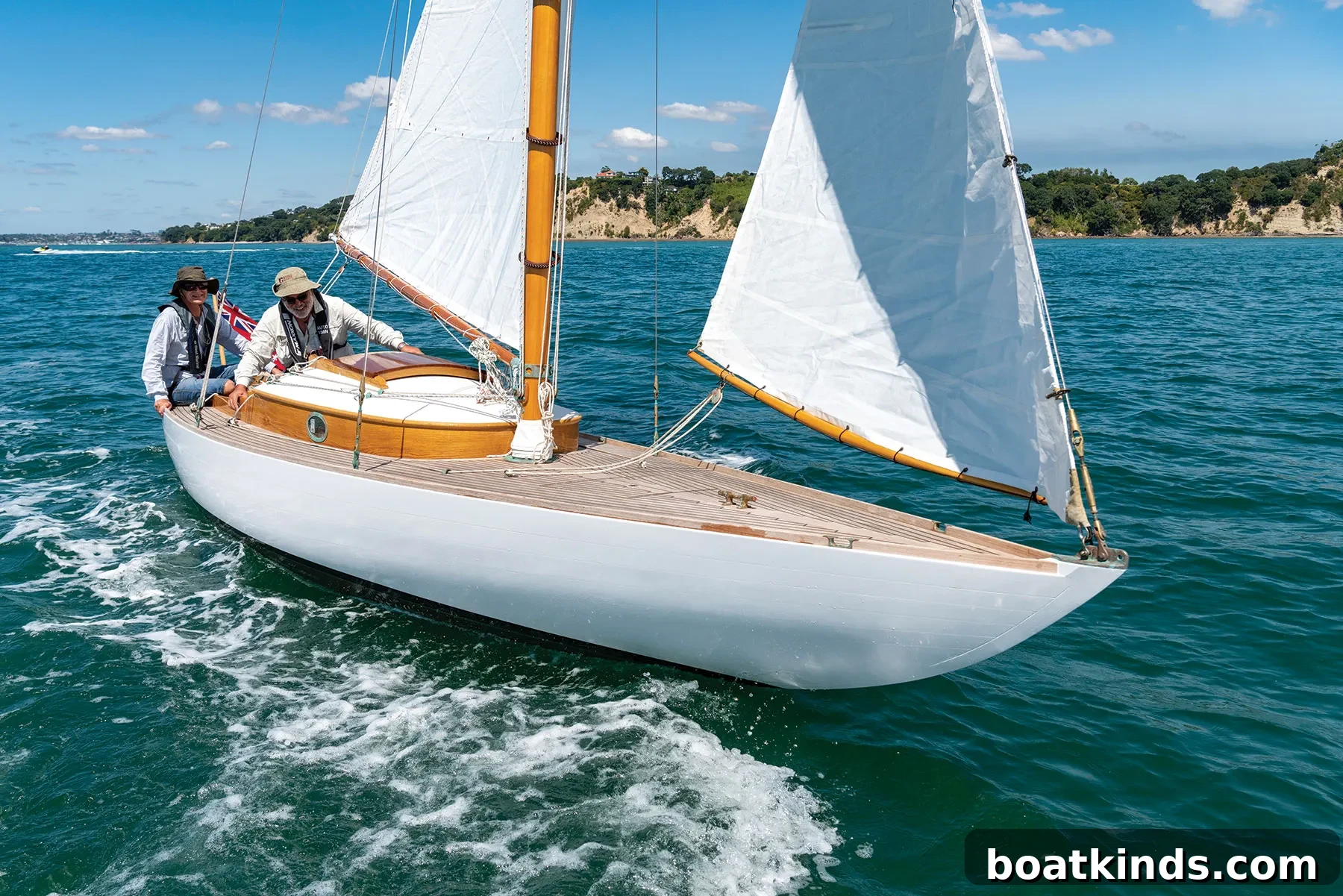
Recent student projects reflect a diverse curriculum: a 25-foot zero-emission pump-out boat, a 28-foot Herreshoff Rozinante and a 28-foot H.C. Hanson Forest Service Boat, alongside numerous smaller projects such as local Pacific Northwest favorites like Grandy sailboats, Poulsbo skiffs, prams and various rowing craft. These builds give students hands-on experience with modern and traditional techniques.
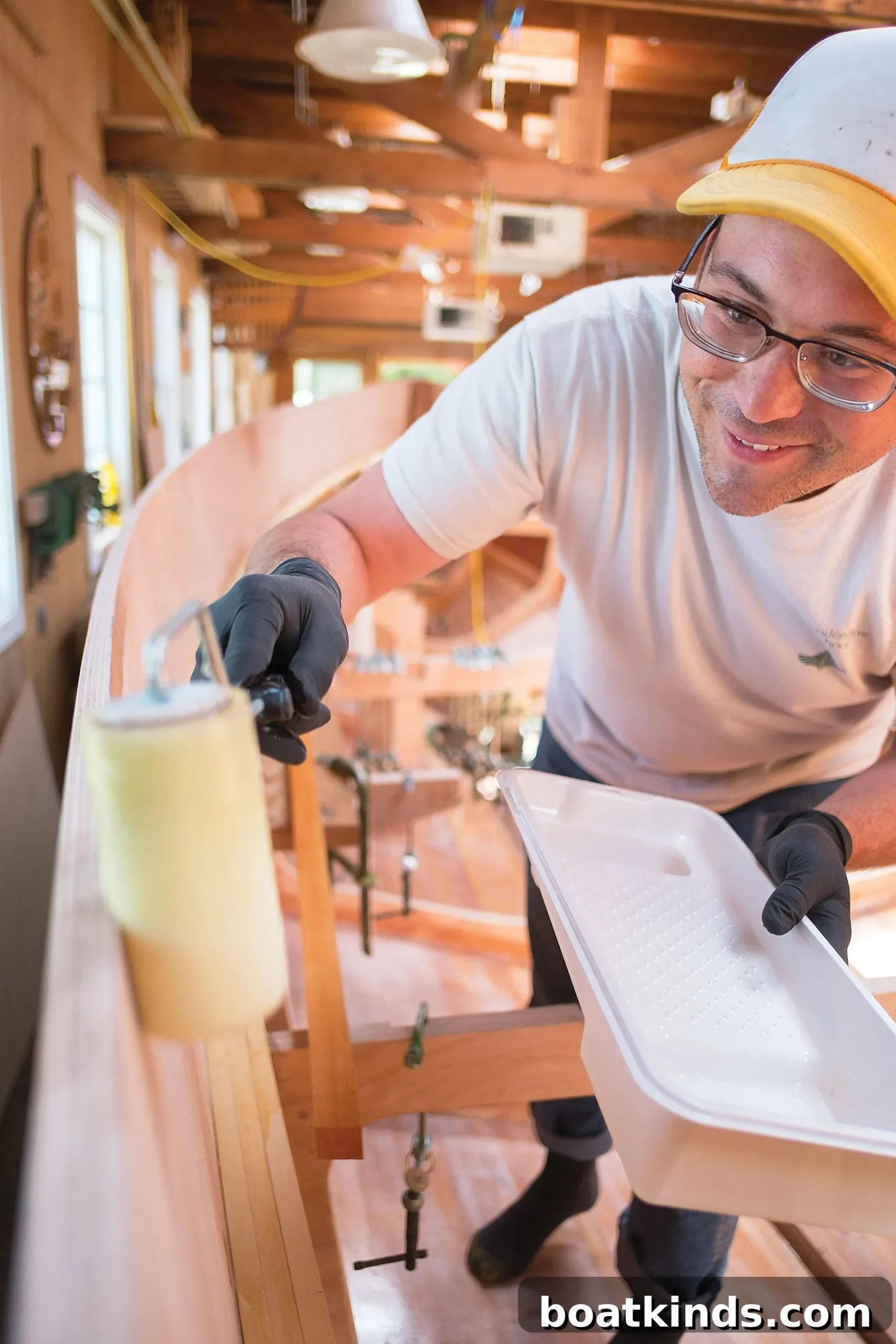
Koomen emphasizes that the education goes beyond discrete skills like planking or paint systems. “One of the most important lessons we teach is problem-solving,” he says. Turning two-dimensional drawings into functional three-dimensional boats teaches students analytical thinking and transferable hand skills they’ll use throughout their careers.
Students and Career Outcomes
Graduates from NWSWB commonly find work in boatyards, restoration shops, timber framing, cabinetmaking and other trades that value precision woodworking and systems knowledge. Tim Lee, owner and partner at Port Townsend Shipwrights Co-Op and a 1990 graduate of NWSWB, notes that school alumni are especially valuable hires: they already “speak the same language” as boatyard teams, understand boat-specific techniques like bending wood and cutting rolling bevels, and are familiar with the tools and terminology used in the trade.
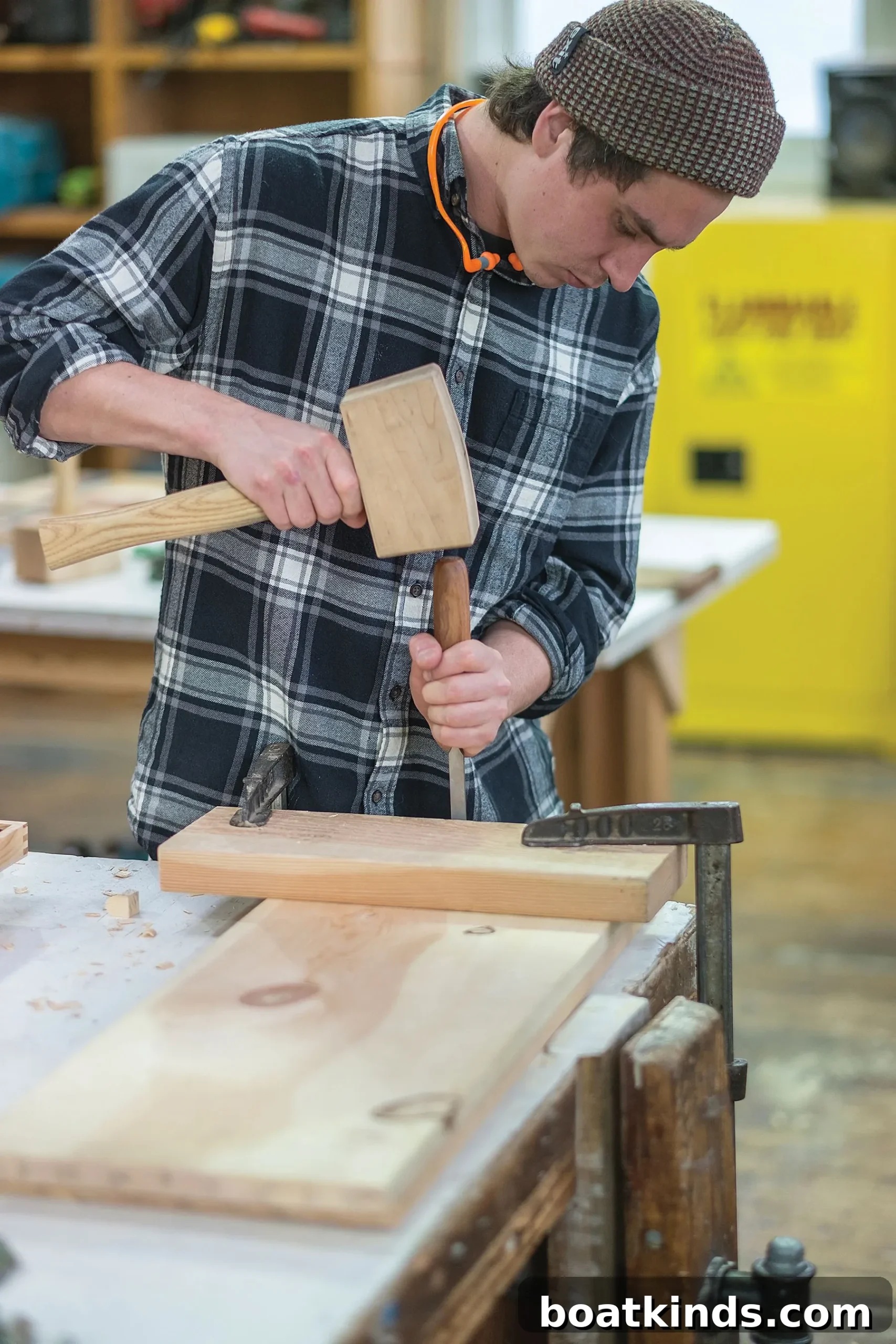
Student stories illustrate the program’s real-world impact. Chris Mullen, a recent graduate from Cape Cod, secured full-time work at Haven Boatworks immediately after finishing the traditional boatbuilding course and plans to return to complete the marine systems program. Mullen credits the instructors and the immersive, hands-on nature of the program for helping him land a job before graduation.
Carolyn Corbin, who came from Baltimore with a fine arts degree and time on tall ships, also completed the traditional boatbuilding program. She found Port Townsend’s waterfront community compelling but acknowledged the financial and logistical challenges of committing to a full-time, 12-month program. Despite those obstacles, she values the school’s openness—no prerequisites are required—and the breadth of exposure students receive to different boats, materials and construction techniques.
Instruction and Learning Environment
Students praise the instructors’ candor and depth of experience. Mullen says constructive feedback and encouragement from instructors helped his confidence and skill development. Corbin highlights the visual and practical exposure to a wide variety of projects and techniques—experience she found invaluable for shaping her career interests, including yacht restoration and period-appropriate boat conservation.
Koomen sums up the school’s broader value: “Once students develop these problem-solving and hand skills, they can apply them in many directions—modern fiberglass boatbuilding, fine carpentry, home construction or other trades. That versatility is the real strength of our program.”
Looking Ahead
After navigating a brief interruption due to the Covid-19 pandemic, the school is preparing for another academic year and a new cohort of students. “We’re excited to see what our graduates go on to build and create,” Koomen says. Watching students grow into skilled, confident craftspeople is at the core of the school’s mission—to keep traditional wooden boatbuilding and marine systems knowledge alive and relevant in the Pacific Northwest and beyond.