
Geoffrey Huband’s “Benbow”: A Winter Blockade in the Baltic
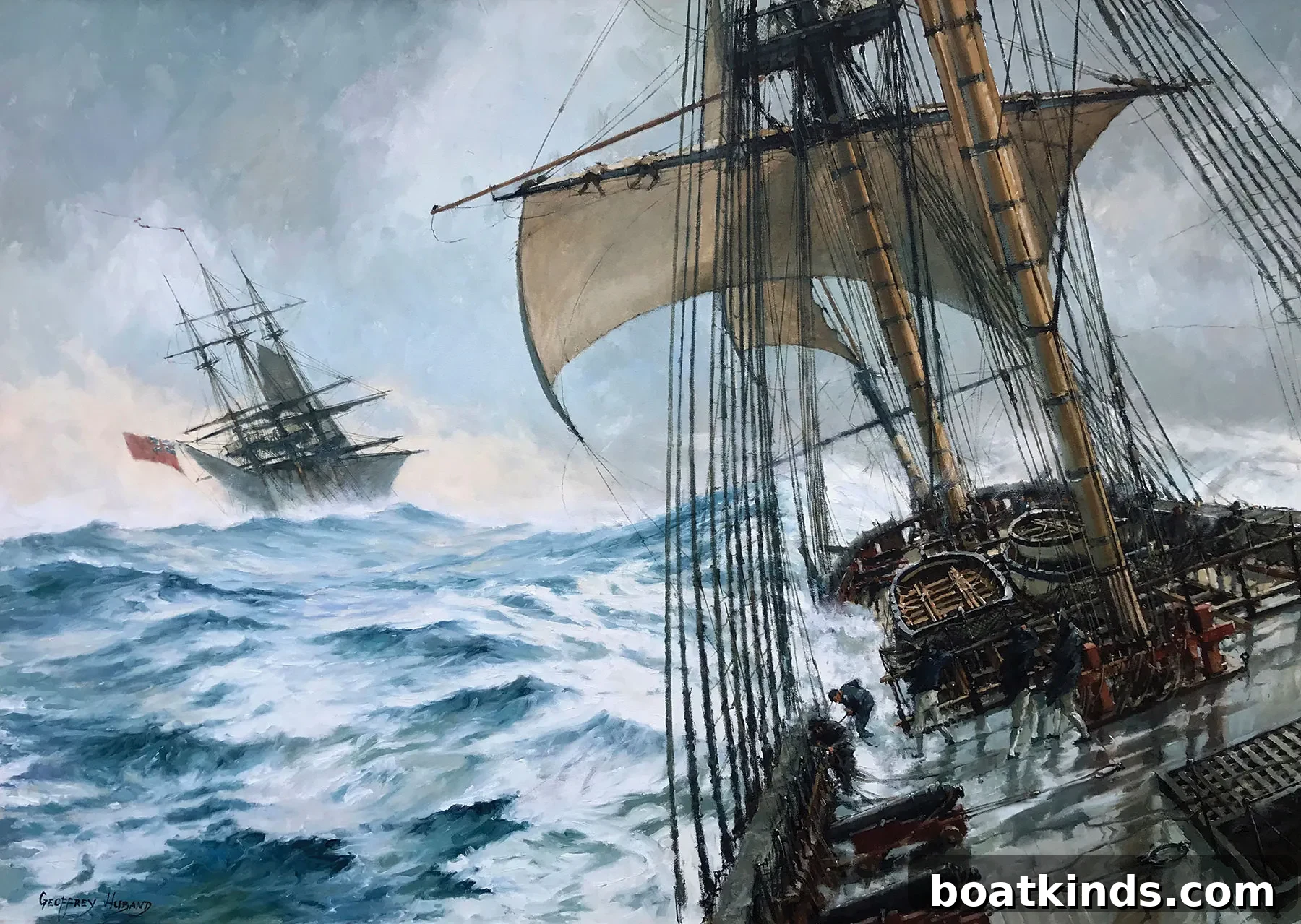
The scene is set in 1800, when Britain is engaged in hostilities with Denmark and a Royal Navy squadron is sent to enforce a blockade in the Baltic. At the center of Geoffrey Huband’s painting is the deck of the 74-gun flagship Benbow, commanded by Rear Admiral Richard Bolitho, a fictional hero from the naval novels of Douglas Reeman, who wrote under the pen name Alexander Kent. Huband’s image captures the harsh conditions and the tense atmosphere of a winter patrol, with another 74-gun ship looming through sheets of wind-driven rain and seawater spray.
Huband’s cover illustration for The Inshore Squadron, the fifteenth book in the Bolitho series, emphasizes narrative and mood rather than documentary detail. The artist himself has said that “I have always loved narrative in a painting,” and this work demonstrates that approach: the composition focuses on the human and environmental drama—men bracing on a wet, slanted deck, spars stripped nearly bare, and a second ship half-swallowed by cold mist and a choppy sea. The effect is cinematic, drawing the viewer into the immediate tension of life at sea during war.
The historical setting lends weight to the image without limiting Huband to strict historical re-creation. Blockade duty in northern waters was famously relentless and unforgiving, and the painting communicates that endurance in visual terms. The sea is not merely a backdrop; it is an active force that shapes the scene. The wind, rain and spray create a sense of motion and danger, while the distant silhouette of the companion ship reminds us how precarious and isolated naval operations could be in poor winter weather.
Huband worked methodically to achieve both accuracy and atmosphere. He began with sketches to explore composition and movement, developing one key image that eventually became the basis for the finished canvas. He consulted ship plans and historical illustrations to ensure convincing details of rigging and hull form. At the same time, he allowed for spontaneity in his painting process, welcoming the “happy accidents” that can produce striking lighting or texture. This balance between careful research and painterly intuition helps the work feel authentic without becoming overly literal.
The artist’s personal connection to coastal Britain informs the painting’s mood. Huband notes a local maritime history—the wreck of HMS Anson near his native Cornwall after a blockade mission in 1807—which anchors his interest in the relentless hazards of sea duty. While the wreck itself is a separate event, the anecdote underscores the ever-present risk facing blockading squadrons and adds a layer of lived experience to Huband’s portrayal of naval life.
Technically, the painting succeeds through contrasts: the dark mass of ship timbers against the white of spray, the lean of a deck saturated with water, and the subtle interplay of light through clouds and rain. These elements combine to create atmosphere more than to narrate a sequence of actions. The result is a momentary story—an instant suspended in weather and duty—where the viewer senses the ongoing struggle between men and the elements, and the endurance required to maintain a blockade through winter storms.
Huband’s wry satisfaction that he “didn’t have to go back and paint anything again” hints at both the difficulty and the finality of completing such a demanding image. The finished work stands as a tribute to naval endurance, to the narrative tradition in maritime painting, and to the historical imagination that brings fictional characters like Richard Bolitho vividly into view. For readers and collectors interested in naval art, this painting offers a powerful, immersive depiction of life at sea during an era of sail and war.
This article was originally published in the February 2021 issue.