
Model Sailboat Regattas: A Brief History and Modern Revival
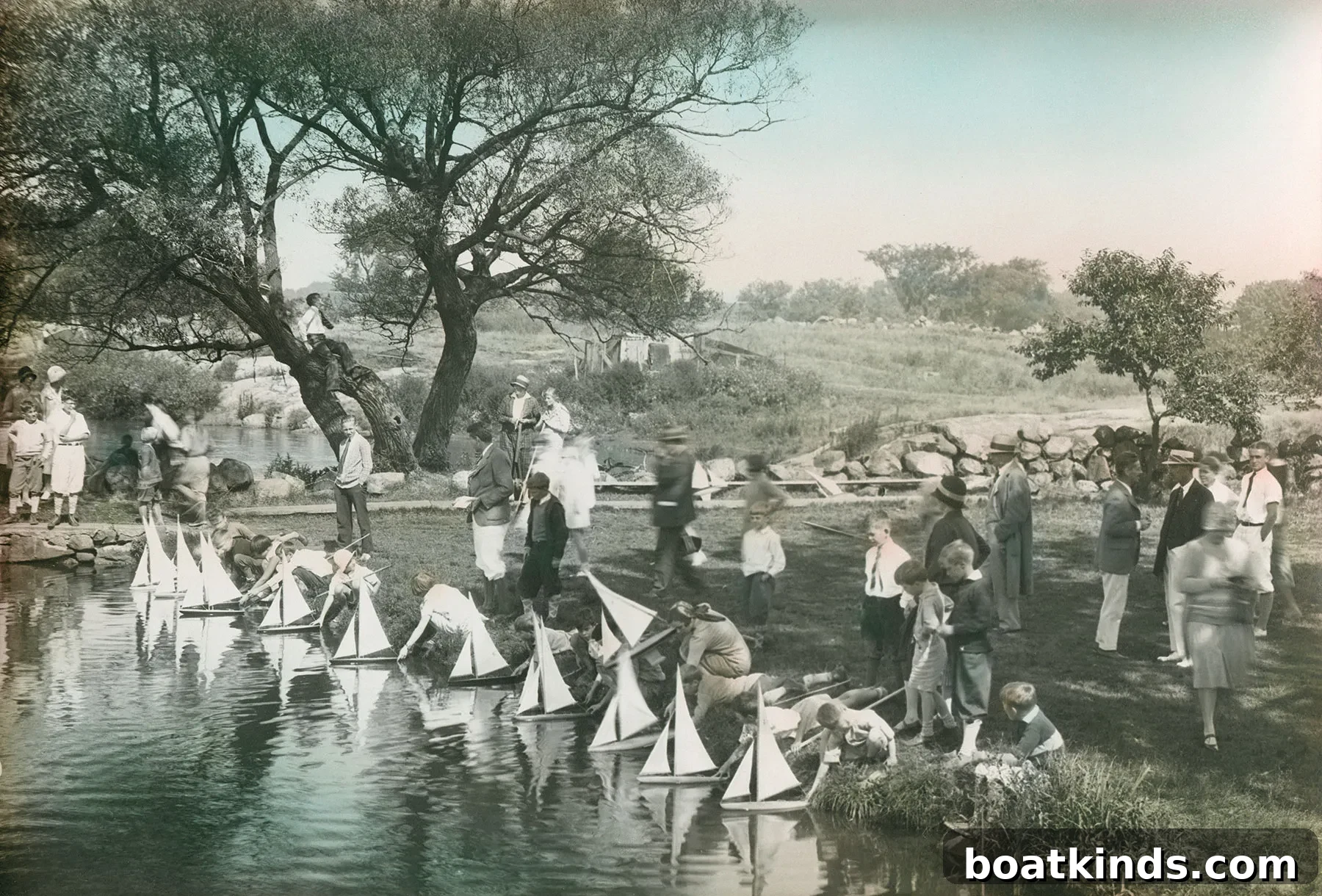
Model sailboat skippers gather for a regatta in Marblehead, Massachusetts, in this early 20th-century image from the collections at Mystic Seaport, the maritime museum in Mystic, Connecticut. The image captures a long tradition: model yachting has roots stretching back to the 1870s in the United States and continues today under the guidance of the American Model Yachting Association (AMYA).
Origins and Early Popularity
New York was an early center for organized model sailboat racing. On July 4, 1872, model yachting was introduced on the large lake at Prospect Park, and soon after a second regatta in Central Park drew a significant crowd. Contemporary accounts reported 13 schooners and four sloops competing for spectators numbering in the thousands, an early sign that miniature yachting appealed to the public.
By the 1920s the sport had become more firmly established in American culture. Large regattas regularly attracted crowds: one New York event drew an audience of around five thousand people and featured varied contests such as father-and-son races and events for girls. Youth regattas also became common, with some events attracting hundreds of young entrants. Model sailboating offered an affordable way for young people to engage with maritime skills, and many schools incorporated construction of model boats into lessons in woodworking, metalworking and fabric handling.
Technology and the Rise of Remote Control
Early model sailboats relied on simple steering mechanisms—rudder vanes and rudimentary systems that required skillful setup before launching. The introduction of radio remote control fundamentally changed the sport, putting steering directly in the hands of sailors on shore. Nikola Tesla is credited with developing a wireless control for a model boat in the late 19th century, and while practical adoption of radio control took time, the 1930s saw a notable leap forward. Newspapers of the era described the new wireless steering as astonishing: a child could press a button on a box onshore and watch the boat tack and steer with deliberate control.
Remotely controlled boats opened the door for new formats, including powerboat racing. In places like Central Park, powerboat events became a local attraction. However, safety problems—fires, explosions and injuries to both wildlife and people—eventually led clubs to suspend or cancel those activities, underscoring the need to balance innovation with safety and public responsibility.
Changing Costs and the Role of Organized Clubs
As radio gear and more sophisticated materials became available, the cost of competitive model yachting rose. That increase in expense led to a decline in casual participation for a time, as fewer families could afford the newest equipment and materials. The sport’s rebound came in part through organization and national coordination. The creation of the American Model Yachting Association (AMYA) in the 1970s provided a national governing structure, standardized rules, and a network of clubs that helped preserve the hobby and promote fair competition.
Today the AMYA supports local clubs, organizes regattas, maintains class rules, and promotes youth programs to keep the tradition alive. Under such stewardship, model sailboat racing remains accessible through club fleets, educational programs, and community events that emphasize skill, seamanship and sportsmanship.
Enduring Appeal and Community
Model sailboating endures because it combines craftsmanship, tactical racing, and the simple pleasure of being on the water. Whether built in a school shop as a learning project or fine-tuned by an experienced hobbyist, model yachts teach practical skills while providing a social outlet for sailors of all ages. Regattas in coastal towns like Marblehead and gatherings at maritime museums such as Mystic Seaport continue to preserve and celebrate the sport’s heritage.
This article was originally published in the March 2021 issue.