Refinishing the Cabin Sole on Snow Goose: A Grand Banks 32 Restoration
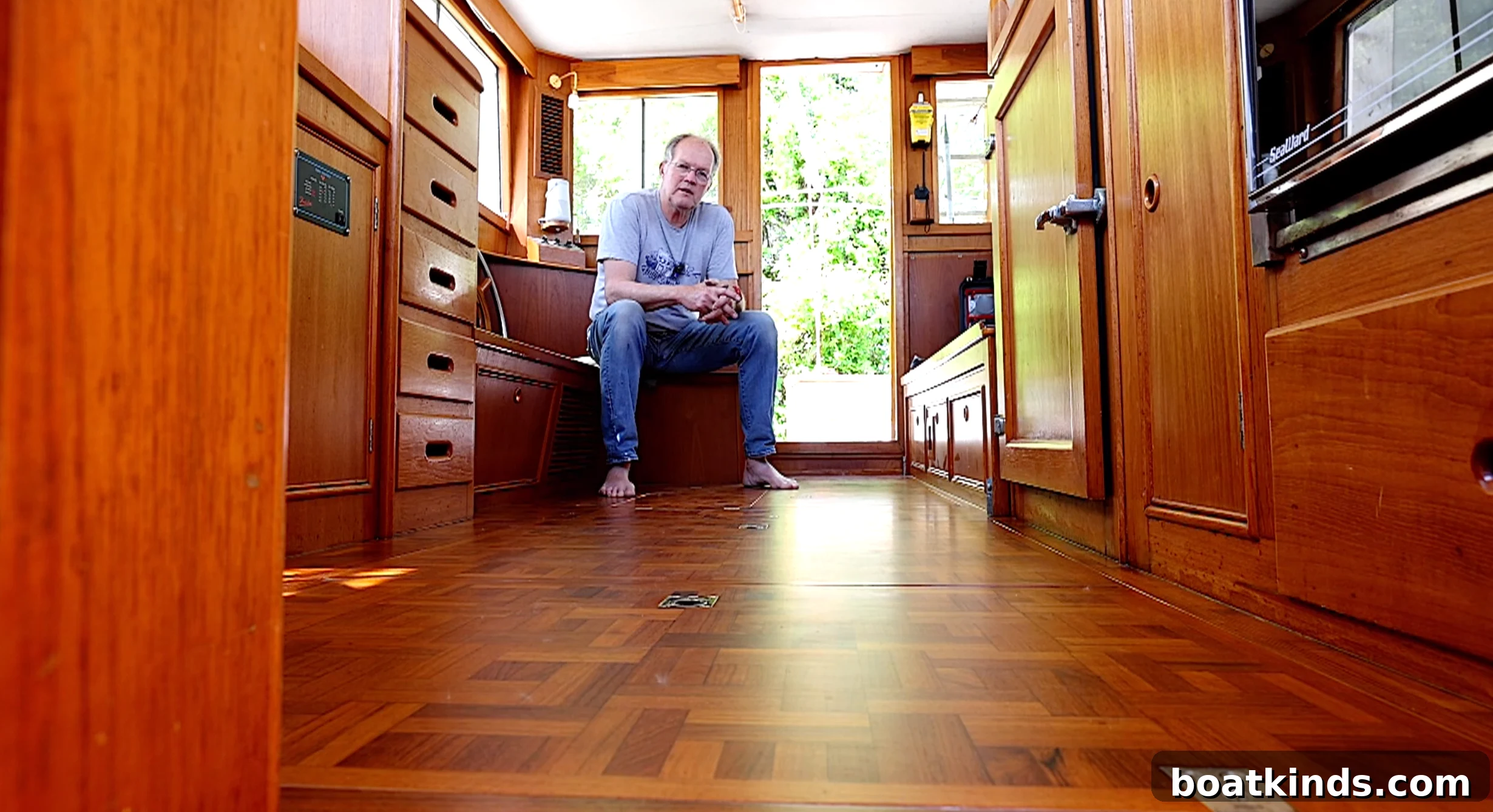
Onne van der Wal tackled a number of small repairs and updates to return his 1986 Grand Banks 32, Snow Goose, to near-new condition. While many tasks were modest in scope, three major jobs stood out: installing Raymarine electronics, sanding the teak decks, and — saved for last — stripping, sanding and varnishing the cabin sole. The sole work required concentrated effort and attention to detail, but the results were dramatic.
Preparing the Cabin Sole
Onne estimates he spent about four to five days on the cabin sole project. To make the work more manageable, he removed several panels and finished parts of the job in his shop rather than remaining on his knees inside the boat the entire time. That simple step improved ergonomics and sped the process.
His first step was to remove the old varnish. For this he used TotalBoat Strip, which he describes as having the consistency of mayonnaise. He applied the stripper about an eighth of an inch thick with a foam brush and left it on overnight to penetrate and lift the old finish. The following day he used a scraper and a kitchen spatula to remove the bulk of the softened varnish. “That stuff works like a banshee,” Onne says.
Sanding and Surface Prep
After scraping away the softened varnish, Onne sanded the remaining finish off the wood. He followed with a thorough cleaning using TotalBoat Dewaxer and Surface Prep to remove contaminants and ensure a clean surface receptive to new coatings. These preparatory steps are crucial for adhesion and a consistent final appearance.
Sealers and Topcoats
Once the sole was clean and sanded, Onne applied two coats of TotalBoat Varnish Sealer, lightly sanding between each coat to maintain a smooth surface and good adhesion. He then applied two coats of TotalBoat Lust Gloss for depth and shine, finishing with one coat of TotalBoat Lust Matte where he wanted to dial back the glare. In total he applied five coats on the sole.
“When you go through the trouble of stripping something down, why skimp,” Onne remarks. The extra coats add durability and create a richer, more impressive finish. He notes that the final result has strong visual impact: “But now you walk in, and it goes, ‘Baboom.’ It jumps right out at you.”
Why the Effort Was Worthwhile
Restoring a cabin sole requires time and patience, from removing panels and applying chemical stripper to careful sanding and multiple finish coats. Onne describes the project as “a big job,” but the transformation between the original worn finish and the renewed sole made the investment of time worthwhile. Seeing the before-and-after difference confirmed the effort.
Practical Tips from the Project
- Remove panels and work in a shop or comfortable workspace when possible to reduce strain and improve control.
- Use a chemical stripper to expedite the removal of old varnish, and allow ample dwell time for the product to work.
- Scrape carefully, then sand the surface to remove residual finish and ensure a uniform base.
- Clean thoroughly with a dewaxer or surface prep product before applying sealer or varnish.
- Apply multiple thin coats, sanding lightly between coats to achieve a durable, level finish.
Onne’s approach to the Snow Goose cabin sole demonstrates how methodical preparation and a willingness to invest in extra coats of finish create a standout restoration. The combination of chemical stripping, careful sanding, cleaning, and multiple sealer and topcoat applications produced a sole that truly revitalized the interior.
A DIY video documenting the project exists for those who want to see the process in motion and follow along step by step.
In the end, the time spent stripping and refinishing the sole paid off: the result is a striking, well-protected surface that enhances the overall appearance of the Grand Banks 32.