
The clouds looked threatening. Onshore, white puffy clouds against a deep-blue sky can be pleasant, but 40 miles off Hatteras Inlet, North Carolina—with spray blown from the boat’s wake—the same formations felt ominous.
On the bridge of Release, a 50-foot Carolina sportfisher, I watched two rods bent under the pull of high-speed lures as Captain Rom Whitaker powered through the chop at about 14 knots. In the cockpit, half a dozen anglers clung to railings and watched the action unfold behind the boat.
A few minutes into the troll, the excitement began. One rod bucked violently and a spray of water erupted down our wake. For an instant a silver-blue torpedo flashed in the white water. Line ripped off the reel as Whitaker kept the boat running. His persistence paid off when another rod exploded and the reel screamed.
With two wahoo on, Whitaker eased the speed while the mate helped one angler into the fighting chair and rigged him with a heavy rod. The second angler worked his line from a gunwale-mounted rod holder. Whitaker kept the boat moving slowly as the anglers tried to gain ground on their fish.
The fight swung back and forth, line spooling off then being recovered, until the four-foot streak in the water resolved into a brilliant blue-and-silver wahoo. The mate gaffed the fish and hauled it aboard. The second angler then moved into the chair and repeated the battle. Within a couple of hours we had a full box of wahoo—something not many fisheries can boast of before lunch.
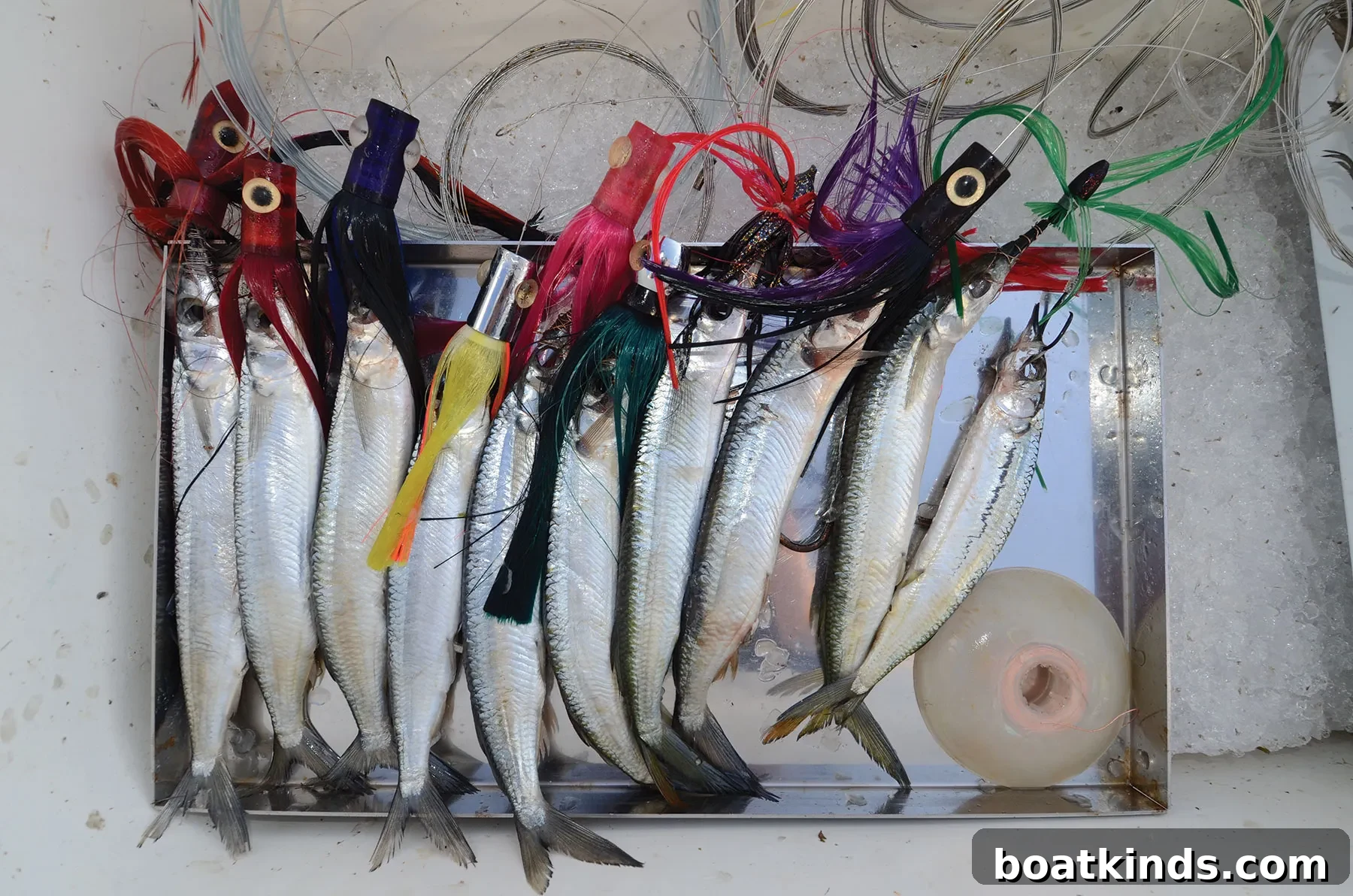
Hatteras captains have refined tactics that work anywhere wahoo swim. From August through October anglers up and down the East Coast—from New England to the mid-Atlantic—get their shot at explosive wahoo fishing. When the fish move through, high-speed trolling with ballyhoo on wire leaders is a proven method, and it’s exactly how they do it at Hatteras.
Whitaker often begins by high-speed trolling. About 10 miles from his target he slows to roughly 14 knots and deploys two fast lures. “If I see flying fish or bait on the sounder, I’ll put the lures out,” he says. In summer, when surface temperatures are hot, he searches for the edge of a temperature break. Later in the season he runs over structure—wrecks and depth changes that concentrate bait.
His high-speed rig pairs a heavy trolling sinker with a large skirted lure. Tackle includes a Penn 70VSW on a stout rod, spooled with an 80-pound mono topshot finishing in a ball-bearing swivel. To pull the lure down he attaches a 48-ounce sinker to 25 feet of 200-pound monofilament leader, adding a few inches of 270-pound stranded wire at each end of the sinker to prevent failures. A three-foot section of 270-pound seven-strand wire links the swivel to an Ilander head with three skirts and an 8/0 recurve tuna hook—the full lure measures about nine to ten inches.
Whitaker runs a 48-ounce sinker on one side of the boat and a 36-ounce on the other, staggering them so the lighter rig trails about 100 yards and the heavier about 50 yards back. If a wahoo strikes, he’ll put the boat in a tight turn to try to trigger a second bite.
Each November I return to Hatteras to learn from the fleet’s top wahoo captains, including Whitaker and Capt. Tim Hagerich, who has turned wahoo fishing into a science. Hagerich focuses on fall tactics, when wahoo concentrate around structure and large bait schools. He looks for hot, blue water—wahoo favor temperatures up to the low 80s—and fish the edge of the continental shelf where depths drop from about 180 to 250 feet. That puts them within reach of anglers running 25 to 40 miles offshore from East Coast inlets.
Hagerich targets sea mounts, ledges and wrecks that attract bait. He runs a compact spread—about seven rods—because he rarely sees more than two or three wahoo bites at once and wants to be able to clear lines quickly when things get hectic. His ideal trolling speed for fall wahoo is 8 to 9 knots; when he hooks one fish he’ll often bump the speed by a knot and tempt another to strike.
Wahoo have razor-sharp teeth and a scissor-like bite, so Hagerich relies on heavy single-strand wire leaders to prevent bite-offs. His rig starts on a 50-class rod and reel spooled with 80-pound mono and a ball-bearing snap swivel. He adds about 30 feet of No. 9 single-strand wire with a haywire-twisted loop on each end, slides a seawitch skirt and egg sinker in place, then rigs a needle-eye hook and threads a large ballyhoo so the hook is secured beneath the bait’s gill plates and through the bill—lashed with a rubber band for durability.
He believes the heavier, stiffer wire holds the bait at the ideal depth below the surface so a wahoo sees the silhouette and strikes. His most important tool is the planer rig: braid on a heavy rod feeds an 80-foot mono leader that connects to a 30-foot wire leader and seawitch. A No. 4 or No. 6 planer pulls the lure 30 to 50 feet down. By using a quick-release setup and crimps to create attachment loops, Hagerich can unclip the planer when the fish is close and handline the final stretch of wire to bring the wahoo alongside the boat.
Because wahoo are finicky and have keen vision, Hagerich replaces wire leaders after each fish to remove kinks or burrs that could ruin the lure’s action and cost a trophy. The combined techniques—high-speed trolling, seawitch lures, wire leaders, targeted structure fishing and careful speed control—are what put Hatteras anglers on some of the East Coast’s best wahoo action.
This summer, when wahoo push along the coast, try high-speed trolling with ballyhoo on wire if you want to catch them the way the pros do in Hatteras: keep the spread tidy, match the water and bait conditions, and fish for wahoo the way wahoo prefer to be hunted.
This article was originally published in the July 2021 issue.