

Michael Packard was diving for lobster in 45 feet of water off Provincetown, Massachusetts, when he said he “felt this huge bump and everything went dark.” He initially believed a great white shark had struck him, but when there was no pain and no sign of teeth, he began to suspect something far larger: that he might be inside the open mouth of a whale.
Packard, a 56-year-old lobsterman with decades of experience, later said a humpback whale had scooped him up. Trapped inside the animal’s mouth, he feared he would be swallowed. “Oh my God, I’m in a whale’s mouth and he’s trying to swallow me,” he recalled in an interview outside Cape Cod Hospital in Hyannis. “This is it. I’m going to die.”
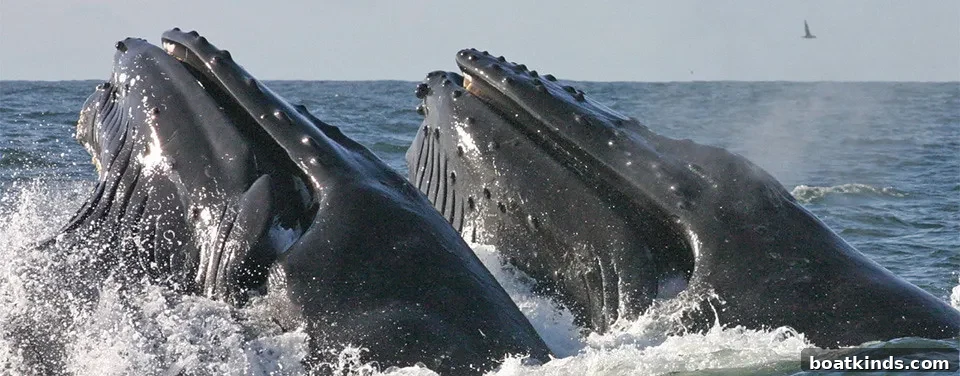
Rather than being swallowed, Packard says the whale surfaced, shook its head, and expelled him back into the water. He estimates he was inside the whale’s mouth for roughly 30 to 40 seconds. On deck, his crewman, Josiah Mayo, was scanning the ocean for the telltale stream of bubbles from Packard’s scuba gear when he noticed something unusual.
Mayo later described seeing the whale break the surface and toss Packard back into the sea. Nearby, charter boat captain Joe Francis said he witnessed the moment: Packard “come flying out of the water, feet first with his flippers on, and land back in the water.” Francis boarded Packard’s vessel to help remove the diver’s gear and get him aboard.
Packard recounted the surreal sensation of being ejected: “I just got thrown in the air and landed in the water. I was free, and I just floated there. I couldn’t believe it… I’m here to tell it.” Initially convinced he had suffered broken legs, he was later diagnosed with mainly soft tissue bruising and what may have been a dislocated knee. He left the hospital walking with a slight limp.
After a 40-year career at sea, Packard’s wife has urged him to stop diving, but he has said he plans to return to the water once he recovers. The incident has drawn intense public attention because of its dramatic and unlikely nature: a fisherman briefly taken into a whale’s mouth and surviving to tell the story.
Despite the vivid eyewitness accounts from his crewman and from Captain Francis, some observers—both experts and local fishermen—have expressed skepticism about parts of Packard’s description. Questions raised in news reports and informal commentary include how likely it is for a humpback to pick up a diver in its mouth and whether events might have unfolded in a different sequence than described. These doubts have not diminished the significance of the event for Packard and his family, nor the broader conversation it has sparked about interactions between humans and large marine animals.
Incidents like this are rare, and the circumstances that can bring a human and a whale into such close contact are complex. Lobstering often requires divers to work in areas where large whales feed or transit, and sudden encounters can create hazardous situations. Packard’s story underscores both the unpredictability of the sea and the resilience of those who make their living on it.
For now, Packard is focusing on his recovery. He remains shaken but alive, and his account continues to attract attention from the local community and the wider public. Whether every detail of the encounter is accepted without question, the core facts remain: a veteran lobsterman had a frightening, close encounter with a humpback whale, was briefly taken into the whale’s mouth, and survived.
The episode has prompted reflection among local fishermen and recreational divers about safety practices and awareness when working or diving in waters frequented by large marine mammals. As investigators and commentators discuss what they witnessed and what might be possible, Packard’s experience stands as a dramatic reminder of how quickly conditions at sea can change and how rare, unpredictable encounters with wildlife can leave a lasting mark on those involved.