
Shamrock V: The Living Link to 1930s America’s Cup and J Class Heritage
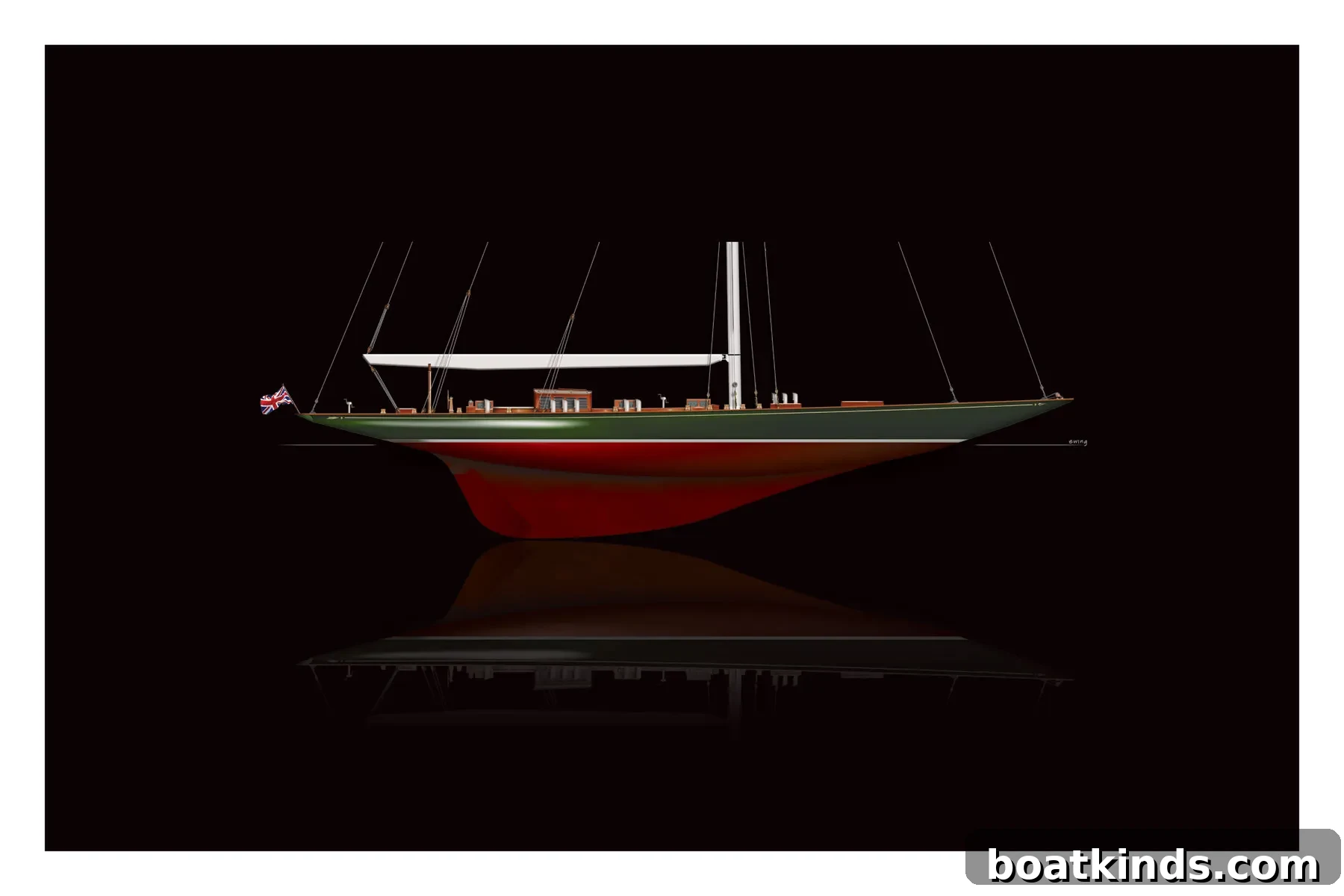
Few yachts preserve a direct, sailing connection to the golden age of ocean racing like Shamrock V. Built to the J Class rule and launched for the 1930 America’s Cup challenge, Shamrock V remains one of the most significant and best-preserved examples of pre-war yacht design and craftsmanship. As an active member of the modern J Class fleet, she continues to represent both her designer’s intent and the fierce transatlantic rivalry that defined competitive yachting in the 1920s and 1930s.
Commissioned by Sir Thomas Lipton for the 1930 regatta in Newport, Rhode Island, Shamrock V was the first British entry constructed specifically under the J Class formula. That rule used a formula factoring length, sail area and other parameters to create powerful, competitive yachts typically measuring between 75 and 87 feet on the waterline and using a masthead or Bermuda rig. These J Class vessels were among the largest, most advanced and most beautifully finished racing yachts of their day, marrying naval architecture with high-end materials and skilled craftsmanship.
Shamrock V was built in Britain of mahogany planking over a steel frame, a combination that offered both the warmth of traditional wooden construction and the strength of metal framing. Launched in the spring of 1930, she sailed across the Atlantic to challenge for the America’s Cup. Her opponent was the American defender Enterprise, a Herreshoff-built yacht notable for contemporary innovations such as an aluminum mast and lightweight winches—technologies that gave her advantages in sail handling and performance.
The 1930 series between Shamrock V and Enterprise unfolded in dramatic fashion. Enterprise won the first two races convincingly. In the third race, Shamrock V appeared to have the edge early on, only to suffer a catastrophic gear failure when the main halyard parted and the massive mainsail collapsed onto the deck, costing the British challenger that race. The final race proved anticlimactic as Enterprise secured the Cup and the United States retained the Auld Mug, leaving Lipton to lament afterward that he could not win. Lipton, a persistent and passionate patron of yachting, had tried to bring the Cup back to Britain five times over three decades; he died the following year.
Unlike many J Class yachts that were dismantled or left to decay after their competitive lives ended, Shamrock V survived. Over the years she passed through a number of notable owners, including British aviators Sir Thomas Sopwith and Sir Richard Fairey, figures with interests in both aviation and maritime pursuits. In 1962 the yacht was purchased by Italian yachtsman Piero Scanu and underwent an important restoration at the Camper and Nicholsons yard where she had originally been built. That restoration preserved both her structural integrity and historic character, allowing her to sail again.
Renewed interest in classic yacht racing and in the heritage of the J Class led to a revival of competitive outings. In 2001 Shamrock V returned to the racecourse and sailed against other surviving J Class yachts such as Endeavour and Velsheda. Since then she has continued to appear in regattas organized by the J Class Association, racing under the same spirit of competition and seamanship that defined her early career while also serving as a tangible reminder of yachtbuilding artistry and the evolution of high-performance sailing craft.
Today Shamrock V is more than an historic artifact; she is an active and maintained example of maritime heritage. Sailing in classic regattas, she educates new generations about the design principles, materials and human effort that created the J Class legacy. For sailors, historians and enthusiasts, Shamrock V represents both the drama of America’s Cup competition and the enduring value of careful restoration and stewardship.
This article originally appeared in the November 2017 issue.