
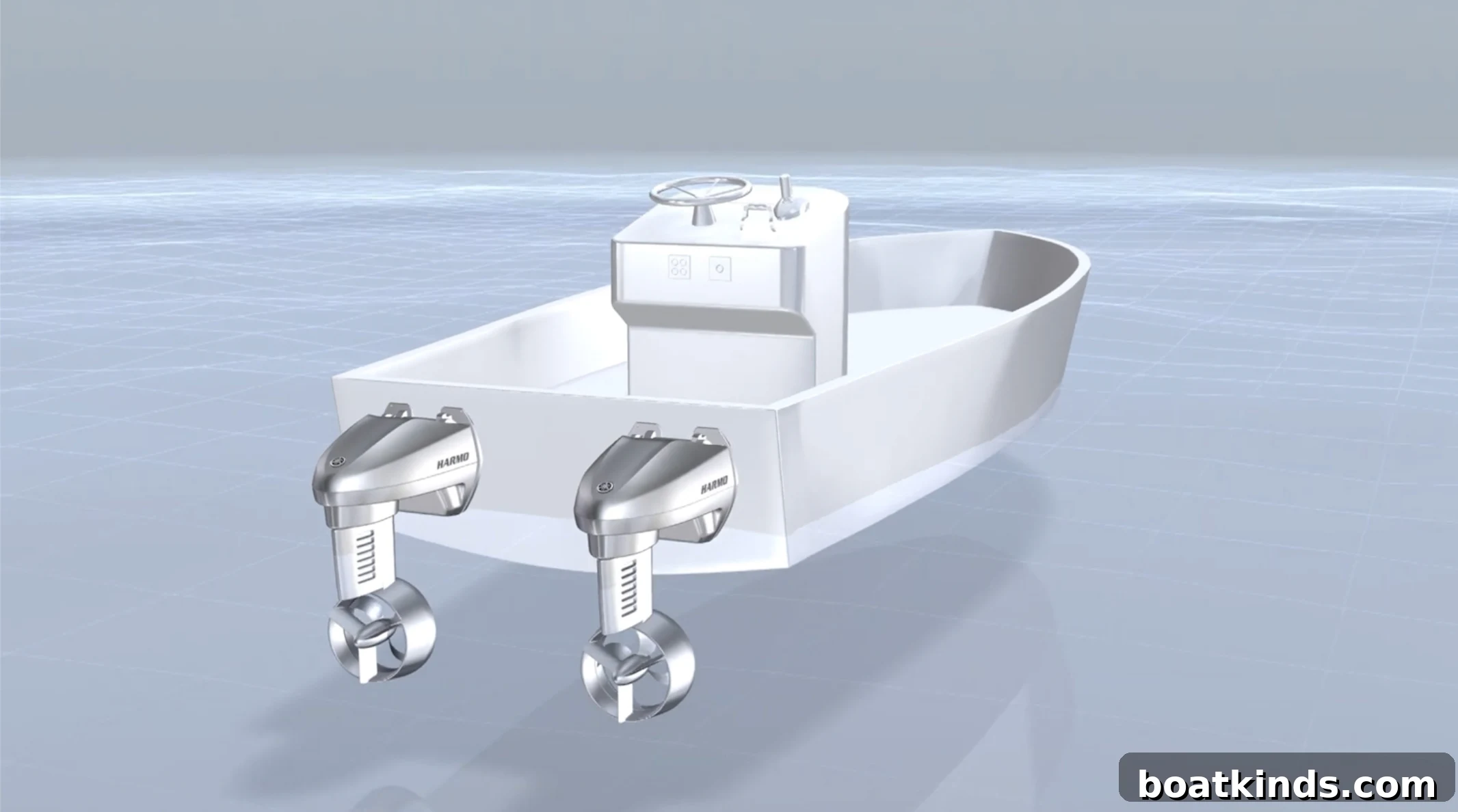
Yamaha Marine has announced that its HARMO electric outboard system, which first appeared as a prototype in Europe in 2016 and later saw an updated release there, is now available in the United States. The company says American boat builders are already evaluating how to integrate the system into new models, and Yamaha estimates that HARMO-equipped boat packages will begin appearing on the market within the next 18 months.
“HARMO is the perfect system for horsepower or internal-combustion restricted waterways,” says Ben Speciale, president of Yamaha Marine’s U.S. Business Unit. “Ultimately, it is up to our boatbuilder customers to decide how to integrate it into their boats, and we are eager to see the result.” That willingness to collaborate with OEMs reflects Yamaha’s intent to offer a modular electric solution that can be adapted to a variety of hulls, mission profiles and regulatory environments.
Yamaha describes HARMO as a complete electric outboard package designed for propulsion, control and quiet operation. At its core is a rim-drive electric motor built around the perimeter of a specially encased four-blade aluminum impeller. The propulsion unit is rated at 3.7 kW and operates from a 48-volt power supply, producing 225 pounds of static thrust. The motor assembly weighs approximately 121 pounds and is engineered to run with very low acoustic signature and minimal vibration—qualities that make it particularly well suited for fishing, wildlife areas, and waterways with strict noise or emissions rules.
In Yamaha’s own trials, HARMO was tested on a Skeeter fishing boat hull. Those trials demonstrated the system’s endurance in trolling conditions: Yamaha reports the outfit can troll for seven to eight hours at speeds between 2 and 4 miles per hour on a single charge configuration typical for those tests. While exact run-time will vary by battery size, load and sea state, these results indicate HARMO’s potential for extended low-speed operation favored by anglers and operators on restricted waters.
Control and maneuverability are central to the HARMO design. The system integrates digital-electric steering and supports Yamaha’s Helm Master EX joystick control, offering precise, responsive handling and the ability to perform tight-point turns or “spin-on-a-dime” maneuvers. The motor unit also tilts up to 74 degrees, allowing it to be fully lifted out of the water when out of use or when trailering the boat. HARMO can be configured as either a single unit or a twin setup; in twin installations Yamaha says the system can effectively maneuver boats up to 32 feet in length, expanding its suitability beyond small skiffs to larger recreational and utility craft where electric propulsion is desired.
Beyond the immediate product specifications, HARMO represents Yamaha’s continued expansion into electric-drive technologies. The company already manufactures a broad range of electric and electrified products—electric golf carts, personal mobility devices, electric motorcycles, power-assisted bicycles, electric wheelchairs and drones—which informs its engineering and systems-integration approach for marine applications. That experience helps when addressing electrical architecture, battery management, user interfaces and reliable control systems required for marine environments.
For boatbuilders, HARMO offers an option for markets constrained by horsepower limits or where local ordinances restrict internal-combustion engines. For owners and operators, its low noise, lack of local exhaust emissions and precise electric control promise a different kind of boating experience—one suited to fishing in quiet waters, operating in close quarters, or complying with emissions regulations in sensitive areas. How individual manufacturers package HARMO—battery options, installation layouts, and complementary onboard systems—will determine the range of available configurations and the practical cruising or trolling times buyers can expect.
At this time Yamaha has not released pricing details for HARMO. Boatbuilders and dealers will be key partners in shaping how the system is marketed and installed, and prospective buyers should watch for upcoming announcements from OEMs and dealers as they begin to offer HARMO-equipped boat packages in the U.S. market over the coming months.