
Scottish Ferry to Run on Wind-Powered Hydrogen: CMAL Advances Low-Emission Design
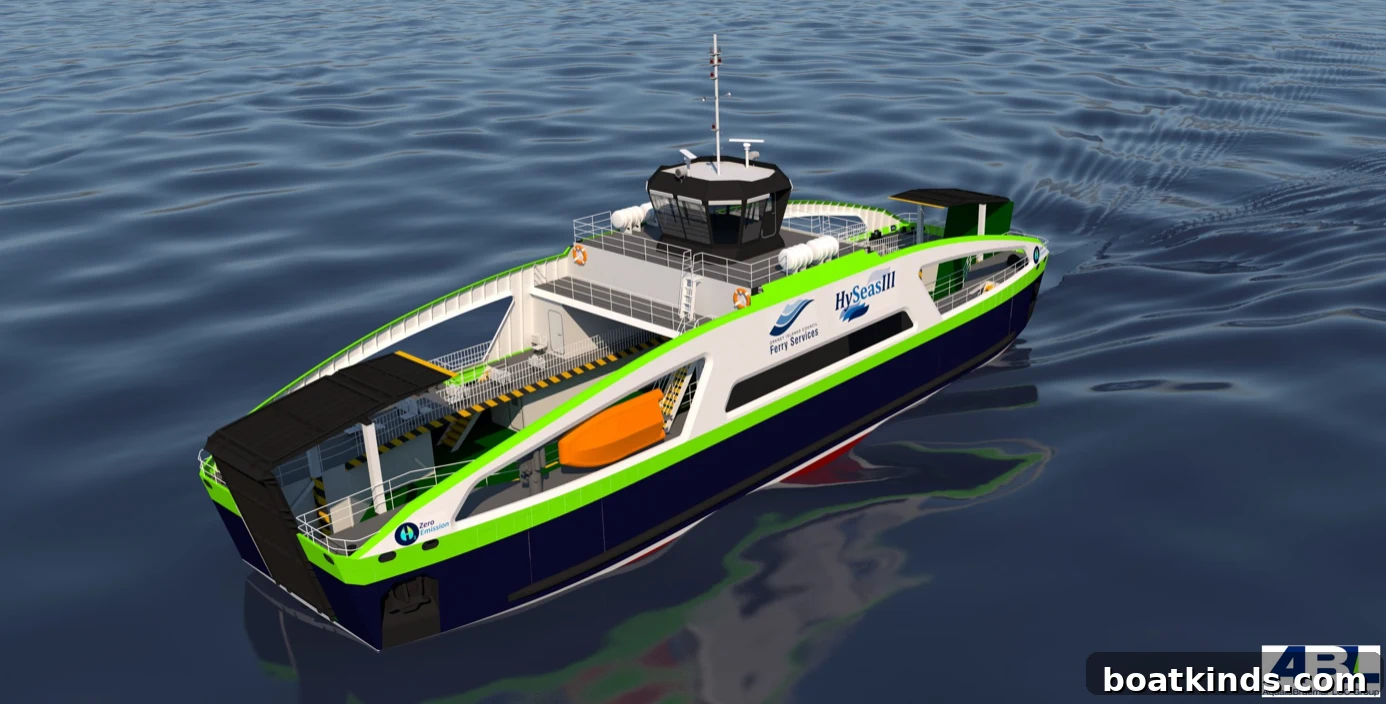
A new zero-emission ferry, developed by Caledonian Maritime Assets Limited (CMAL), may soon operate in Scottish waters using hydrogen produced from wind power. The vessel, part of the EU-funded HYSEAS III program, represents a next step in sustainable ferry transport by moving away from conventional diesel propulsion toward fuel-cell and battery systems fed by renewable electricity.
Design and Capacity
Designed by AqualisBraemar LOC Group, the ferry will be sized to carry approximately 160 passengers and 16 cars, making it suitable for short regional routes. The planned route for the vessel is between the town of Kirkwall and the island identified in project documents as Shapisnay. The design emphasizes efficient onboard systems—fuel cells combined with batteries and an electric propulsion arrangement—to deliver quiet, low-emission operation while meeting the needs of island communities.
How Wind-Powered Hydrogen Works
The concept for this ferry relies on hydrogen produced using electricity from wind farms. In practice, renewable electricity is used to power electrolysers that split water into hydrogen and oxygen. The hydrogen can then be stored and used in onboard fuel cells, which generate electricity to power the ferry’s propulsion system and hotel services. Because the electricity input comes from wind generation, the resulting hydrogen can offer very low lifecycle greenhouse gas emissions compared with conventional marine fuels.
Testing and Development Timeline
Key components of the ferry system—namely the fuel cell, battery systems, and electric propulsion—are undergoing testing in Bergen, Norway. Those tests are critical to verify performance, safety, and integration before finalizing the vessel design. According to the development schedule, the detailed design work was due for completion in March 2022, after which procurement and construction phases could proceed. Progress on component testing and design refinement will determine the timeline for building and deploying the vessel.
Benefits for Island Communities and the Environment
Deploying a hydrogen-fuel-cell ferry driven by wind-generated energy can deliver multiple benefits. Reduced local air pollution and lower noise levels improve the environment for residents and visitors alike. From a climate perspective, substituting diesel engines with hydrogen fuel cells powered by renewables cuts carbon emissions associated with ferry operations. For island and coastal transport networks, such technology can also enhance energy resilience by linking local renewable resources with transport needs.
Future Flexibility and Wider Use
While the initial operation is planned for the Kirkwall–Shapisnay route, project partners note that the ferry could operate on additional routes as hydrogen supply infrastructure expands. As hydrogen production and distribution become more widely available across ports and islands, the same fuel-cell and battery configuration could be applied to other short-sea services, enabling broader adoption of zero-emission maritime transport.
What This Means for Maritime Innovation
The CMAL project is an example of how public and private partners are exploring alternatives to fossil-fuelled shipping. By combining proven elements—wind power, electrolysis, fuel cells and batteries—into an integrated ferry concept, the project aims to demonstrate practical, near-term pathways to decarbonize local maritime services. Continued testing, careful design, and phased deployment will be important to ensure safety, reliability and cost-effectiveness as the technology moves from prototype to regular operation.
As this project develops, monitoring of component test results, procurement decisions and construction milestones will provide clearer insight into when the vessel may enter service and how the lessons learned could influence future zero-emission ferries in Scotland and beyond.